Salvador Dalí
The Persistence of Memory (1931, MoMA)
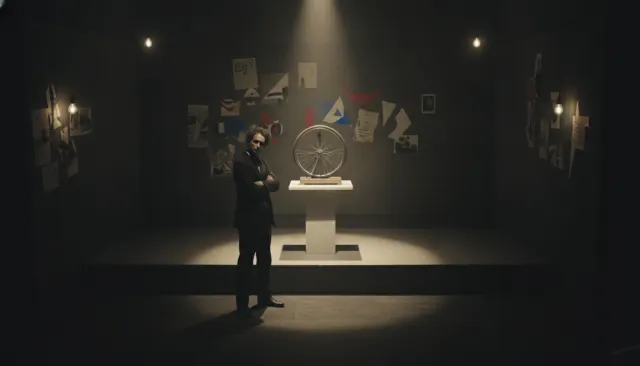
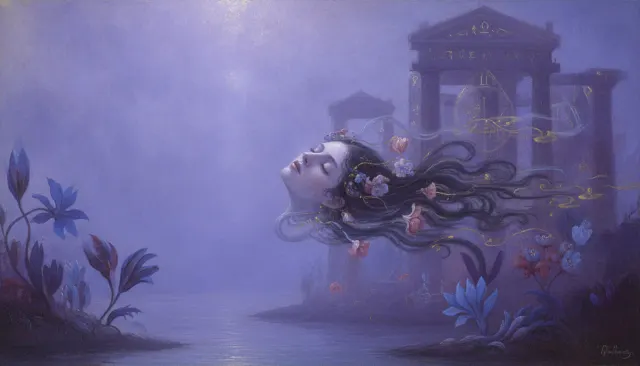
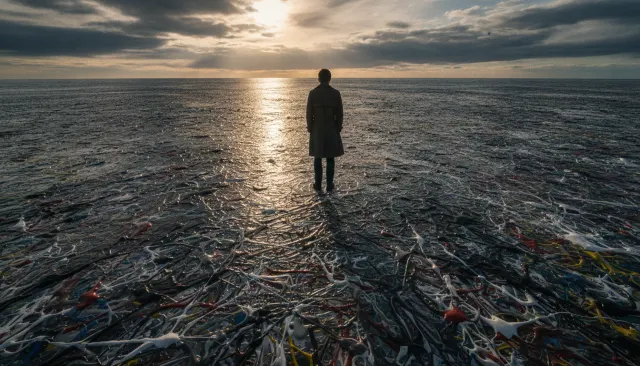
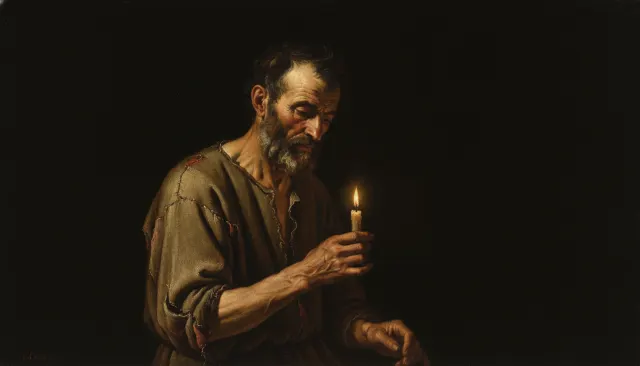
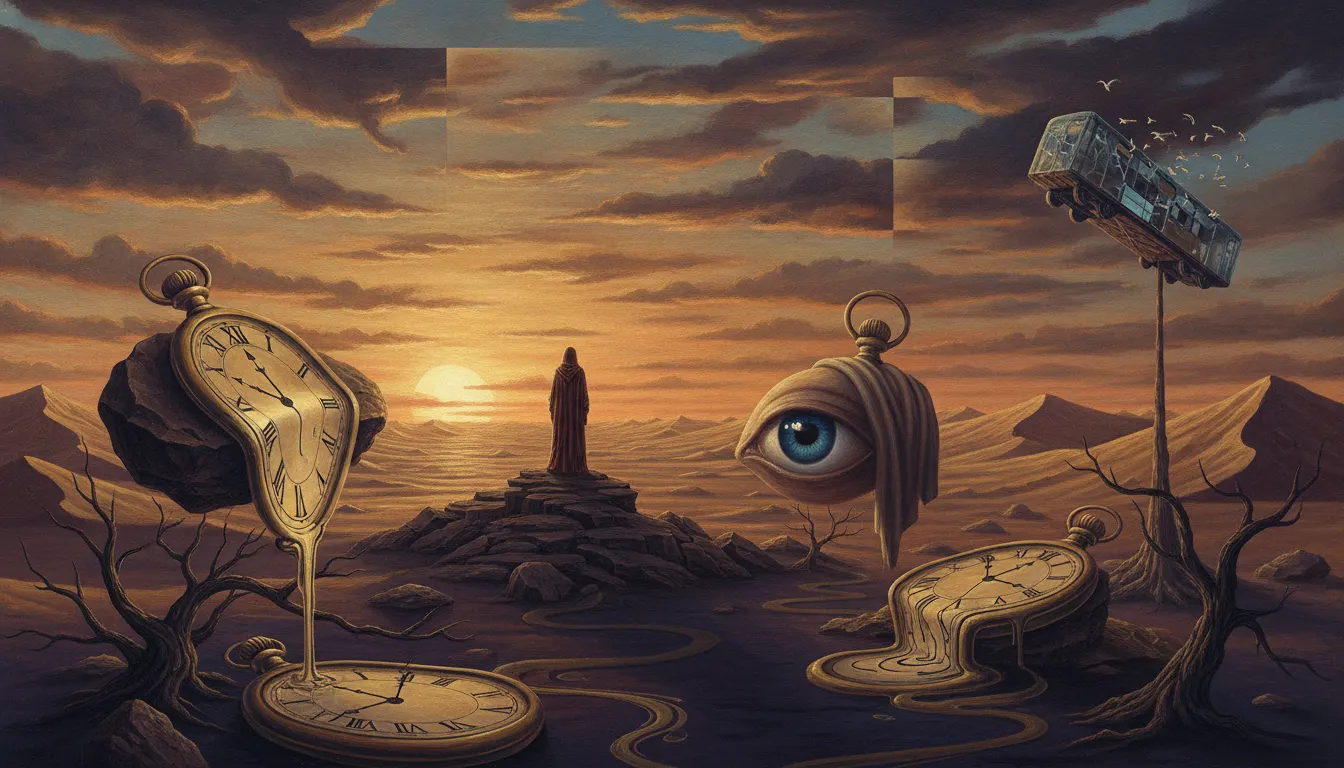
Salvador Dali and Rene Magritte Surrealism. Melting clocks, bowler-hat man, dream desert horizon, impossible juxtapositions, eerie clarity.
The moves a human crew would use to get here. Cue applies them for you, and knowing their names is how you ask for a change.
realistic oil-painting finish applied to physically impossible subjects - Dalí's velázquez-smooth surfaces on melting clocks
objects made enormous (Magritte's apple filling a room) or impossibly tiny
l'oeil windows and frames within frames, confusing inside and outside space
image compositions where the same form reads as two distinct objects simultaneously
hatted everyman as a blank stand-in for the viewer (Magritte motif)
Surrealism was launched by André Breton's 1924 manifesto as a revolutionary project: liberate thought from rationalism by accessing the unconscious through dream logic, automatic writing, and unexpected juxtaposition. In painting, it produced two distinct modes. Salvador Dalí and René Magritte both chose hyper-realistic oil technique - but each applied that precision to undermine reality in opposite ways.
Dalí described his method as "hand-painted dream photographs." The Persistence of Memory (1931, MoMA) is 24×33 cm - smaller than a laptop screen - yet its melting pocket watches in a Catalonian coastal landscape have defined the visual language of time-anxiety for nearly a century. Dream Caused by the Flight of a Bee Around a Pomegranate a Second Before Awakening (1944, Thyssen-Bornemisza) and Swans Reflecting Elephants (1937) demonstrate his use of double-images, where a single form reads as two different objects simultaneously. The Elephants (1948) elongates the animals onto spindly, Giacometti-like legs that defy physics while conveying ethereal menace. His Christ of Saint John of the Cross (1951) placed the crucifixion at a vertiginous aerial angle unseen in religious painting.
Magritte's Surrealism was philosophical rather than psychosexual. The Treachery of Images (1929, LACMA) - a precisely painted pipe beneath the caption "Ceci n'est pas une pipe" - is a trap: of course it is not a pipe; it is a painting of a pipe. The work inaugurated a century of semiotics. The Son of Man (1964, private) places a bowler-hatted man with an apple obscuring his face - the mask of bourgeois identity. Personal Values (1952) and The Human Condition (1933) use trompe-l'oeil windows to argue that perception and representation are irreconcilable. His palette is bright daylight, his subject matter is the ordinary rendered alien.
Max Ernst's frottage textures, Giorgio de Chirico's proto-Surrealist piazzas, and Frida Kahlo's autobiographical dream imagery all belong to the same visual field. Collectively, Surrealism established that photorealism applied to impossible content is more disturbing than abstraction - because the viewer's brain cannot decide whether what it sees is real.
Surrealist imagery arrests attention instantly. The brain flags anomaly before rational processing kicks in, which means a surrealist frame grabs a viewer mid-scroll. It signals sophistication, imagination, and a refusal to be literal - ideal for brands that want to communicate they operate in a different register than their category.
The Persistence of Memory (1931, MoMA)
Dream Caused by the Flight of a Bee (1944, Thyssen-Bornemisza)
Swans Reflecting Elephants (1937, Cavaleri Foundation)
The Elephants (1948, Museo Nacional Thyssen-Bornemisza)
The Treachery of Images (1929, LACMA)
The Son of Man (1964, private collection)
The Human Condition (1933, National Gallery of Art)
Personal Values (1952, San Francisco Museum of Modern Art)
Europe After the Rain II (1940–42, Wadsworth Atheneum)
1914
The Mystery and Melancholy of a Street
A Look is not a filter. It is a set of stored decisions the pipeline reads before it makes a single frame, so two videos in the same Look actually match.