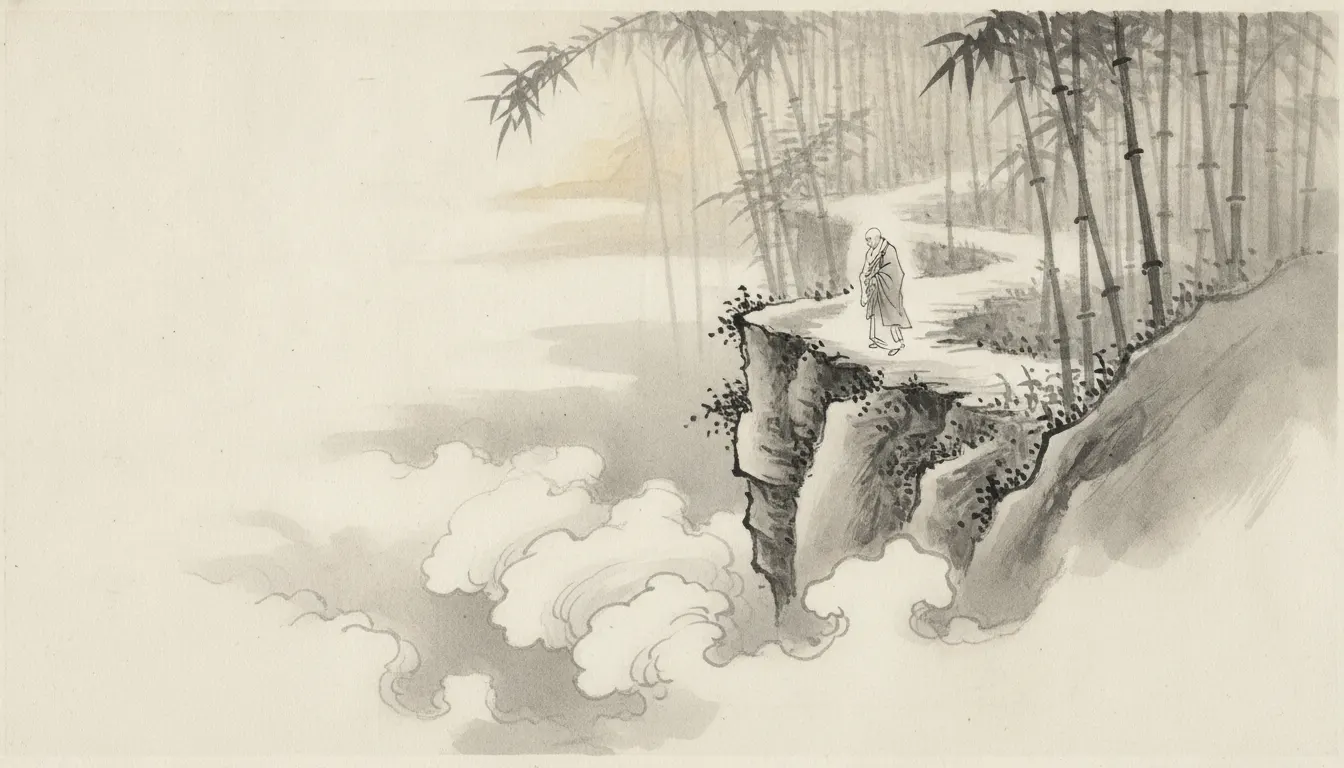
Sesshū Tōyō
Long Landscape Scroll (1486, Mōri Museum)
Sumi-e Japanese ink brush painting. Sparse calligraphic brushstroke, rice-paper white space, bamboo or cliff, Zen-monk minimalism.
The moves a human crew would use to get here. Cue applies them for you, and knowing their names is how you ask for a change.
no color, only tonal gradients from near-black to faint grey
brush strokes that feather and break, conveying texture of bark, rock, or fur
ink passages where large wet strokes define form loosely
unpainted white paper carries as much compositional weight as inked areas
stroke lines for branches, bamboo stems, and bird silhouettes
light) composition - forms emerge from tonal contrast rather than outline
distant elements pale almost to invisibility
Sumi-e (墨絵), meaning "ink picture," is a monochromatic East Asian painting tradition rooted in Zen Buddhism. Developed in China during the Tang and Song dynasties, it reached its mature Japanese form in the Muromachi period (14th–16th century). The technique prizes economy of line and radical negative space: a mountain, a bird, a bamboo grove rendered in a handful of strokes that still breathe.
Sesshū Tōyō (1420–1506) is the towering figure of Japanese ink painting. His Autumn and Winter Landscapes (c. 1470s) and the monumental Long Landscape Scroll (1486, 15.7 meters) demonstrate his command of both the meticulous "kin-kaku" method and the explosive haboku (splashed-ink) technique. A generation later, Hasegawa Tōhaku's Pine Trees screen (c. 1595, Tokyo National Museum) pushed negative space to near-abstraction - the pines dissolving into mist are considered among the greatest paintings in Japanese history.
The tradition extended through Zen temple painters like Josetsu and Shūbun, each refining the "four gentlemen" subjects: plum blossom, orchid, chrysanthemum, and bamboo. Each plant carried Confucian-moral weight as well as aesthetic purpose.
Sumi ink is ground from compressed soot and animal glue. The practitioner controls tone through water ratio, brush pressure, and speed. The notan (light-dark) principle governs composition: light areas are left as raw paper; dark areas built from near-black to pale grey. The brush holds water unevenly, so a single drag can produce a gradient from wet black to dry-scrub white - the kasure (rough-dry) effect central to expressing texture in rock, bark, or fur.
Sumi-e is inseparable from calligraphy practice - both traditions use the same four treasures: brush, ink stick, ink stone, and paper. The bokki bamboo brush is held vertically, loaded with ink ground to the correct viscosity on the ink stone, then pressed and dragged across washi (Japanese mulberry paper) with the speed and pressure that constitute the artist's direct physical signature. Unlike oil or watercolor, sumi-e does not permit revision: the mark that lands is the mark that stays. This permanence - and the preparation it demands - is considered integral to the art's Zen character.
Sumi-e influence runs through Saul Bass's title cards, Studio Ghibli background art, and modern editorial illustration. As a look for video content, it communicates contemplation, nature, craft, and East Asian cultural depth - particularly suited to wellness brands, tea ceremonies, architecture, and philosophical topics.
Long Landscape Scroll (1486, Mōri Museum)
Haboku-Sansui (Splashed-Ink Landscape, 1495, Tokyo National Museum)
Autumn and Winter Landscapes (c. 1470s, Tokyo National Museum)
Pine Trees screen pair (c. 1595, Tokyo National Museum)
Catching a Catfish with a Gourd (c. 1413, Taizō-in)
Reading in a Bamboo Grove (c. 1446, Tokyo National Museum)
Six Persimmons (Song dynasty, Daitoku-ji Kyoto)
A Look is not a filter. It is a set of stored decisions the pipeline reads before it makes a single frame, so two videos in the same Look actually match.