MV GENRE COUNTRY · 1995-2010 · USA
Tim McGraw Country Pickup
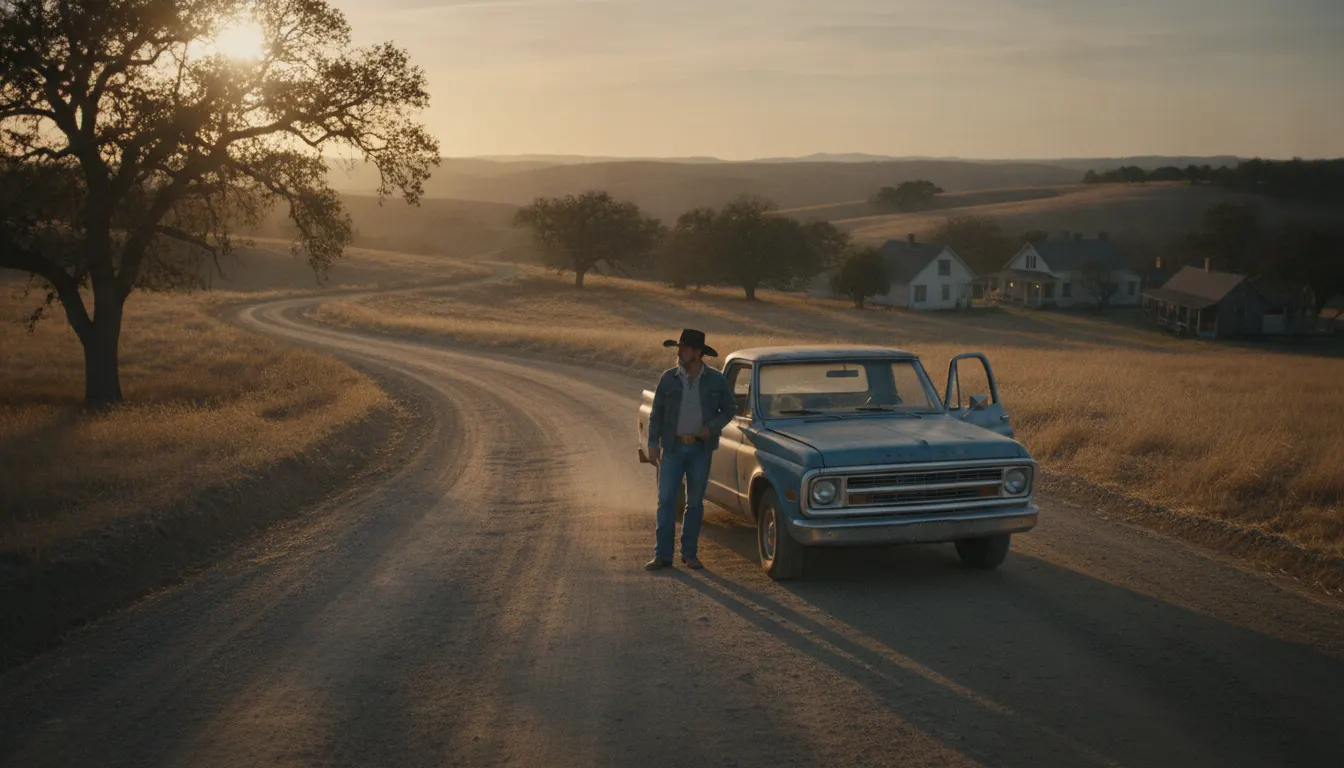
Tim McGraw classic country pickup MV aesthetic. Black cowboy hat, dusty country road, faded blue denim, sunset-lit pickup truck, hometown nostalgia.
countrypickup-trucknostalgiatim-mcgraw
LUT country-pickup-sunset-warm
WHEN TO USE
- Country music content for mainstream Nashville audiences who expect the genre's visual language
- Americana or rural lifestyle brand content for Southern, Midwestern, or Western American audiences
- Content referencing American rural identity, small-town values, and the truck-and-farm visual vocabulary
- Summer or outdoor brand content (beer, truck brands, outdoor apparel) that wants country genre associations
- Content where the golden hour palette and warm community imagery signal authentic American values
- Nostalgia content referencing late-1990s and 2000s Nashville country's commercial peak
WHEN NOT TO USE
- Country music content outside the mainstream Nashville register (Americana, alt-country, indie folk) where the genre aesthetic misrepresents the work
- Urban, coastal, or international content where the American rural imagery is a cultural mismatch
- Brand content for urban or luxury categories where the pickup-truck rural association conflicts with positioning
- Electronic, hip-hop, or genre content that doesn't carry the country music reference
SIGNATURE TECHNIQUES
How the look is made.
The moves a human crew would use to get here. Cue applies them for you, and knowing their names is how you ask for a change.
- 01Golden hour exterior
warm directional light at 20-30 degrees elevation, long shadows on dirt roads
- 02Pickup truck as prop and protagonist
clean F-150 or Silverado in bed, driving, or parked
- 03Rural landscape establishing
open fields, wooden fences, dirt roads receding to horizon
- 04Family and community
multiple generations, barbecue, Friday-night lights, small-town gathering
- 05Warm color grade
amber push to shadows, golden midtones, slightly desaturated sky
- 06Denim, boots, and Stetson
costume coordinated to landscape palette - earth tones, washed blue
- 07River or lake water
swimming hole, boat dock, sunset reflection as romantic setting
- 08Performance in landscape
artist singing on barn roof, truck bed, field - no stage visible
HISTORY & CONTEXT
Where it comes from.
Tim McGraw Country Pickup Truck Aesthetic
Mainstream country music video has, since the format's peak on CMT and TNN in the late 1980s and 1990s, developed a visual grammar as codified as any other music genre. The 'country pickup truck' aesthetic centers on a specific set of visual signifiers - the pickup truck itself, golden-hour rural landscapes, small-town community life, family, faith, and the specific American geography of the rural South and Midwest - that functions as both authentic cultural expression and genre marketing.
Tim McGraw and the Nashville Mainstream
Tim McGraw is perhaps the central figure of mainstream country music video aesthetics from 1993 through the 2010s. His video output, from 'Indian Outlaw' (1994) through 'Humble and Kind' (2016), charts the evolution of the aesthetic across two decades. 'Live Like You Were Dying' (2004, dir. Trey Fanjoy) is the genre template: the song is a meditation on mortality and appreciation, and the video matches it with imagery of extreme outdoor recreation (skydiving, mountain climbing, bull riding), family tenderness, and the warm golden-hour palette that Nashville video has made its own.
Director Trey Fanjoy has directed many of the defining Nashville video aesthetic moments, working with McGraw, Kenny Chesney, Keith Urban, and others to develop a language that is simultaneously aspirational and rural-authentic: the pickup truck is present but clean, the farm is picturesque rather than working, the golden hour is the genre's default color grade.
The Visual Grammar: Golden Hour, Rural Landscape, Community
Country music video's color language centers on the golden hour - the 40-60 minutes after sunrise and before sunset when directional warm light creates the long shadows, warm skin tones, and glowing landscape that Nashville video has claimed as its visual signature. The locations are typically Southern or Southwestern: dirt roads, wooden barns, open fields, small-town main streets, and always the pickup truck itself as both prop and protagonist.
Evolution and Contemporary Nashville
The contemporary country video aesthetic has fractured between traditional Nashville (Luke Bryan, Jason Aldean, Keith Urban maintaining the golden-hour pickup grammar), bro-country (Florida Georgia Line), and the insurgent Americana and alt-country aesthetics of Kacey Musgraves, Chris Stapleton, and Jason Isbell, who have brought a different, more austere visual sensibility.
NOTABLE WORKS
Where you have seen it.
Tim McGraw 'Indian Outlaw', 1994 (early career, rural setting template)
Trey Fanjoy dir., Kenny Chesney 'She Thinks My Tractor's Sexy', 1999
Tim McGraw and Faith Hill 'It's Your Love', 1997 (golden-hour duet aesthetic)
Alan Jackson 'Drive (For Daddy Gene)', 2002 (lake and childhood memory setting)
Garth Brooks 'The Dance', 1990 (early video era, rural romance archetype)
Keith Urban 'You'll Think of Me', 2004 (road and countryside aesthetic)
Luke Bryan 'Country Girl (Shake It for Me)', 2011 (bro-country variant)
THE RECIPE
The exact knobs
the renderer turns.
A Look is not a filter. It is a set of stored decisions the pipeline reads before it makes a single frame, so two videos in the same Look actually match.
SettingValue
GradeColour LUT applied to every frame
country-pickup-sunset-warmTransitionHow one shot becomes the next
soft cuts · 240ms · ease-in-outKen BurnsCamera move applied to stills
Slow push · 0.025 · centerTypographyDisplay / body / mono pairing
Bebas Neue · Inter · JetBrains MonoMusic moodWhat the bed under the voice sounds like
country-fiddle-pedal-steel · nashville-acoustic-vocalPrompt suffixAppended to every shot prompt in this Look
Tim McGraw classic country pickup MV, black cowboy hat, dusty country road, faded blue denim, sunset lit pickup truck, hometown nostalgiaPALETTE
Primary
#8A5A28
Secondary
#4A2F18
Accent
#C8A038
Text/Light
#2A1F10
Text/Dark
#FFE8B0
BG 900
#1A1208
BG 800
#2A1F10
RELATED LOOKS
Next to it on the shelf.
Your first cut
is on us.
+ New videoFree plan · no card · 1080p export