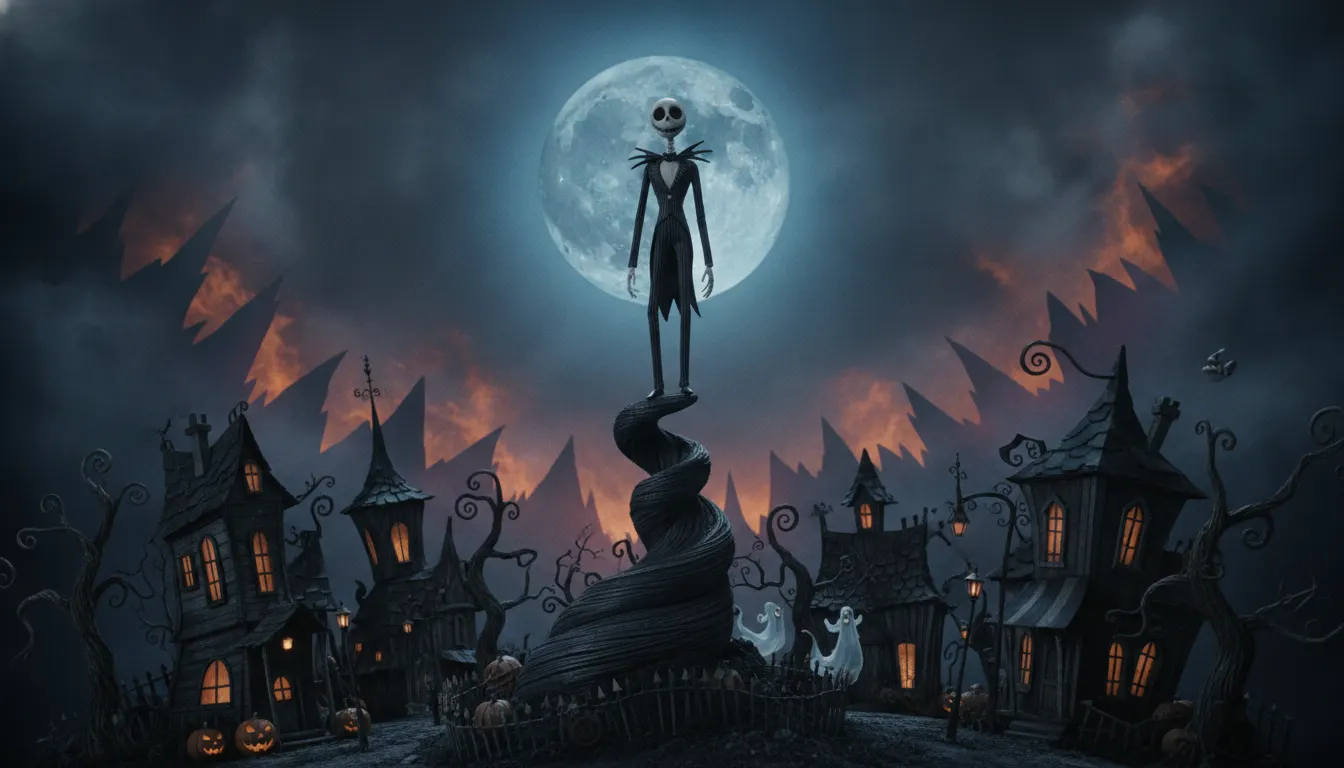
The Nightmare Before Christmas (1993, dir. Henry Selick, story by Tim Burton)
the primary reference
Nightmare Before Christmas Halloween-Town puppet stop motion. Spiral-hill silhouettes, Jack Skellington pinstripes, replacement-head animation, Danny Elfman gothic whimsy.
The moves a human crew would use to get here. Cue applies them for you, and knowing their names is how you ask for a change.
buildings, trees, and landscapes from spiral and curve geometry
black, white, grey with symbolic sickly yellow-green and orange
face replacement system: pre-Laika standard for puppet expression animation
all movement choreographed to score from pre-production
monochrome Halloween Town vs. hyper-saturated Christmas world
architecture expressing collective inhabitant personality
Henry Selick's The Nightmare Before Christmas (1993) - story and co-production by Tim Burton, directed by Henry Selick, score and songs by Danny Elfman - is the film that defined gothic stop-motion for a generation. Made by Disney with Selick's team in San Francisco over three years, the film deployed 227 puppets (including 400 different faces for Jack Skellington alone), 120 crew members, and 109,440 frames of exposed film to create one of cinema's most distinctive visual worlds.
Halloween Town is the film's great visual achievement: an entirely consistent architectural world built from curvilinear Gothic geometry. Everything curves. Buildings lean. Towers spiral. Trees branch in perfect symmetrical spirals. The palette is restricted to black, white, grey, and the occasional sickly yellow-green or Halloween orange - with colour used sparingly and symbolically (the Christmas world, when finally depicted, is hyper-saturated to contrast).
Jack Skellington is the film's design landmark: a human skeleton with an elongated black-and-white pinstripe body and enormous expressive eyes. The character was designed by Burton specifically for its dual nature - the skeletal form of death wearing the costume of melancholy and emotional depth. His movement is all angles and long limbs: slow, deliberate, and poetic. The film uses this contrast between Jack's angular dignity and the lumpy, rounded masses of the Halloween Town citizenry as its primary visual rhythm.
Selick's team animated 24 stages simultaneously at the peak of production. Jack's replacement face system - 400 individual sculpted faces for expression changes - remained the industry standard until Laika's 3D printing pipeline superseded it. The film was shot on 35mm film, with each frame requiring up to six hours of preparation.
the primary reference
direct aesthetic sequel
Selick's Gothic puppet tradition continued independently
same team, different Burton source material
1982
source material and design Bible
direct visual ancestor of curvilinear Gothic character design
shared curvilinear Gothic architecture vocabulary
tonal musical ancestor to the score
A Look is not a filter. It is a set of stored decisions the pipeline reads before it makes a single frame, so two videos in the same Look actually match.
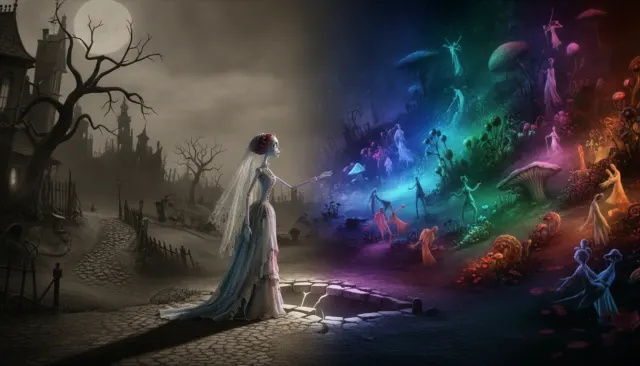 Puppet Stop MotionTim Burton Corpse Bride
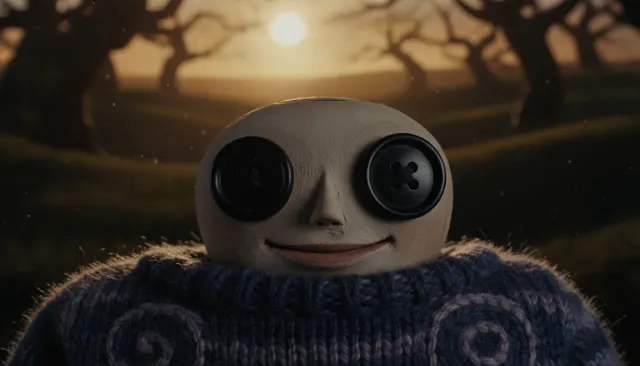 Laika ExpansionLaika Coraline Button Puppet
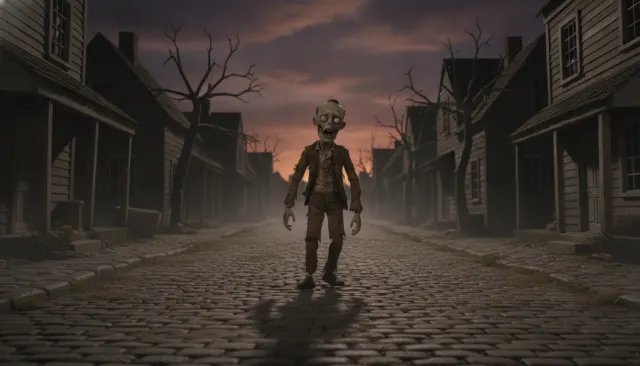 Puppet Stop MotionLaika ParaNorman
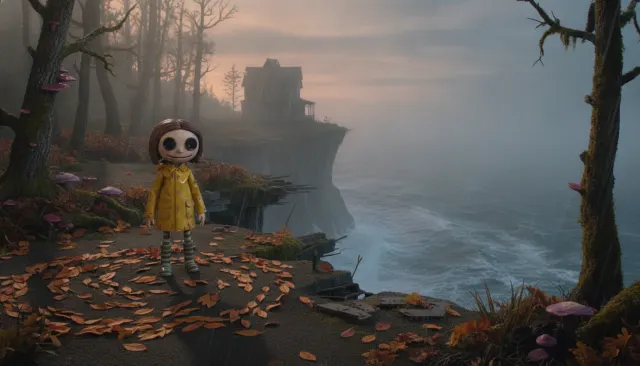 Puppet Stop MotionLaika Coraline Spooky Stop Motion
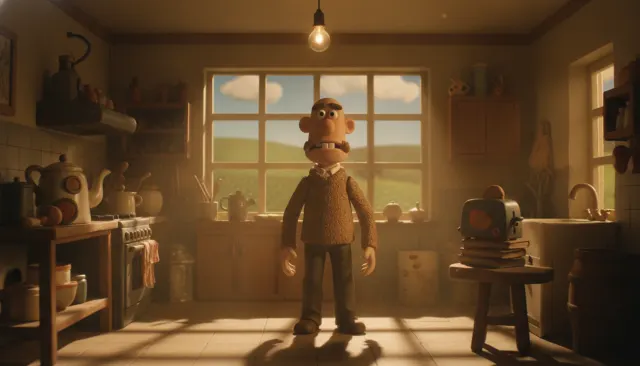 ClaymationAardman Wallace and Gromit Claymation
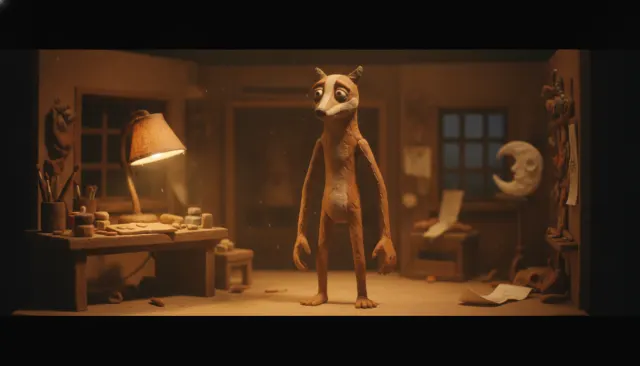 ClaymationPlasticine Classic Clay Puppet
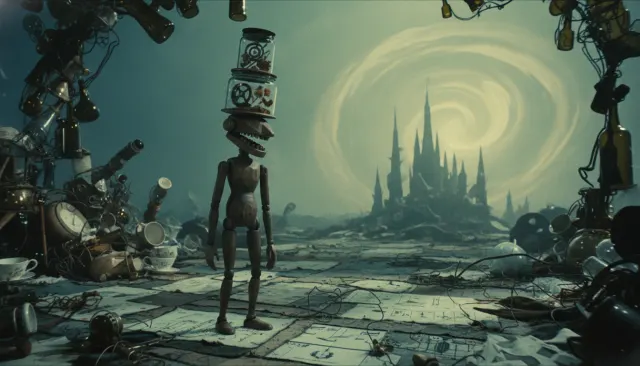 Traditional Puppet ExtendedCzech Svankmajer Surreal Puppet
 Harryhausen DynamationRay Harryhausen Dynamation