Coraline (2009, dir. Henry Selick, Laika Studios)
the defining reference
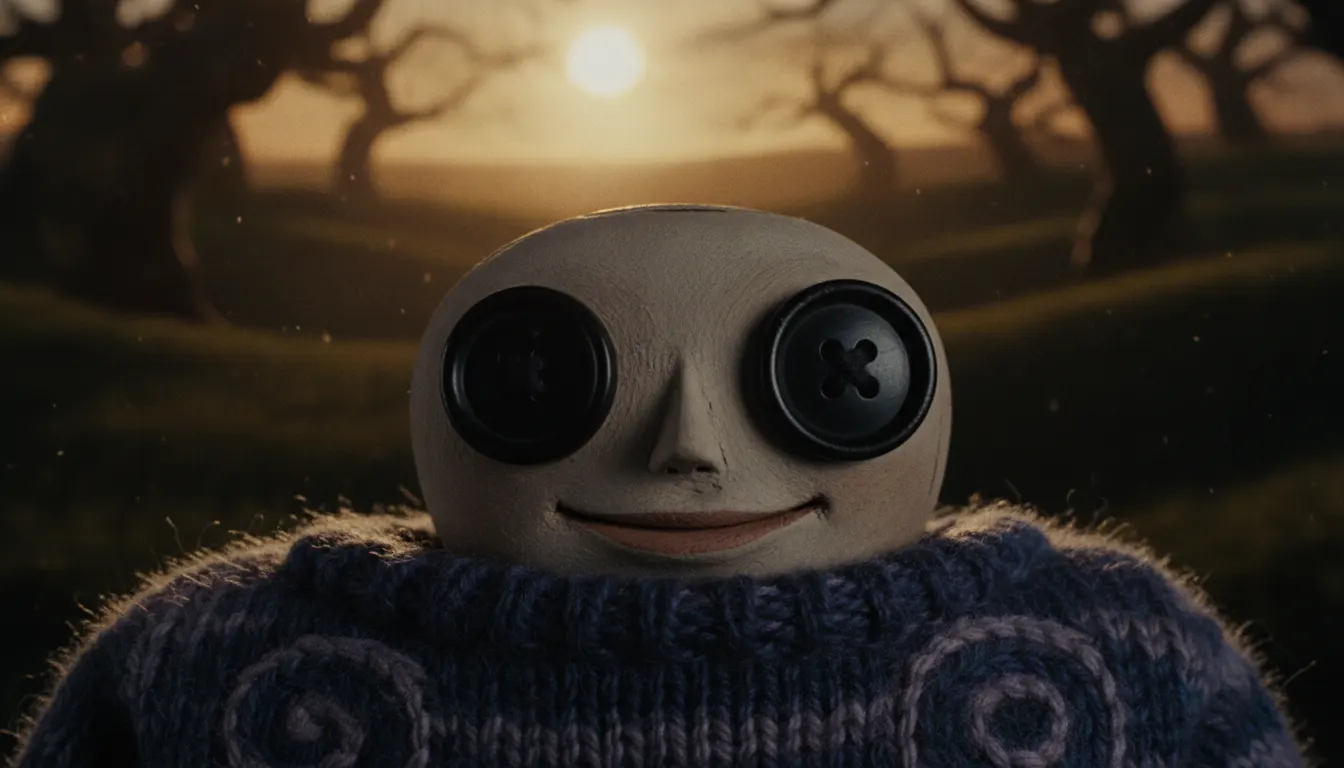
Laika Coraline button-eye puppet close-up variant. Macro craft focus on knitted-sweater puppet wardrobe, button-eye uncanny detail, Henry Selick replacement-face animation.
The moves a human crew would use to get here. Cue applies them for you, and knowing their names is how you ask for a change.
printed replacement face system with thousands of unique facial expression parts
eye motif as narrative visual symbol of the uncanny Other World
splitting: desaturated real world vs. hyper-saturated Other World
focus long-lens photography
crafted miniature costumes in real fabric, knitting, felt, and woven wool
by-frame fabric and texture continuity across thousands of animated frames
Henry Selick's Coraline (2009), adapted from Neil Gaiman's 2002 novella, established a new benchmark for puppet stop-motion filmmaking. Produced by Laika Studios in Portland, Oregon, the film introduced 3D-printed replacement faces at industrial scale - over 200,000 individual face parts were fabricated using a ZPrinter to achieve the most nuanced facial expressions ever captured in stop-motion. The iconic button eyes of the Other Mother and the parallel "Other World" characters became the film's defining visual motif: glassy, reflective, unsettling.
The Coraline aesthetic is built on a deliberate contrast between the real and the idealized. The "real world" Coraline inhabits uses desaturated, muddy earth tones - grey walls, damp greens, washed-out fabrics. The Other World gleams with saturated jewel tones, impossible garden arrangements, and theatrical costume-party color. This chromatic split gives the look its psychological unease: the beautiful world is the dangerous one.
Puppets have visible seams, wire armatures hinted at through subtle posing, and hand-crafted costumes with genuine texture - knitted sweaters, layered felt, woven wool. Sets are densely built miniatures at approximately 1:4 scale, using forced perspective and deep-focus photography to read as lived-in domestic spaces. The cinematography by Pete Kozachik emphasizes shallow depth-of-field with long lenses, making foreground characters pop against meticulously hand-dressed backgrounds.
the defining reference
peak jewel-tone chromatic contrast
continued evolution of 3D-printed puppet faces
direct aesthetic predecessor
same fabrication pipeline, different palette
A Look is not a filter. It is a set of stored decisions the pipeline reads before it makes a single frame, so two videos in the same Look actually match.
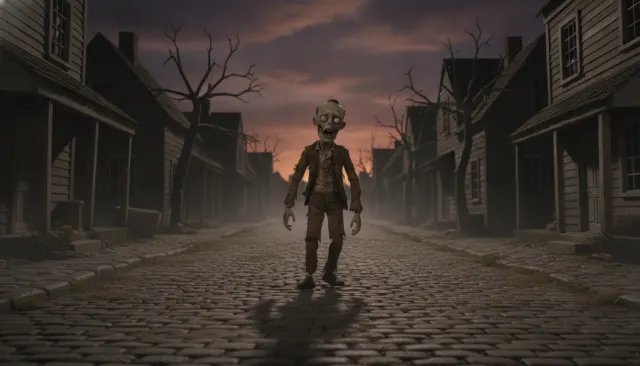 Puppet Stop MotionLaika ParaNorman
 Puppet Stop MotionLaika Kubo Two Strings Painterly Puppet
 Puppet Stop MotionTim Burton Nightmare Before Christmas
 Puppet Stop MotionTim Burton Corpse Bride
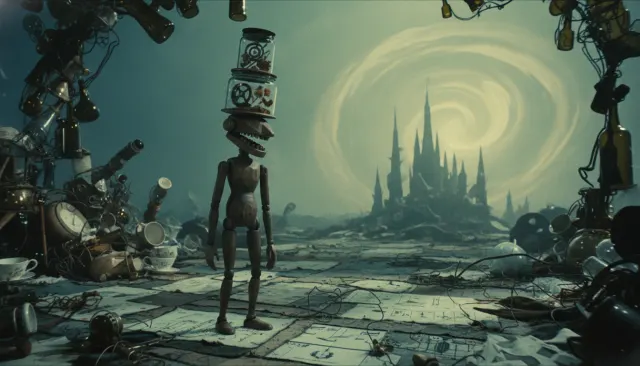 Traditional Puppet ExtendedCzech Svankmajer Surreal Puppet
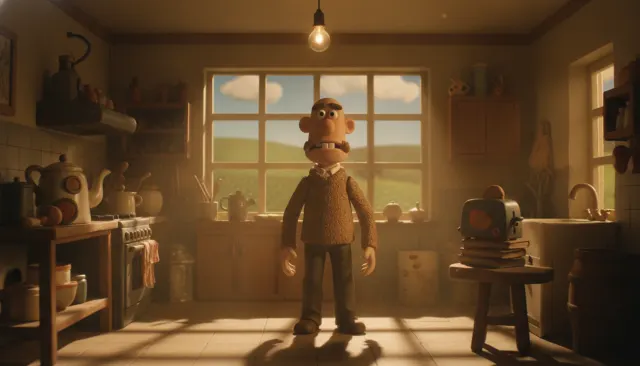 ClaymationAardman Wallace and Gromit Claymation
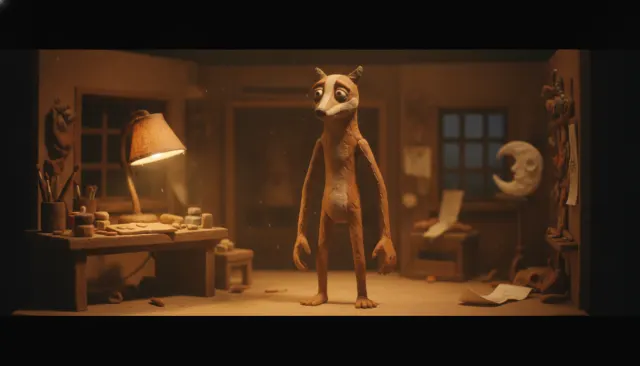 ClaymationPlasticine Classic Clay Puppet
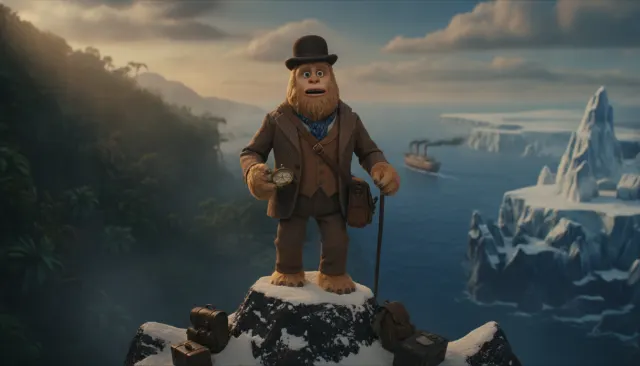 Laika ExpansionLaika Missing Link 2019