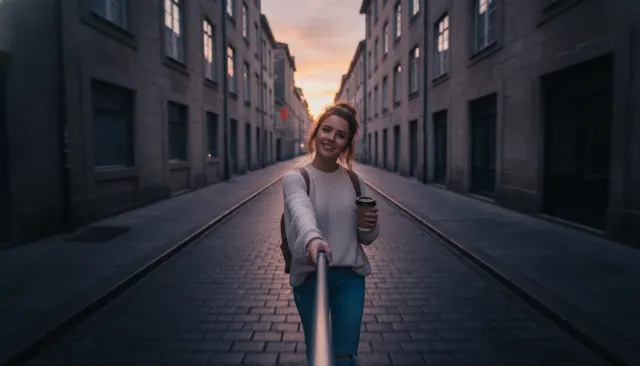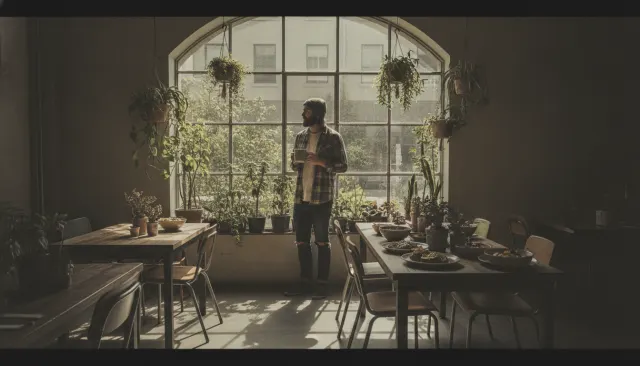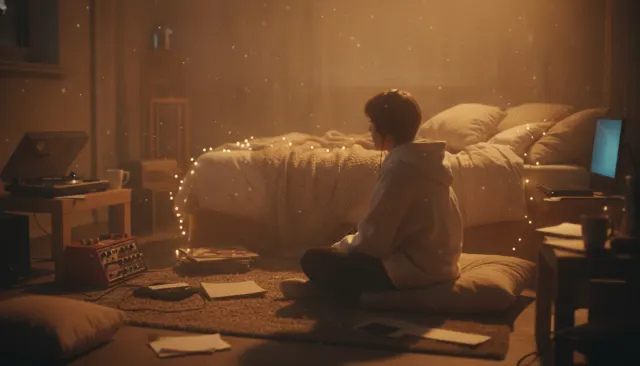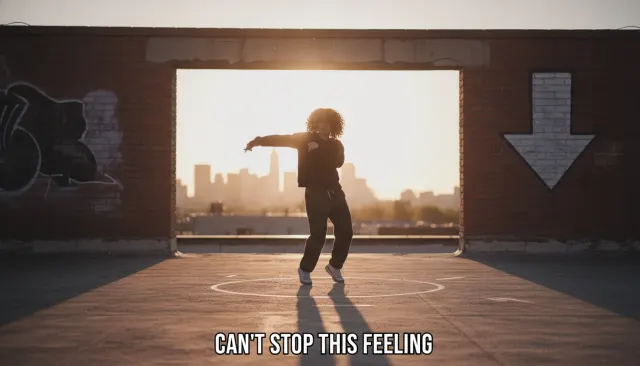
Khaby Lame silent reaction format
Khaby Lame · 2020
The minimalist gesture-comedy that defined TikTok's wordless visual humor grammar
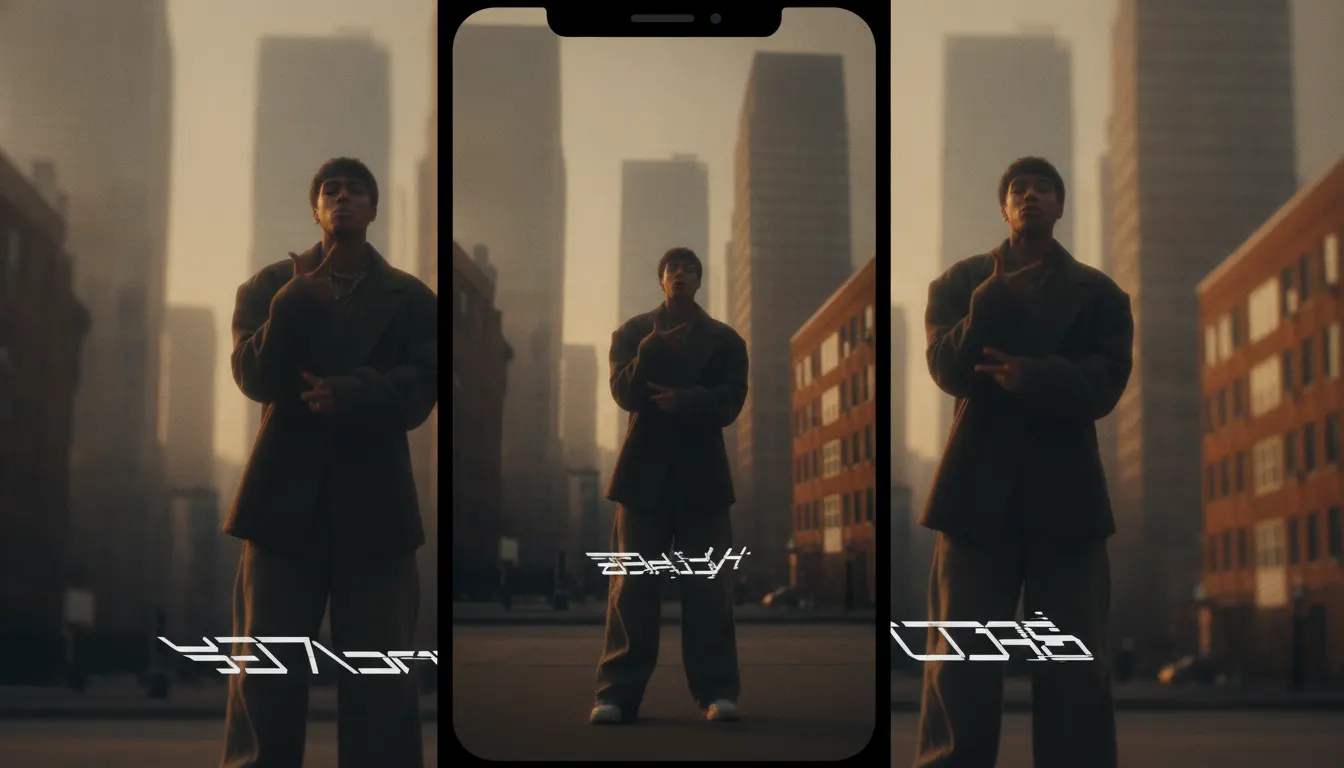
Modern TikTok vertical 9:16 native. Phone-front-cam HDR, captions burned in, trending-sound lipsync, fast-cut transitions.
The moves a human crew would use to get here. Cue applies them for you, and knowing their names is how you ask for a change.
Subject centered with text zone preserved at bottom quarter; vertical framing makes horizontal content feel deliberately old-fashioned by contrast.
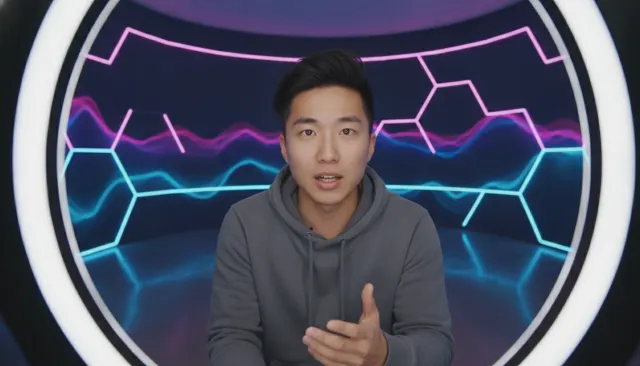
Circular ring-light reflected in eyes signals self-produced authenticity and marks content as creator-made.
Bold word-highlighting captions in Impact-style type that track speech syllable by syllable, enabling silent viewing.
First three seconds deliver the most dramatic or curiosity-inducing moment to stop the scroll before context is established.
Cuts that hold subject in the same screen position while changing time, location, or costume - creating a disorienting continuity effect.
Edits timed to the downbeat of a platform-trending track, coupling visual rhythm to the audio meme economy.
The TikTok modern vertical look is the dominant visual grammar of short-form social video in the mid-2020s. Born from the smartphone camera, shaped by algorithmic attention mechanics, and refined by millions of creators, it represents a genuinely new cinematographic tradition - one built entirely for the 9:16 aspect ratio, the scrolling thumb, and the first-three-seconds retention mechanic.
TikTok vertical content is native to the phone camera's front or rear sensor - typically a wide-angle 26-28mm equivalent lens with HDR processing. The front-facing camera has produced its own aesthetic: slight upward-tilt, ring-light catchlights in the eyes, shallow depth of field via Portrait Mode, and often a subtle skin-smoothing softness. Rear cameras produce crisper, more cinematic results with slightly more natural color science. Both are shot in 1080x1920 or 4K vertical resolution with the subject centered in the upper or middle third of the frame, leaving room for on-screen captions in the lower portion.
Burned-in captions are not optional in the TikTok aesthetic - they are structural. Auto-generated captions via TikTok's or CapCut's transcription engine, styled in bold white or yellow Impact-adjacent text with black drop shadows or outlines, have become as much a visual signature as the aspect ratio itself. Creators using CapCut or InShot add kinetic text that highlights individual words as they are spoken. The text layer is not supplementary but primary - many viewers watch without audio.
The TikTok transition vocabulary is distinct from traditional editing. Whip-cut transitions, POV-shift cuts that begin mid-motion, jump cuts that preserve screen position while changing costume or scene, and the "point-to-camera" beat that holds viewer attention are all native to the form. The aesthetic rewards editing that feels energetic and propulsive without the longer breathing room of traditional film editing.
Creators apply LUTs or in-app color filters that push contrast and vibrance. The CapCut "Moody," "Film," and "Futuristic" presets have spread widely enough to constitute a shared color grammar. Skin tones are generally warm and smoothed; backgrounds often have subtle vignetting. Unlike film emulation LUTs, TikTok color tends toward punchy digital clarity rather than grain or organic imperfection.
The look is inseparable from its audio culture. Trending sounds, original audio memes, voiceover narration, and text-to-speech are tightly coupled to visual editing rhythm. Music-sync cuts - where edits land on downbeats of a trending track - are standard practice. The visual look signals to viewers a contract: this content follows current rhythms and is fluent in the platform's vernacular.
Khaby Lame · 2020
The minimalist gesture-comedy that defined TikTok's wordless visual humor grammar
Various creators · 2021
Trending-sound format where vertical framing and caption text carry the humor entirely
CapCut ecosystem · 2022
Platform-wide adoption of template-driven editing defined the TikTok color and transition grammar
Beauty creators · 2021
Front-cam ring-light aesthetic that exported TikTok's self-presentation grammar to all other platforms
Fan community · 2023
Concert vertical footage that demonstrated how the look functions even for premium live event documentation
A Look is not a filter. It is a set of stored decisions the pipeline reads before it makes a single frame, so two videos in the same Look actually match.