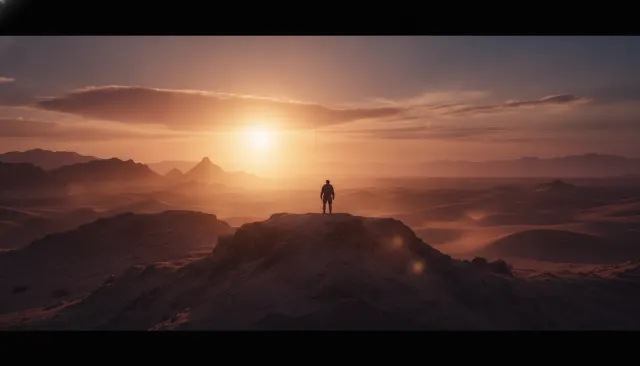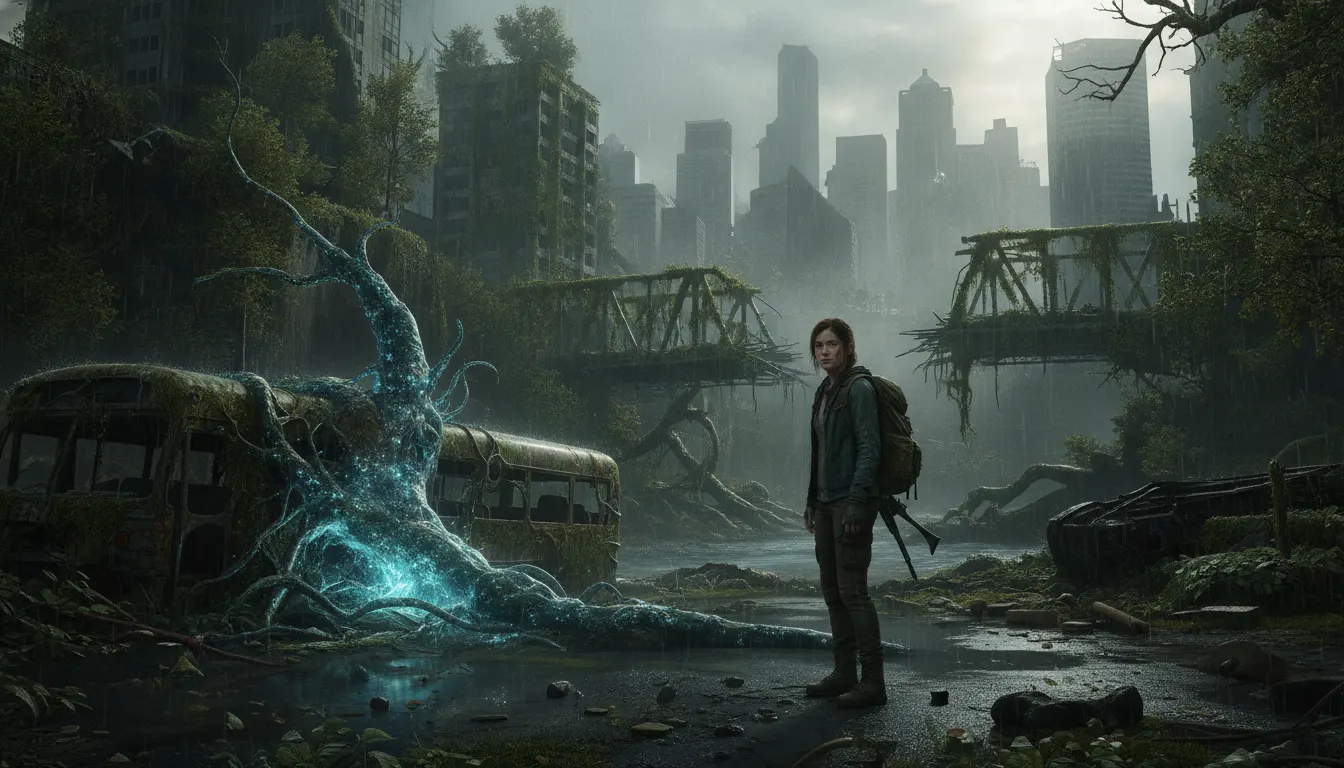
The Last of Us (Naughty Dog, 2013)
defining the photoreal grim game aesthetic
The Last of Us Part II Naughty Dog photoreal-grim aesthetic. Post-pandemic Seattle overgrowth, performance-capture face fidelity, emotional close-up cinematography.
The moves a human crew would use to get here. Cue applies them for you, and knowing their names is how you ask for a change.
moss, vine, root, and water coverage across all urban surfaces
space reflections in standing water and rain-wet surfaces
hour contrast shots: warm amber backlight against muted interior foregrounds
The Last of Us (Naughty Dog, 2013) and The Last of Us Part II (Naughty Dog, 2020) together constitute the defining statement of photorealistic game storytelling. Where Uncharted used photorealism as spectacle, The Last of Us uses it as an instrument of empathy - every rendering decision serves the game's inquiry into grief, love, and survival in a post-pandemic world.
The same Naughty Dog engine that powered Uncharted was overhauled for The Last of Us. The key shift was toward naturalistic lighting rather than spectacular HDR bloom. The Last of Us uses a more diffuse global illumination model - light bounces softly through interiors, creating the gradual fill that photographers associate with overcast window light. Skin materials use subsurface scattering tuned to feel fleshy and fragile rather than heroically luminous.
The environmental art direction specifically avoided the Uncharted tendency toward saturated exotic locales. The Last of Us's palette is muted: grey concrete, dead brown grass, rust, ash. The only saturated elements are organic - the green of nature reclaiming urban space, the red of blood, the amber of golden-hour light through broken windows. This contrast makes the rare moments of natural beauty (a giraffe against a golden sky, fireflies in a flooded basement) devastating.
The Last of Us's most distinctive visual contribution is its overgrown post-apocalyptic environment design. Twenty years after the cordyceps outbreak, American cities have been substantially reclaimed by vegetation. Naughty Dog's environment artists created building facades covered in layered moss, vines threading through car chassis, and tree roots cracking and lifting street pavement. This required extensive botanical reference and procedural placement tooling to achieve the density of overgrowth without repetition.
Part II (2020) extended this further. Seattle's post-outbreak environments included flooded lower levels, mature second-growth forest inside shopping malls, and stadium-converted settlements with their own internal ecosystems. The lighting model was further refined with improved screen-space reflections in standing water and more convincing volumetric fog in interior spaces.
Both games made extensive use of motion capture and facial performance capture. The technology required the rendering pipeline to handle facial animation at a fidelity where individual muscle group movements were visible. Normal maps encoded skin surface variation at the pore level. The result set a benchmark for emotionally communicative digital human faces that the TV adaptation (HBO, 2023) measured itself against.
defining the photoreal grim game aesthetic
technical and emotional apex
live-action adaptation measuring against game's visual language
parallel photoreal post-apocalyptic approach
comparable mature narrative photorealism
overgrown world with contrasting color strategy
A Look is not a filter. It is a set of stored decisions the pipeline reads before it makes a single frame, so two videos in the same Look actually match.