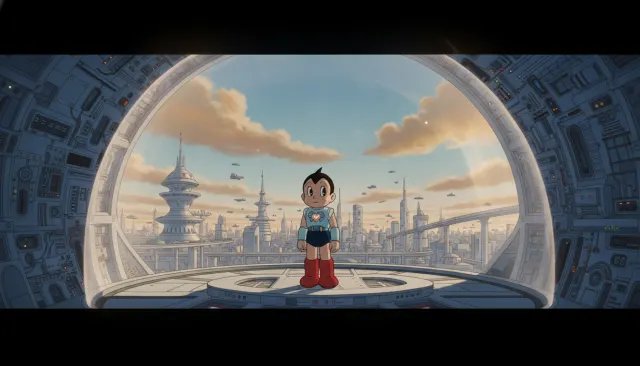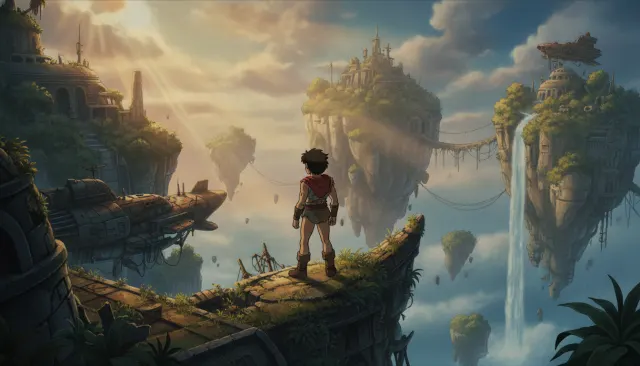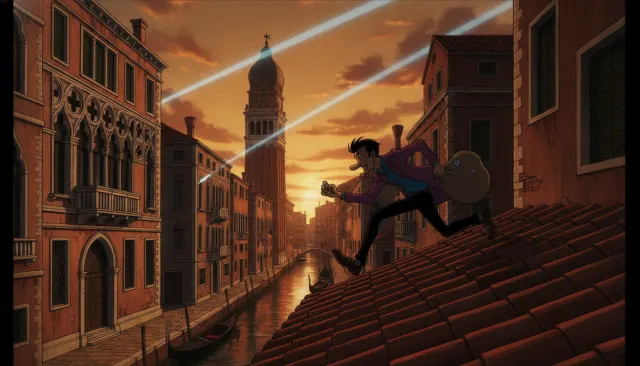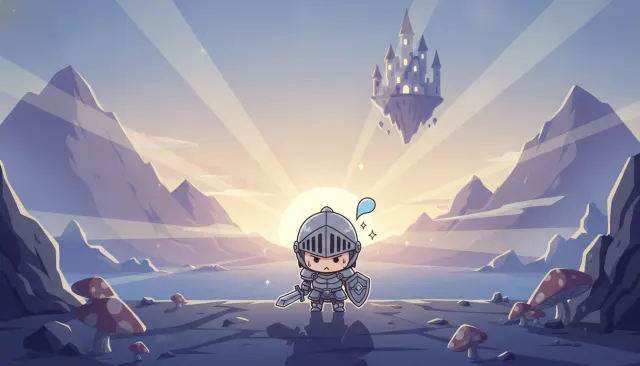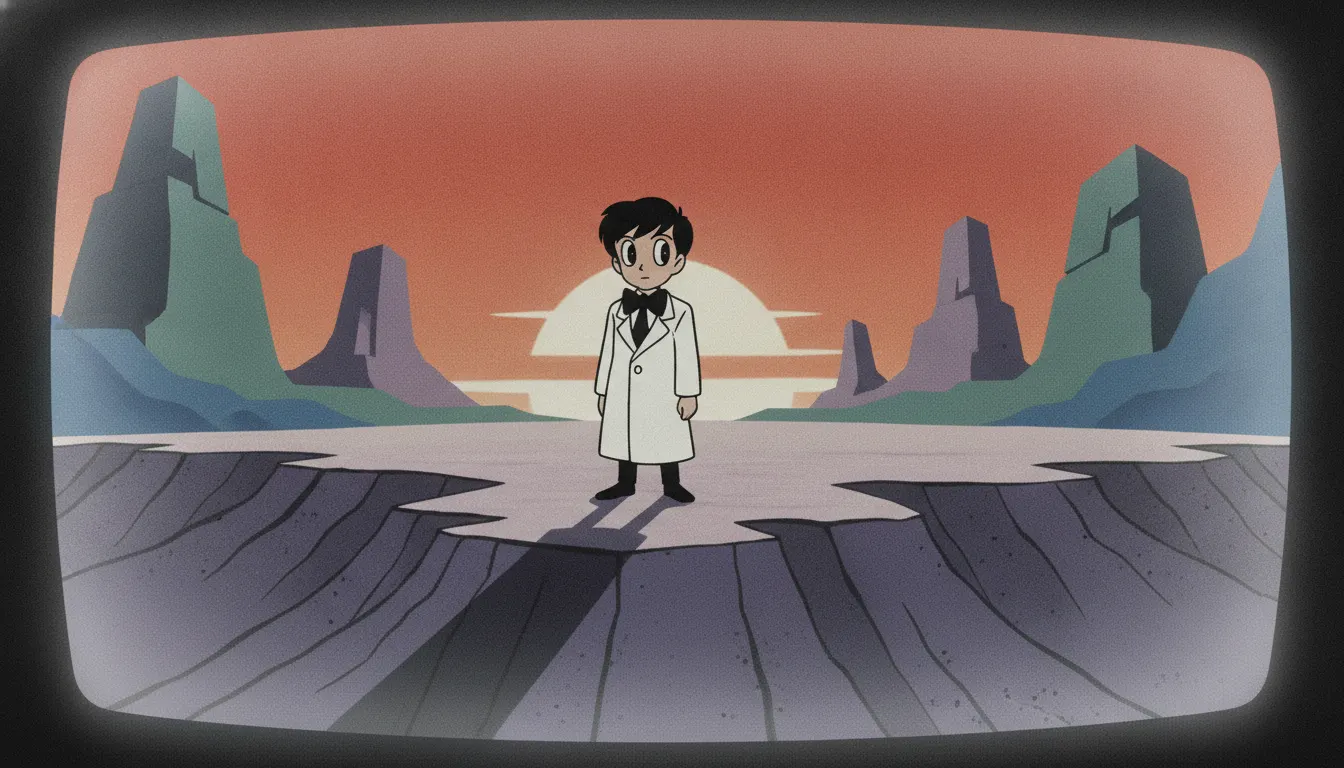
Astro Boy / Tetsuwan Atom manga (1952-1968) + anime (1963-1966)
Osamu Tezuka / Mushi Production
Osamu Tezuka (Astro Boy, Kimba, Black Jack) 60s register. Big-eyed simple linework, flat color, limited animation, vintage TV charm.
The moves a human crew would use to get here. Cue applies them for you, and knowing their names is how you ask for a change.
- large eyes dominate, nose reduced to a bump or point
held backgrounds with moving mouth and eye layer on a separately-celled face
deformed) proportion shifts for comedy: characters shrink to three-head-heights for comedic reaction shots
shaped iris: irises drawn as pointed star shapes when characters are excited or in love, a Tezuka innovation replicated across generations
Osamu Tezuka (1928-1989) is the single most important figure in the history of manga and anime. Trained as a physician but drawn to comics from childhood, Tezuka synthesized his love of Disney animation, Fleischer Studios, and European cinema into a new visual language for manga that defined the medium's grammar and directly established the visual foundation for all subsequent anime.
Tezuka's most transformative contribution was the application of cinematic grammar to manga: close-ups, wide shots, tracking shots, and montage sequences rendered as panel sequences. Before Tezuka, Japanese kamishibai (street theater picture cards) and early manga used static, flat compositions. Tezuka introduced depth, foreshortening, and dramatic lighting borrowed from his obsessive study of Disney and German Expressionist film.
Tezuka's character design borrowed the large, rounded eye from Betty Boop and Disney's Bambi (1942), encoding expressive range and psychological depth into a simple shape. This became the foundational grammar of anime character design -- virtually every anime eye drawn in the subsequent 70 years derives from Tezuka's original codification. His character designs used a round head, simplified body, and expressive face that could carry complex emotion within the constraints of weekly magazine printing.
Tetsuwan Atom (Astro Boy, manga 1952-1968; anime 1963-1966, Mushi Production) was the first successful Japanese television anime -- Tezuka's own studio produced 193 episodes. The TV anime translated Tezuka's black-and-white manga designs into a limited animation style that became the template for television anime production. Kimba the White Lion (1965-1966) introduced color anime. Black Jack (manga 1973-1983) demonstrated Tezuka's range toward darker, morally complex storytelling while maintaining the foundational visual grammar.
Tezuka founded Mushi Production in 1961 to produce anime adaptations of his work. The studio's production methods -- streamlined limited animation, held cels, and recycled sequences -- were economically driven but became the visual language of TV anime. These compromises shaped what audiences understand 'anime' to look like.
Every major manga artist and anime director of the subsequent generation studied Tezuka's work. Go Nagai (Mazinger Z), Shotaro Ishinomori (Cyborg 009), Leiji Matsumoto (Space Battleship Yamato), and eventually Osamu Tezuka's disciples across generations all trace their visual literacy to his grammar.
Tezuka was unusual among 1950s-1970s Japanese artists in his deep engagement with international popular culture. He spent time in New York studying American comics and animation, and his work explicitly references and dialogues with Western traditions. This internationalism is reflected in the visual grammar of his work -- the Disney eye is the most obvious element, but his panel compositions also reference European bande dessinee and American newspaper strips. The result is a visual language that translated across cultural contexts more readily than contemporary Japanese manga, which is part of why Astro Boy became the first anime series to achieve significant international distribution through American Astronaut Boy adaptations. This cultural permeability was foundational to anime's eventual global reach.
Osamu Tezuka / Mushi Production
Mushi Production, first color anime series
first shoujo manga, Tezuka
Osamu Tezuka, darker mature work
Osamu Tezuka, lifetime masterwork manga series
Osamu Tezuka, historical epic
2001
Madhouse, posthumous Tezuka adaptation, dir. Rintaro
2009
Imagi Animation / Summit Entertainment, CGI remake
A Look is not a filter. It is a set of stored decisions the pipeline reads before it makes a single frame, so two videos in the same Look actually match.