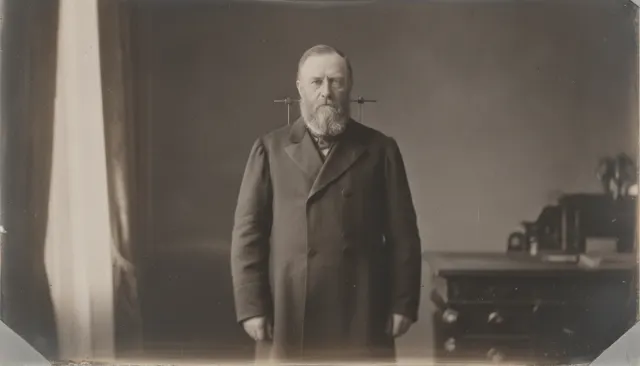
Walter Potter
*The Death and Burial of Cock Robin* (1861, 98 birds, Brighton Museum)
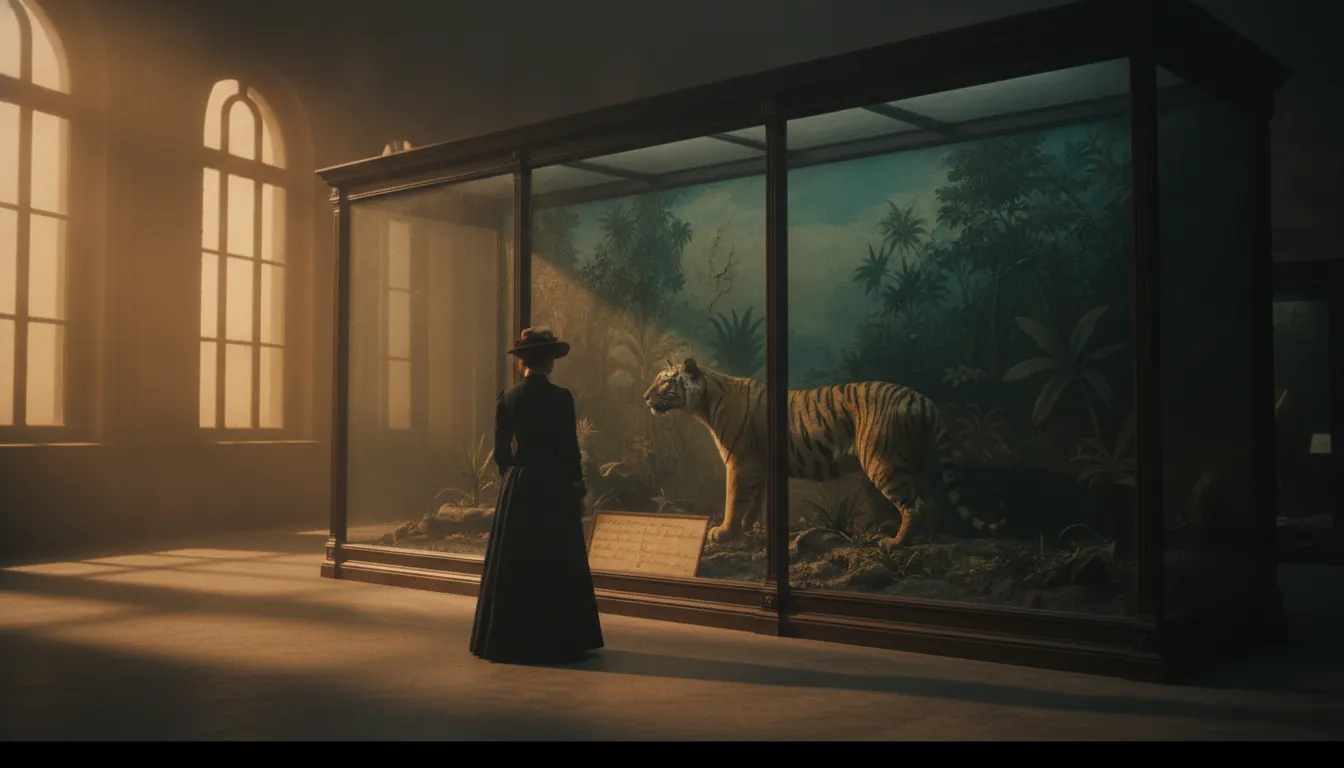
Victorian natural-history museum taxidermy diorama aesthetic. Mounted specimen in glass case with painted backdrop, faded label card, slightly uncanny preserved-life feel.
The moves a human crew would use to get here. Cue applies them for you, and knowing their names is how you ask for a change.
stained wooden base with brass nameplate
lettered or typeset scientific name and collection date
left corner of the composition
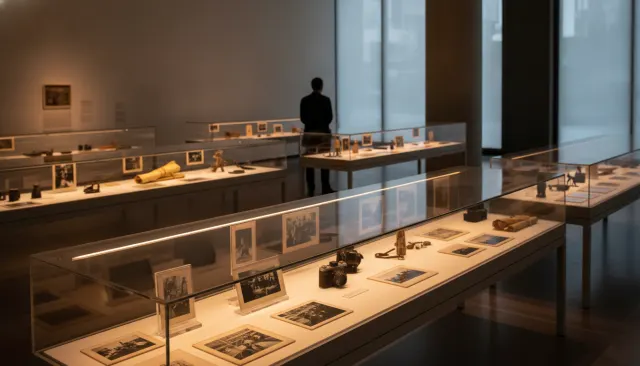
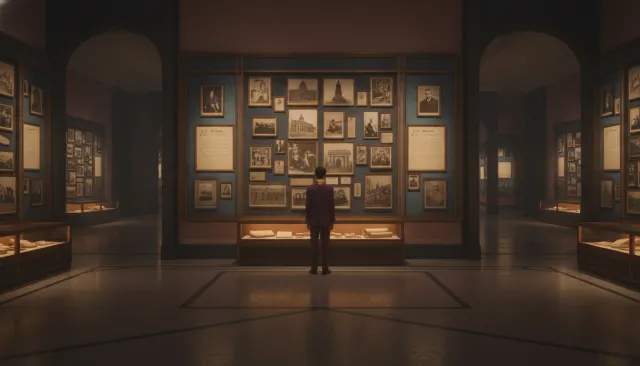
The taxidermy mounted museum style deploys the visual grammar of natural history museum specimen display: animals positioned in formal attitudes on mahogany bases with brass nameplates, placed under raking directional light in glass cases or against neutral backgrounds with catalog numbers and Linnaean classification labels. The aesthetic is Victorian scientific authority crossed with the uncanny – these are real creatures made permanent, their biological impermanence overridden by the preservationist's art.
Walter Potter (1835–1918) of Bramber, Sussex, created the most extraordinary Victorian tableau taxidermy: anthropomorphic scenes of animals in human domestic settings. His The Kittens' Wedding (1890) showed 20 kittens in human wedding dress; The Upper Ten depicted squirrels playing cricket; The Death and Burial of Cock Robin (1861, still extant, Brighton Museum) staged a Victorian funeral using 98 birds. Potter's work moved taxidermy from natural science into narrative art, though he was working within Victorian natural history culture rather than against it.
The natural history museums of the 19th century – the British Natural History Museum (opened 1881, designed by Alfred Waterhouse), the American Museum of Natural History (opened 1877, New York), the Smithsonian Natural History Museum (opened 1910) – established the visual standard for scientific display taxidermy: accurate pose, faithful coat/feather preservation, habitat context in diorama backgrounds. Taxidermists like Carl Akeley (1864–1926) at the American Museum of Natural History elevated the craft to fine art, creating the habitat dioramas (Akeley Hall of African Mammals, opened 1936) that remain among the greatest achievements of 3D natural history display.
Polly Morgan (British, born 1980) revived fine-art taxidermy as a contemporary practice from around 2005. Her work places preserved birds and animals in unexpected domestic and symbolic contexts: birds hatching from light bulbs, rabbits in hammocks, starlings nesting in telephone handsets. Her 2009 exhibition Psychopomps at Haunch of Venison Gallery, London established the territory. Morgan is explicit about her attraction to the Victorian precedent, particularly Potter's narrative ambition.
Damien Hirst's Natural History series (1991–2013) pushed preservation display into fine art gallery contexts with industrial-scale ambition. The Physical Impossibility of Death in the Mind of Someone Living (1991, Charles Saatchi collection, now Metropolitan Museum) placed a 14-foot tiger shark in 5% formaldehyde solution inside a vitrine that replicated the visual logic of natural history display – the glass case, the object preserved against time, the label with the clinical title – but at gallery scale and using a subject (a shark, death itself) that overwhelmed the institutional frame's claim to calm taxonomic authority. Hirst's work demonstrated that the museum display aesthetic could contain terror as well as education.
For photographers and directors working with the taxidermy-museum look, Hirst's approach offers a useful principle: the formality of the display grammar (glass, label, direct lighting) is effective precisely because it is applied to subjects that exceed what the grammar was designed to contain.
*The Death and Burial of Cock Robin* (1861, 98 birds, Brighton Museum)
*The Kittens' Wedding* (1890, Bramber Museum)
Akeley Hall of African Mammals dioramas (American Museum of Natural History, opened 1936)
*Psychopomps* exhibition (2009, Haunch of Venison Gallery London)
*The Physical Impossibility of Death in the Mind of Someone Living* (1991, shark in formaldehyde)
Victorian natural history taxidermists, supplied British and international museums (1800s–1900s)
photograph series of natural history museum specimen drawers (1990s–2000s)
A Look is not a filter. It is a set of stored decisions the pipeline reads before it makes a single frame, so two videos in the same Look actually match.