Joseph Cornell
*Untitled (Soap Bubble Set)* (1936, MoMA New York)
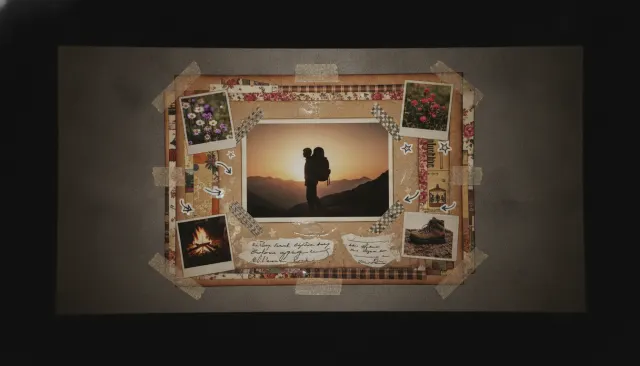
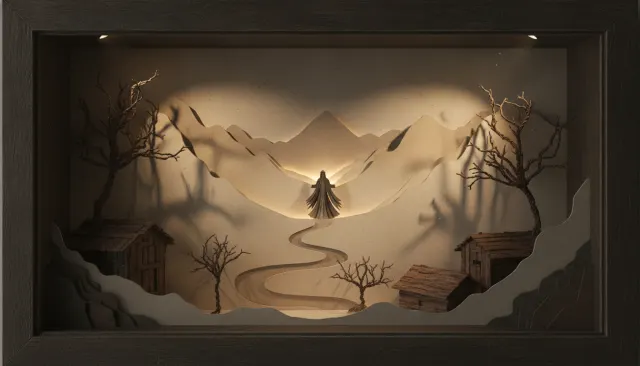
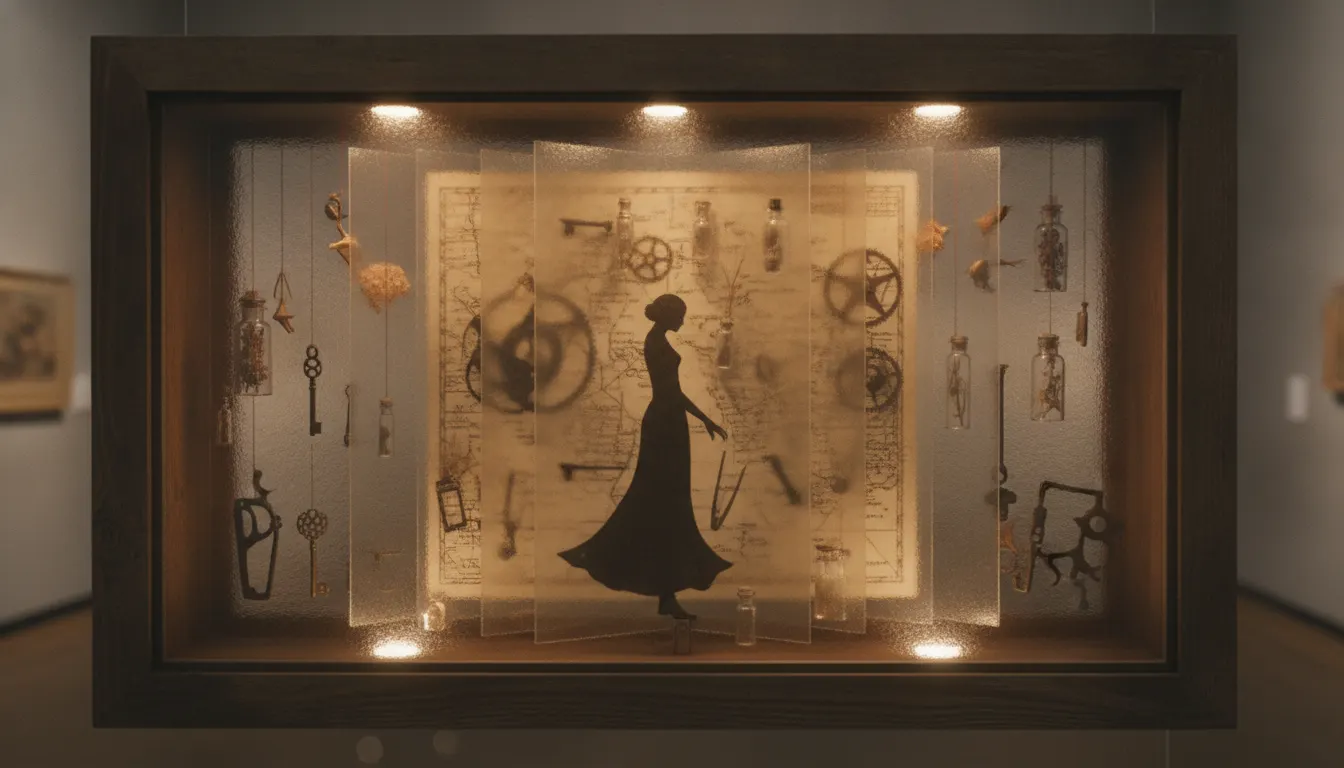
Joseph Cornell shadowbox assemblage. Photograph mounted inside a wooden shadowbox with three-dimensional found objects, layered glass, soft museum lighting, tactile depth.
The moves a human crew would use to get here. Cue applies them for you, and knowing their names is how you ask for a change.
foreground objects, midground photographs, background painted or printed surface
stamps, maps, star charts, pressed botanicals
The photo-in-shadowbox 3D collage places photographic prints, ephemera, objects, and found materials inside a recessed frame – a deep box with a glass front – creating compositions where depth is real rather than simulated. The glass separates the viewer from the contents while the box depth allows multiple planes of material to coexist, with foreground objects casting shadows on photographs behind them.
The definitive practitioner of the form was Joseph Cornell (1903–1972), a self-taught American artist who never left New York but created dense encyclopedic worlds inside small wooden boxes. From the 1930s through the early 1970s, Cornell assembled found photographs (often of Renaissance paintings or Hollywood actresses), dried flowers, astronomical charts, blue glass fragments, sand, and parakeet imagery into constructions that read simultaneously as memory theaters, toy theaters, and surrealist poetry. His Untitled (Soap Bubble Set) (1936) and the Hotel series (1950s) established the grammar of the form. Cornell worked from materials sourced in Manhattan's bookshops and Woolworth stores; the humble origin of each element intensified its transformation inside the box.
Marcel Duchamp's Boite-en-valise (1935–1941) – a portable museum carrying miniature reproductions of his own works – explored related territory: the box as complete self-contained world.
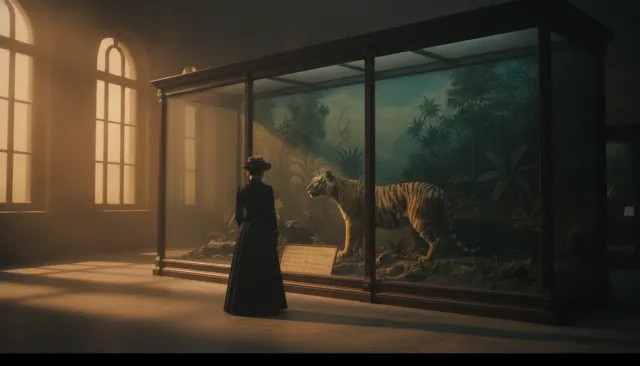
Polly Morgan (British, active 2005–present) creates naturalistic tableau assemblages using taxidermy inside box frames, placing preserved birds and animals in domestic or narrative scenarios. Her work extends the tradition while shifting Cornell's melancholy into something more ambiguous. Mark Dion's curiosity cabinet installations at the Natural History Museum Tate (2009) revived Wunderkammer sensibility in institutional art.
In commercial and editorial photography, the shadowbox format appears in product photography for luxury goods, perfume, and jewelry, where depth and material richness substitute for conventional flat lay. Stop-motion directors build shadowbox-scale sets that position cameras at box-portrait angles.
The immediate historical ancestor of the shadowbox assemblage is the Renaissance Wunderkammer (cabinet of curiosities) – the private collection room in which European nobility and scientists assembled remarkable natural and artificial objects: narwhal horns, automata, coral, ostrich eggs, scientific instruments, and religious relics. The Wunderkammer prefigures the museum, but without the museum's organizational rationalism: proximity and strangeness are the curating principles, not taxonomy. Ole Worm's Wunderkammer (Copenhagen, illustrated 1655) is the best-documented historical example.
Cornell explicitly descended from this tradition. His boxes are private Wunderkammern scaled to fit on a shelf. The contemporary revival of curiosity cabinet aesthetics in both gallery art and commercial interior design (the 'curiosity cabinet' trend in retail display from the 2010s) keeps the shadowbox format culturally current. For photographers and directors, the practical advantage is clear: the box physically organizes a composition for you, enforcing the discipline of the frame while permitting the controlled density of collected objects.
*Untitled (Soap Bubble Set)* (1936, MoMA New York)
*Hotel de l'Étoile* (1950s, various collections)
*Boite-en-valise* (1935–1941, portable miniature museum)
2009
*Systemic Inflammation* and taxidermy assemblage series
*Tate Thames Dig* curiosity cabinet (1999, Tate Modern)
large-scale wooden relief assemblages (1950s–1980s, Whitney Museum)
*Combine* paintings incorporating box and shelf elements (1954–1962)
A Look is not a filter. It is a set of stored decisions the pipeline reads before it makes a single frame, so two videos in the same Look actually match.