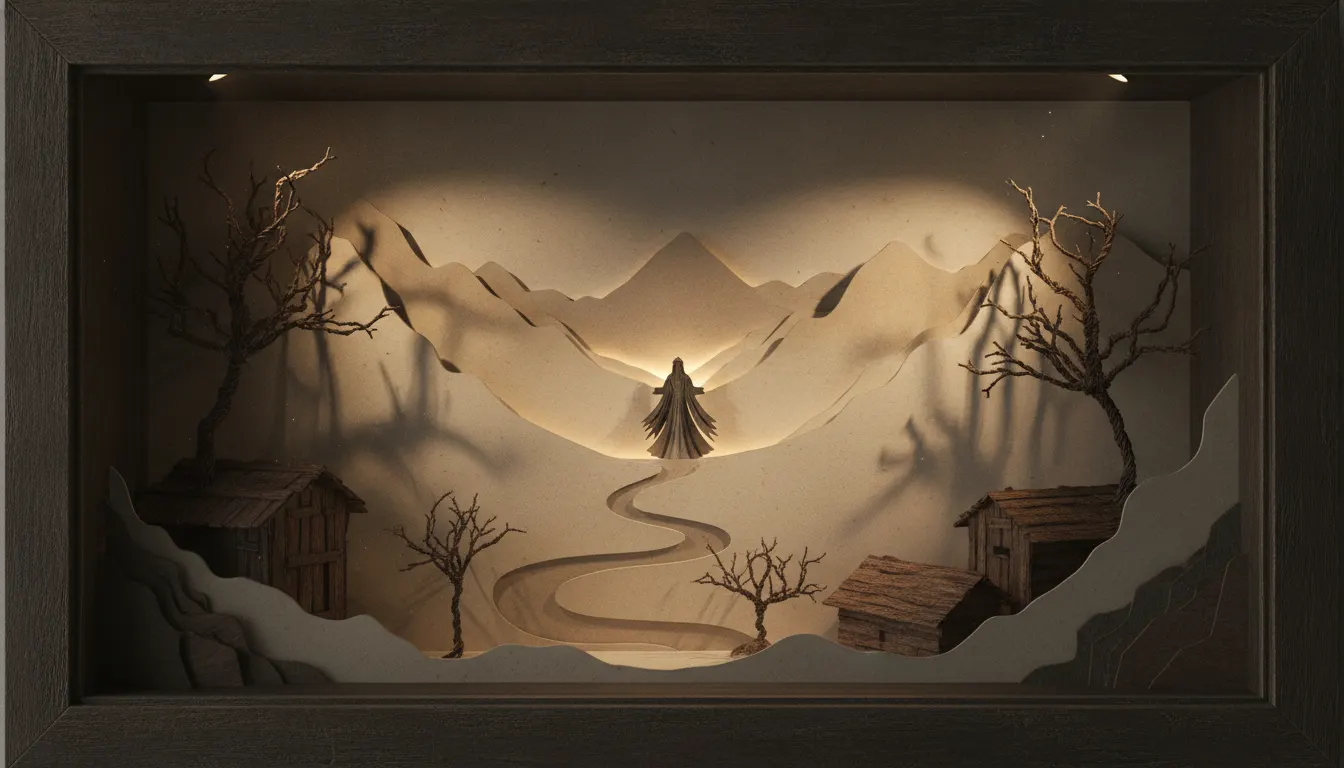
Joseph Cornell, Untitled (Soap Bubble Set)
1936
early foundational assemblage box
Hand-built shadow-box diorama aesthetic. Layered paper cutouts and miniature props inside a deep wooden frame, theatrical lighting casting layered shadow into background.
The moves a human crew would use to get here. Cue applies them for you, and knowing their names is how you ask for a change.
light: single-source light at low angle to maximize shadow cast and dimensional revelation
plane rack focus pulling between foreground objects and receding background elements
heterogeneous material mix (glass, paper, wood, fabric, bone) in confined space
layer color separation: warm foreground against cool or dark background to push planes apart visually
incongruously sized objects sharing equal frame space per Cornell's surrealist logic
The diorama box mixed shadow aesthetic takes its name from two sources: the diorama (a three-dimensional miniature scene within a defined frame or box) and shadow box art (found objects and ephemera arranged in a display case). The aesthetic is defined by depth - multiple physical planes within an enclosed space - and by the dramatic raking light that casts shadows and reveals dimensional relationships invisible in flat photography.
Joseph Cornell (1903-1972) is the foundational artist. Self-taught, working out of his Queens, New York home from the late 1930s through the early 1970s, Cornell created over 1,000 assemblage boxes using Woolworth's glass cases, found newspaper, star charts, wine glasses, clay pipes, wooden balls, and photographs. Works like Untitled (Soap Bubble Set) (1936), Hotel de l'Etoile (1951), and the Medici Slot Machine series embedded art-historical images within surreal dimensional contexts. Cornell sourced material from thrift stores and Manhattan bookshops, assembling by night and photographing by daylight through apartment windows.
Cornell's boxes operate as theaters: the glass front creates the fourth wall, the viewer is an audience to an interior world governed by its own poetic logic. His influence on subsequent artists is vast - from Robert Rauschenberg's combines to contemporary shadow box Instagram aesthetics.
Contemporary artists including Mark Dion (whose museum-quality natural history cabinet assemblages address taxonomy and colonial collecting) and Kara Walker (whose silhouette installations within framed spaces extend the diorama logic) work in related territory. The natural history museum diorama - taxidermied animals in painted habitat recreations, pioneered at the American Museum of Natural History (NYC, late 19th century) - provides a scientific/didactic counterpoint to Cornell's surrealism.
In craft and social media contexts, shadow box art became a major DIY format in the 2010s: deep IKEA Ribba frames filled with travel souvenirs, sports memorabilia, or seasonal decorations. The Pinterest-craft version retains the depth and object-collection logic of Cornell but without surrealist content.
The defining visual quality is parallax depth: close objects in sharp foreground, receding planes into deliberate darkness or blur. Raking light from one side creates long shadows that reveal dimensional texture. The enclosed box frame creates a stage-set quality: everything within is composed, nothing is accidental. In video, camera moves (subtle dollies, rack focuses) activate the depth that static photography flattens.
1936
early foundational assemblage box
1951
star map and found image assemblage
art-historical imagery in surrealist context
extending assemblage logic to painting scale
A Look is not a filter. It is a set of stored decisions the pipeline reads before it makes a single frame, so two videos in the same Look actually match.