Kill Bill: Volume 1
Quentin Tarantino / Robert Richardson · 2003
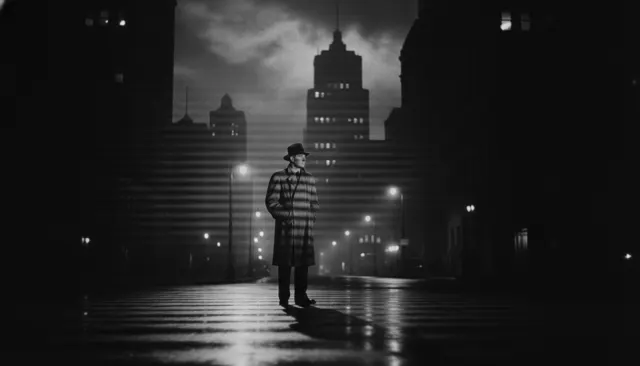
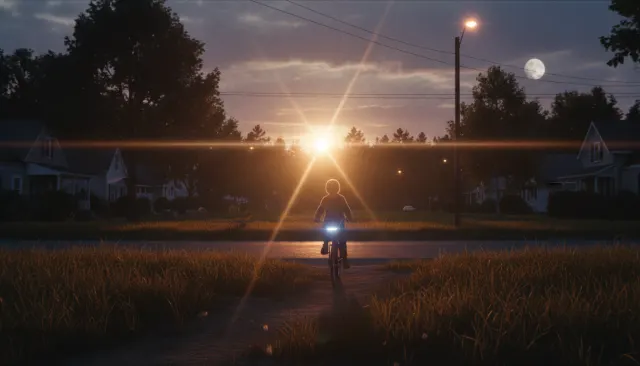
Multi-genre synthesis: samurai, kung fu, giallo - colour, B&W, and anime in one film
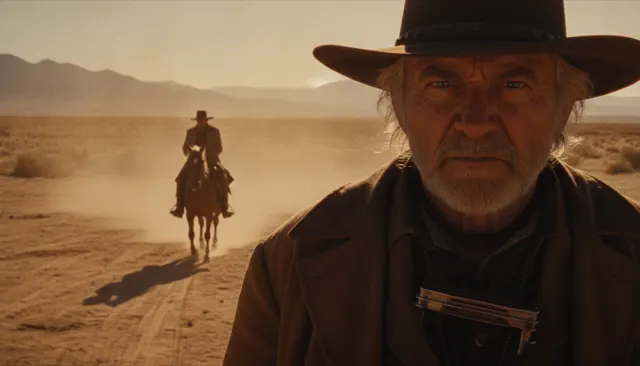
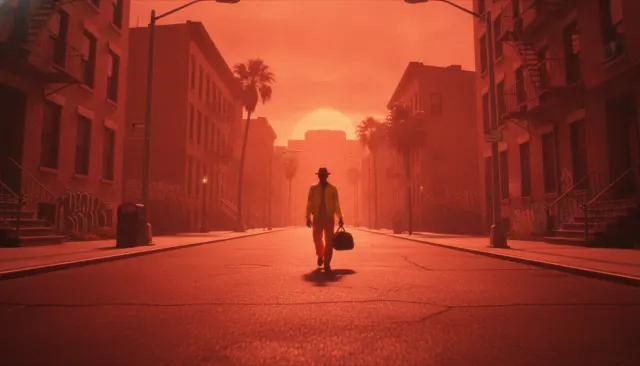
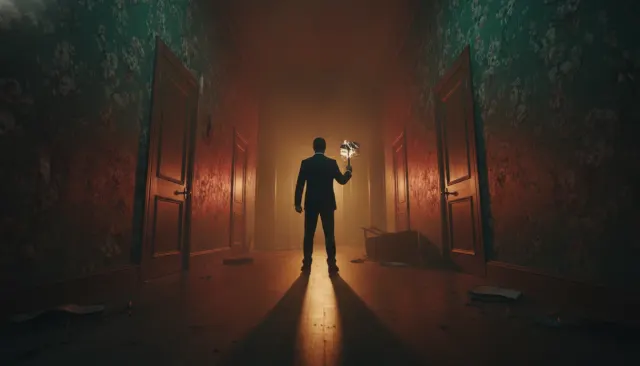
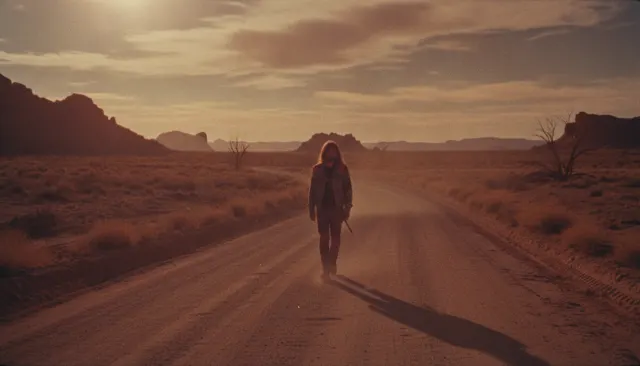
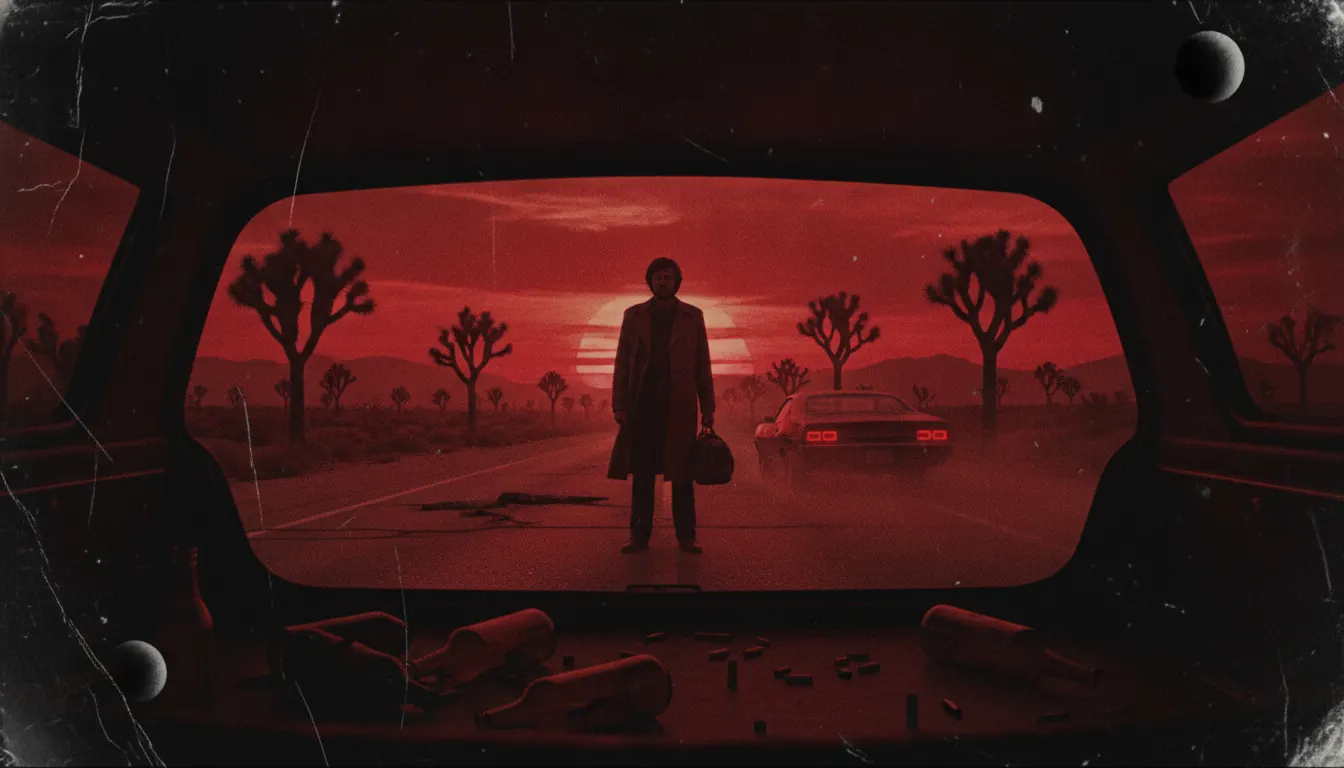
Tarantino grindhouse pastiche. 70s exploitation print damage, reel-change cigarette burns, saturated blood-red, trunk-POV shots.
The moves a human crew would use to get here. Cue applies them for you, and knowing their names is how you ask for a change.
Scratches, splices, hair in the gate, and reel-end colour shifts applied in post to simulate exploitation print deterioration.
Missing frames simulate damaged reel sections; continuity is deliberately broken as a formal act.
Slow and fast zoom lenses replace dolly moves, citing the low-budget production grammar of 1970s exploitation.
Different sequences shot or graded to simulate different film stocks or eras, creating a multi-format collage quality.
Intertitle cards and chapter divisions cite the episodic structure of Italian genre serials and exploitation features.
Extended dialogue scenes build to violence with Hawksian patience; the grindhouse kills earn their payoff through sustained anticipation.
Quentin Tarantino's grindhouse aesthetic is one of cinema's most deliberate and sustained acts of genre homage - a visual language built from the wreckage of 1970s exploitation cinema, B-movie genre trash, and the specific degraded texture of films that were shown, rewound, and broken in repertory theatres and drive-ins. Where most directors aspire to technical perfection, Tarantino and his collaborators actively reproduce the imperfections of a specific era of low-budget American filmmaking as a form of critical love letter.
The term 'grindhouse' refers to exploitation cinemas that operated in American urban centres through the 1970s and into the 1980s - theatres that 'ground out' continuous double or triple bills of low-budget genre films: blaxploitation, spaghetti westerns, Italian giallo, kung fu, women-in-prison, slasher, and car-chase films. These films were shot cheaply, often on expired or mismatched film stocks, processed hastily, and projected from prints that accumulated scratches, splice marks, colour shifts, and reel-end damage across hundreds of screenings.
Tarantino, who worked in a video rental store in Los Angeles in the 1980s and absorbed thousands of these films, has made their grammar the foundation of his cinema from Reservoir Dogs (1992) through Django Unchained (2012) and The Hateful Eight (2015).
Kill Bill: Volume 1 (2003) and Volume 2 (2004), shot by Robert Richardson, synthesise the specific visual grammars of multiple grindhouse genres: Japanese samurai film (Lady Snowblood, 1973), kung fu (Shaw Brothers productions of the 1970s), Italian giallo (The Bird with the Crystal Plumage, 1970), and American revenge films. Richardson and Tarantino shot deliberately in different stocks and processes to simulate the multi-format quality of a grindhouse double bill - some sequences in colour, one extended sequence in black and white, the anime sequence in traditional 2D animation.
The Grindhouse double feature - Tarantino's Death Proof and Robert Rodriguez's Planet Terror, released as a theatrical double bill in 2007 - is the most literal enactment of the aesthetic. The films were deliberately degraded in post-production: digital scratches, missing reels simulated by title cards, colour shifts mid-reel, and cigarette burn cue marks were all added to reproduce the physical deterioration of a heavily screened exploitation print.
Inglourious Basterds (2009, also shot by Richardson) integrates the grindhouse sensibility into a WWII revisionist fantasy, using a chapter structure that cites the multi-episode format of 1970s spaghetti westerns. The deliberate historical anachronism and genre irreverence of Tarantino's broader career - including Django Unchained (2012) and The Hateful Eight (2015) - all draw on the grindhouse tradition's freedom to disregard narrative and historical realism in favour of genre pleasure.
Quentin Tarantino / Robert Richardson · 2003
Multi-genre synthesis: samurai, kung fu, giallo - colour, B&W, and anime in one film
Quentin Tarantino / Robert Richardson · 2004
More restrained spaghetti western grammar; squib violence vs Volume 1's stylised carnage
Quentin Tarantino / Robert Richardson · 2007
Literal grindhouse double-bill; deliberate print damage and missing reels added in post
Robert Rodriguez / Robert Rodriguez · 2007
Companion piece to Death Proof; zombie exploitation with shared degradation treatment
Quentin Tarantino / Robert Richardson · 2009
WWII revisionist fantasy using spaghetti western chapter structure and genre anachronism
Quentin Tarantino / Robert Richardson · 2012
Spaghetti western meets blaxploitation; Leone grammar applied to antebellum America
Quentin Tarantino / Robert Richardson · 2015
70mm Ultra Panavision roadshow format; long-take chamber western with grindhouse violence
A Look is not a filter. It is a set of stored decisions the pipeline reads before it makes a single frame, so two videos in the same Look actually match.