E.T. the Extra-Terrestrial
Steven Spielberg / Allen Daviau · 1982
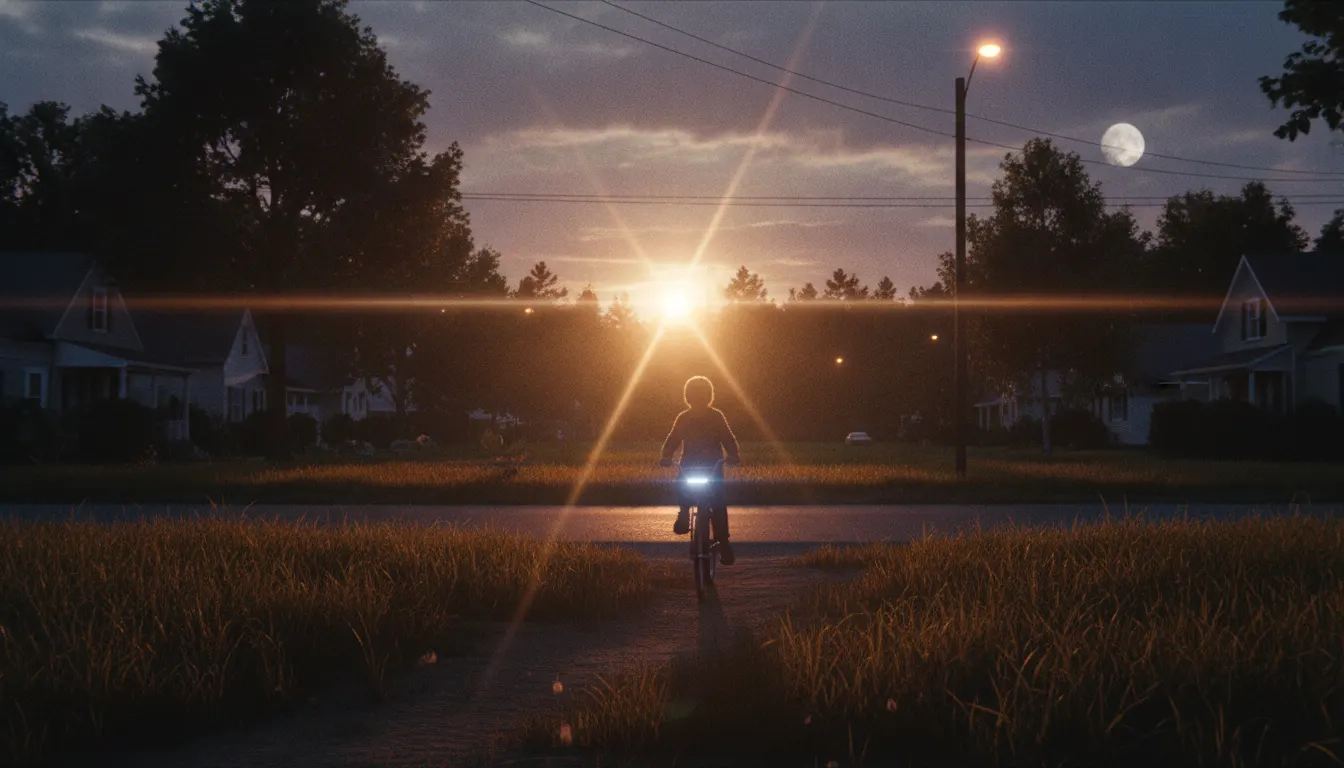
Suburban wonder; backlit bicycle silhouette; child-eye grammar at its most affecting
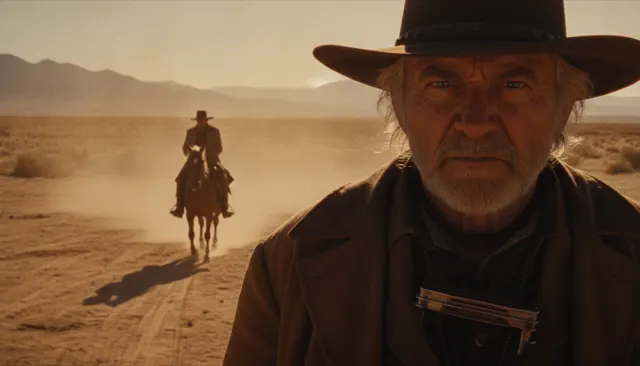
Suburban-magic Spielberg era. Backlit bike silhouettes, lens-flare wonder, Amblin warmth, Janusz Kaminski before he was Kaminski.
The moves a human crew would use to get here. Cue applies them for you, and knowing their names is how you ask for a change.
Camera positioned at the height of the youngest or least powerful character, enacting their perspective.
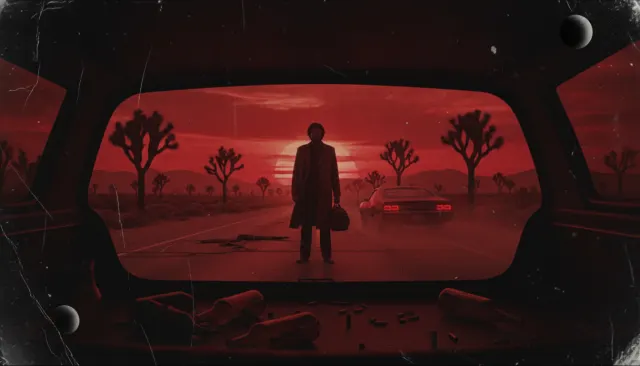
Strong backlight sources create iconic silhouette images - bicycles against moons, figures in doorways - that carry mythological weight.
Interior scenes lit by warm practical lamps, fireplaces, and kitchen light rather than cinematic fill, creating suburban domestic intimacy.
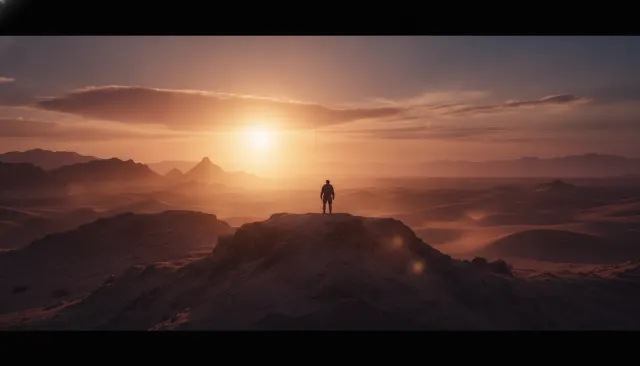
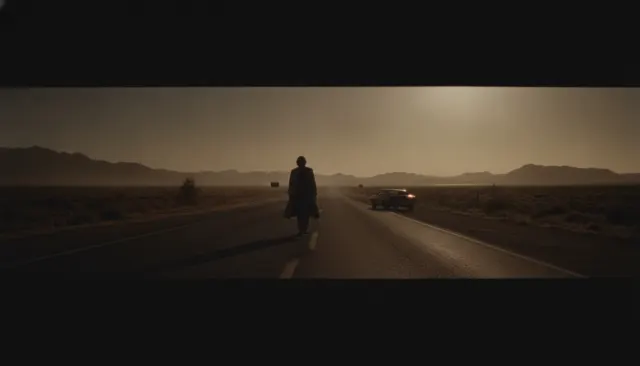
Widescreen anamorphic frame gives outdoor adventure sequences an expansive, mythological quality.
Indiana Jones films use warm, aged-photo palettes that evoke 1930s pulp adventure and colonial exploration photography.
Key emotional and narrative beats are marked by significant light events - sunrise, alien beam, torch in darkness.
Steven Spielberg's 1980s films represent the defining grammar of the Hollywood blockbuster: a visual language that combines mythological scale with intimate emotional accessibility, using light as a storytelling instrument, anamorphic widescreen for grandeur, and a specific relationship between the camera and the child or everyman protagonist that places the viewer inside the wonder of discovery rather than above it.
Spielberg's most important 1980s cinematographic partnerships were with Allen Daviau (E.T. the Extra-Terrestrial, 1982; Empire of the Sun, 1987; Batteries Not Included, 1987) and Vilmos Zsigmond (Close Encounters of the Third Kind, 1977; The Deer Hunter, 1978). Daviau and Spielberg's collaboration on E.T. established the prototypical look: warm practical lighting, the magic quality of backlit suburban environments, and the camera at child height.
Raiders of the Lost Ark (1981), shot by Douglas Slocombe, brought a different grammar: the adventure-serial visual tradition filtered through modern anamorphic optics, with warm golden-brown palettes evoking 1930s National Geographic photography and the romantic haze of colonial adventure pulp fiction.
Indiana Jones and the Temple of Doom (1984) and Indiana Jones and the Last Crusade (1989, shot by Douglas Slocombe and Dean Cundey respectively) extended this adventure grammar with higher contrast and more dramatic shadow work.
The most distinctive Spielberg visual choice is the placement of the camera. In E.T., in Close Encounters, and in the children's sequences of Empire of the Sun, the camera is consistently placed at the eye level of the youngest character in frame. This is not merely a compositional preference but an ethical choice: Spielberg's cinema is about the perspective of those who are not yet powerful, and the low-angle camera enacts that perspective. Adults in his films are often shot from below, emphasising their scale and authority from the child's viewpoint.
Spielberg and his cinematographers treat light sources with a reverence that gives them quasi-spiritual significance. The backlit bicycle silhouette against the moon in E.T. (the production's own poster image), the beams of alien light in Close Encounters, and the sunrise light through tent canvas in Empire of the Sun all deploy light as a signal of transcendence. The Spielberg blockbuster light is not merely dramatic but redemptive.
The Spielberg 1980s grammar has been the dominant template for Hollywood family and adventure filmmaking for four decades. Directors including J.J. Abrams (Super 8, 2011), Amblin-produced contemporaries, and streaming platforms making prestige family content all operate in its shadow.
Steven Spielberg / Allen Daviau · 1982
Suburban wonder; backlit bicycle silhouette; child-eye grammar at its most affecting
Steven Spielberg / Douglas Slocombe · 1981
Adventure serial grammar in anamorphic widescreen; warm golden-brown palette
Steven Spielberg / Vilmos Zsigmond · 1977
Light as spiritual experience; the mothership finale as illuminated transcendence
Steven Spielberg / Allen Daviau · 1987
War through a child's perspective; sunrise light as recurring spiritual motif
Steven Spielberg / Douglas Slocombe · 1989
Adventure grammar at its most polished; warm Mediterranean and Middle Eastern palettes
J.J. Abrams / Larry Fong · 2011
Homage to the Spielberg 1980s grammar; lens flares, child-eye camera, Ohio suburb setting
A Look is not a filter. It is a set of stored decisions the pipeline reads before it makes a single frame, so two videos in the same Look actually match.