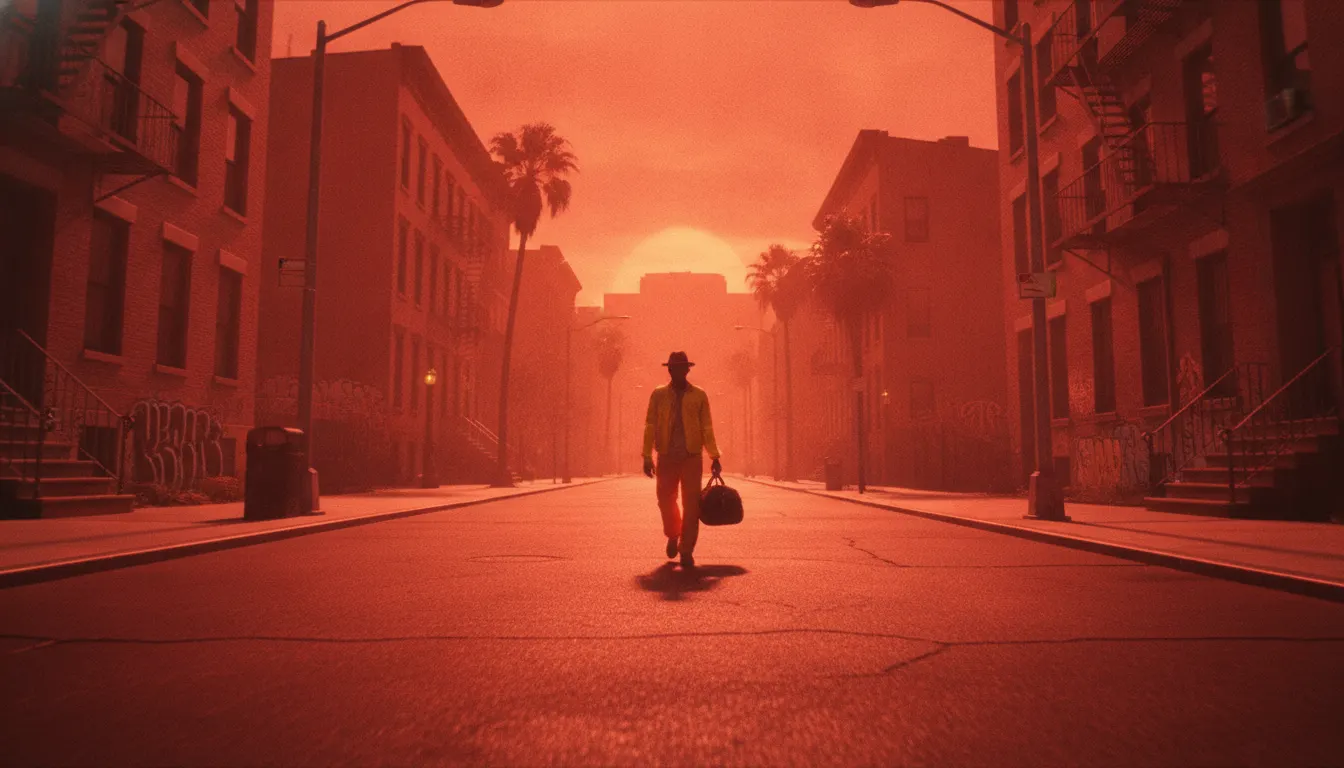
Do the Right Thing
Spike Lee / Ernest Dickerson · 1989
Defining heat-wave saturation; the double dolly; primary colours as political temperature
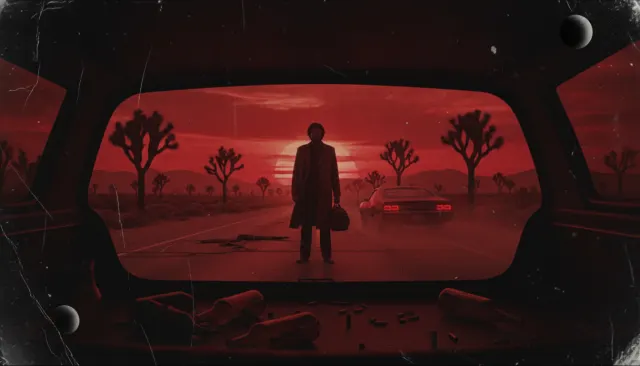
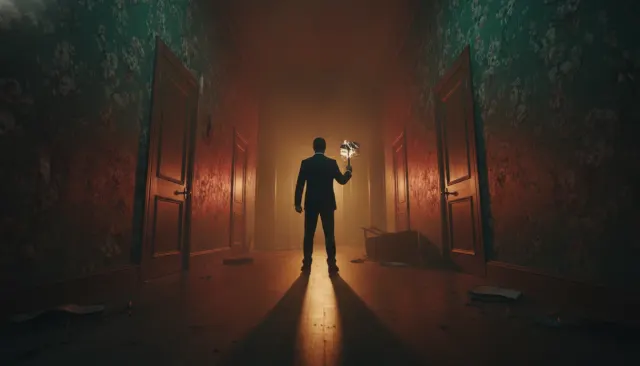
Spike Lee signature double-dolly. Do the Right Thing Brooklyn heatwave, Ernest Dickerson saturated reds and oranges, fourth-wall break monologue.
The moves a human crew would use to get here. Cue applies them for you, and knowing their names is how you ask for a change.
Actor on a dolly moving at camera speed creates the impression of gliding through space, externalising psychological dissociation or intensity.
Reds, yellows, and blues pushed beyond naturalism to function as political and emotional temperature.
Characters frequently look directly at the camera, breaking the fourth wall to create a confrontational viewer relationship.
Tilted frames signal social disruption, injustice, or moral instability.
Extremely wide lenses used at close range distort faces and space, creating expressionist pressure.
Wide-frame compositions organise multiple community members in the frame simultaneously, making the ensemble the protagonist.
Spike Lee is among cinema's most formally inventive directors, and his visual signature - developed with cinematographers Ernest Dickerson (Do the Right Thing, 1989; Jungle Fever, 1991; Malcolm X, 1992) and later with Ellen Kuras and Matthew Libatique - is built on a politically charged colour palette, the 'double dolly' or 'floating' shot that makes characters appear to glide weightlessly through space, and a combative compositional energy that places the viewer in a direct confrontational relationship with the screen.
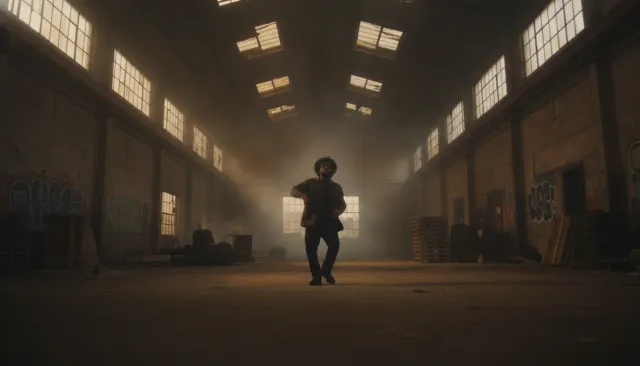
Lee's most technically distinctive innovation is the double dolly (also known as the 'Spike Lee shot'): a technique in which the actor is placed on a dolly or wheeled platform that moves in the same direction as the camera dolly, but at the same speed, such that the actor remains perfectly still in the frame while the background moves behind them. The effect is a kind of uncanny floating: the character appears to be transported through space without physical locomotion, suspended in their own psychological state while the world moves around them.
The shot appears memorably in Do the Right Thing (1989) - with Mookie and other characters - and most poignantly in 25th Hour (2002) with Edward Norton's final drive sequence. It has been adopted and discussed extensively as a cinematic device that externalises mental or emotional states too complex for conventional staging.
Ernest Dickerson's photography for Lee's early films is characterised by deeply saturated primary colours - particularly reds and yellows in Do the Right Thing - deployed as a form of political and emotional intensification. The famous heat-wave day in Do the Right Thing is photographed in deliberately unreal saturation: the red fire hydrant, the yellow and orange walls of Sal's pizzeria, the blue sky all pushed beyond naturalistic representation toward expressionist political temperature.
This approach draws on the African-American tradition of bright, saturated colour as cultural assertion - against the muted, desaturated palette that often signals 'serious' or 'prestige' in white-dominated art cinema. Lee's colour choices are arguments.
Malcolm X (1992), photographed by Ernest Dickerson, applied the saturated grammar to historical epic, using the film's three-act structure to shift colour climates across Malcolm's transformation. The Harlem sequences use warm amber and red; the prison sequences cold blue-grey; the Hajj sequences gold and white. The film demonstrates that Lee's colour politics can operate at the scale of a 3.5-hour historical biography.
Spike Lee / Ernest Dickerson · 1989
Defining heat-wave saturation; the double dolly; primary colours as political temperature
Spike Lee / Ernest Dickerson · 1992
Historical epic; three colour climates marking Malcolm's transformation across 3.5 hours
Spike Lee / Ernest Dickerson · 1991
Warm Harlem saturation applied to interracial relationship drama
Spike Lee / Rodrigo Prieto · 2002
Post-9/11 New York; the double dolly in Edward Norton's final drive sequence
Spike Lee / Chayse Irvin · 2018
1970s Colorado Springs; warm period saturation; archival-to-contemporary cut structure
Spike Lee / Ernest Dickerson · 1986
Black-and-white Brooklyn debut; Lee-Dickerson grammar in its originating form
A Look is not a filter. It is a set of stored decisions the pipeline reads before it makes a single frame, so two videos in the same Look actually match.