Hot Fuzz
Edgar Wright / Chris Dickens · 2007
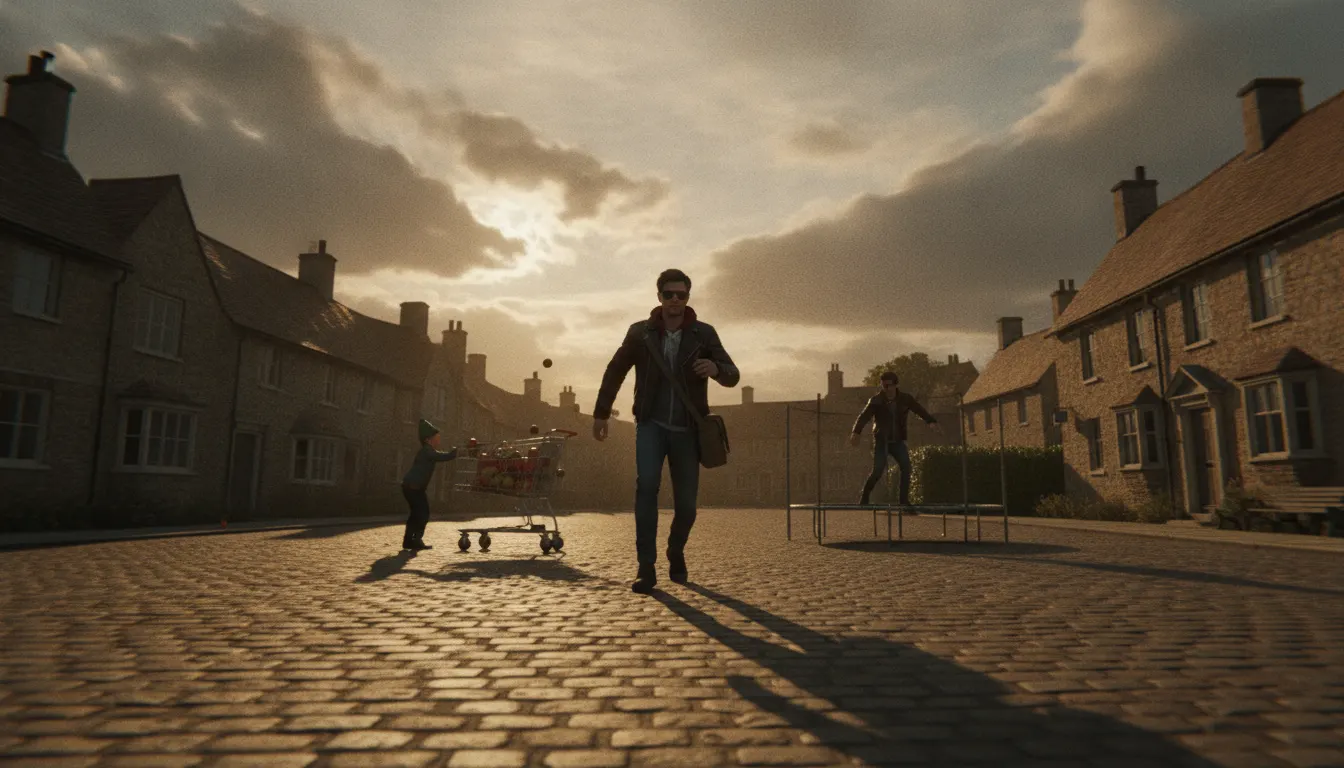
Cornetto Trilogy peak - whip-pan location transitions and triple-cut action as mature grammar
Edgar Wright kinetic comedy. Hot Fuzz and Baby Driver snap-zooms, whip-pan transitions, foley-synced quick cuts, sugar-rush genre pastiche.
The moves a human crew would use to get here. Cue applies them for you, and knowing their names is how you ask for a change.
A rapid rack zoom combined with a hard cut arrives on a beat to deliver a comedic or dramatic exclamation point.
Camera spins so fast it motion-blurs, replacing a conventional cut between two locations with a kinetic bridge.
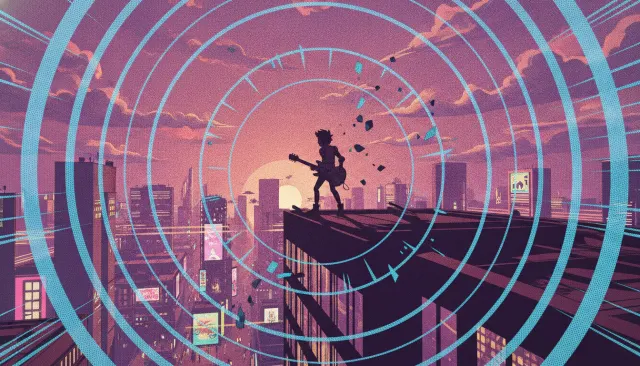
A close insert of an object (gun cocked, coffee poured) is cut to a precise sound effect on a musical beat.
The same action is shown three times from three angles in rapid succession, compressing time and adding comic emphasis.
Every picture cut lands on a musical accent point, making the edit feel choreographed rather than assembled.
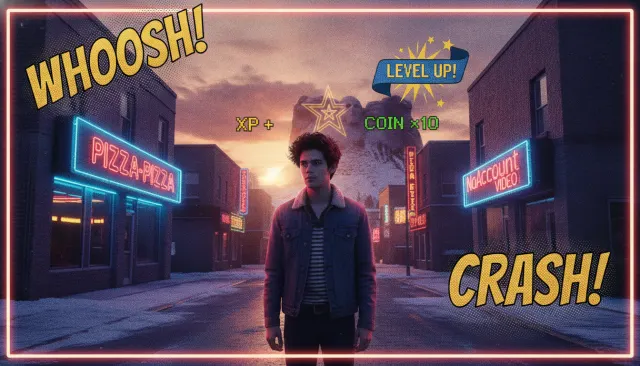
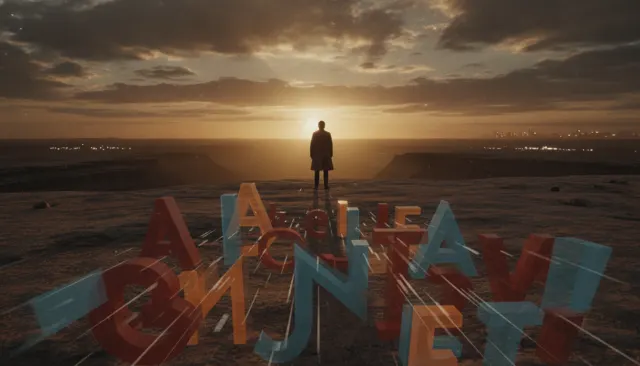
Sound effects materialize as typography on screen, borrowed from Bryan Lee O'Malley's graphic novel language.
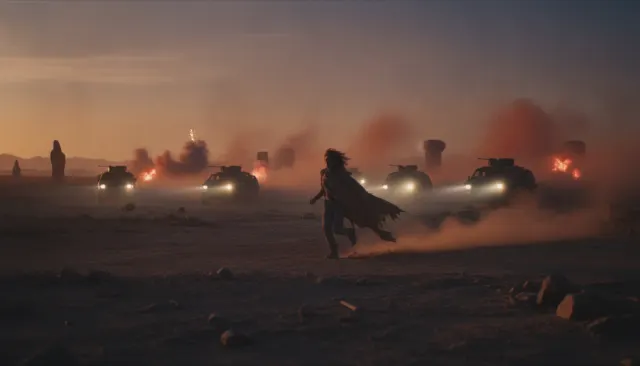
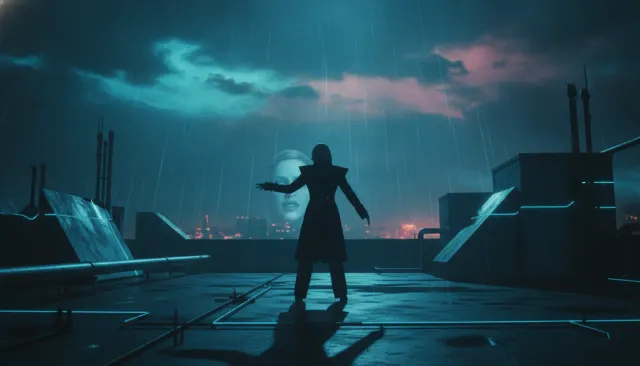
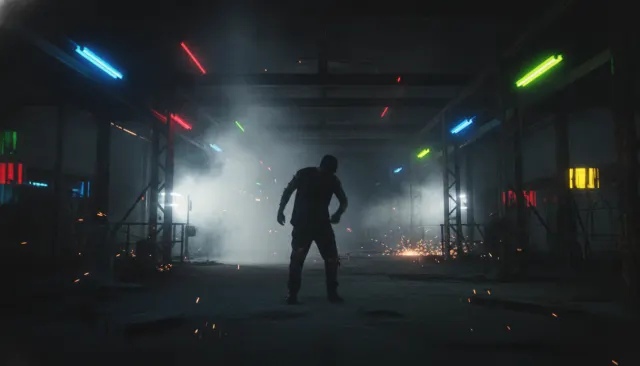
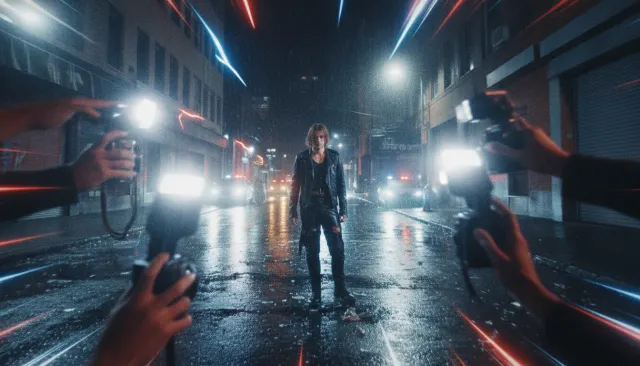
Cyan practicals against red accents on a warm key create a saturated, heightened reality that resists naturalism.
Edgar Wright's editing style is the most imitated and least successfully replicated in contemporary cinema. Developed through three Cornetto Trilogy films with editor Chris Dickens - Shaun of the Dead (2004), Hot Fuzz (2007), and The World's End (2013) - and refined in Scott Pilgrim vs. the World (2010) and Baby Driver (2017), the Wright aesthetic treats editing not as story assembly but as rhythm performance.
Wright established the vocabulary in his UK television series Spaced (1999-2001), co-written with Simon Pegg. Working with a micro-budget and a crew half his age, he deployed the snap-zoom, the whip-pan transition, and the foley-synced object cutaway as conscious homages to Sam Raimi and Hong Kong action cinema. By Hot Fuzz, these had crystallized into a lexicon: the snap-zoom on a reaction face, the whip-pan that replaces a conventional cut between two locations, the triple cutaway in which a repeated action is shown from three angles in half the time.
Baby Driver (2017, cinematographer Bill Pope, editor Paul Machliss) pushed the formula into pure musical structure. Every cut, every gunshot, every gearshift was locked to a pre-existing song. Wright storyboarded the film to recordings before a single frame was shot. The film's opening sequence - a four-minute car chase cut entirely to Jon Spencer Blues Explosion's "Bellbottoms" - is the canonical demonstration of action-as-music-video.
The snap-zoom is a rack zoom combined with a hard cut or a simultaneous camera push; it adds comic or dramatic punctuation to a reaction or reveal. The whip-pan is a horizontal camera spin so fast it blurs to white or black, used as a transition. Wright uses them not for shock but for rhythm - they arrive on musical downbeats or on the logical beat of a joke.
Scott Pilgrim vs. the World (2010) added a third grammar layer: comic book panel overlays, onomatopoeia typography, and match-cut geography borrowed from Bryan Lee O'Malley's source material. The film treats screen space as a navigable comic page, with establishing shots that read left-to-right and sound effects that materialize as physical objects.
DP Bill Pope and colorist Stephan Nakamura grade Wright's films with punchy, primary-color saturation - cyan practical backgrounds, red accent lighting, yellow-key sunlight. The palette avoids naturalism in service of the heightened tone. Hot Fuzz's British village greens are boosted to near-cartoon saturation; Baby Driver's Atlanta exteriors glow gold and cyan.
Edgar Wright / Chris Dickens · 2007
Cornetto Trilogy peak - whip-pan location transitions and triple-cut action as mature grammar
Edgar Wright / Paul Machliss · 2017
Beat-locked edit pinnacle; every cut synchronized to pre-licensed soundtrack in production
Edgar Wright / Jonathan Amos · 2010
Comic-panel grammar, onomatopoeia titles, and video-game logic applied to live action
Edgar Wright / Chris Dickens · 2004
The prototype: snap-zoom, foley cutaway, and deadpan British rhythm established
Edgar Wright / Simon Pegg · 1999
Television laboratory where Wright's kinetic grammar was invented at micro-budget scale
Edgar Wright / Paul Machliss · 2013
Cornetto finale applying the full lexicon to a pub-crawl action-comedy structure
Edgar Wright / Paul Machliss · 2021
Temporal mirror cuts between decades demonstrating Wright's grammar applied to psychological horror
A Look is not a filter. It is a set of stored decisions the pipeline reads before it makes a single frame, so two videos in the same Look actually match.