Cowboy Bebop (1998-1999)
Sunrise, dir. Shinichiro Watanabe, 26 episodes + film
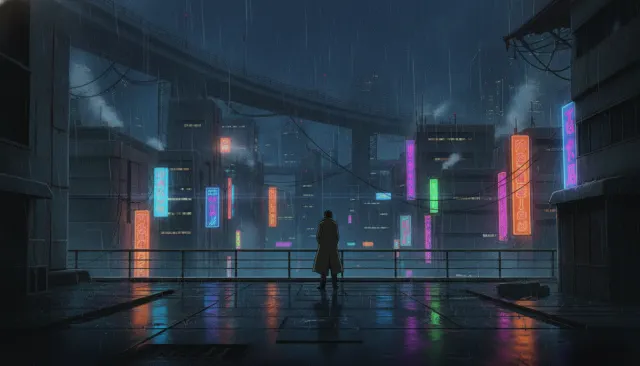
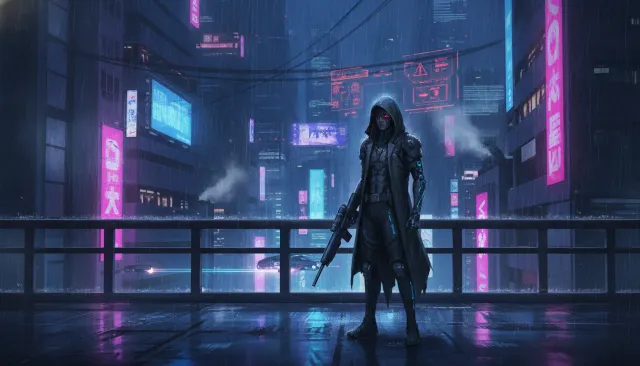
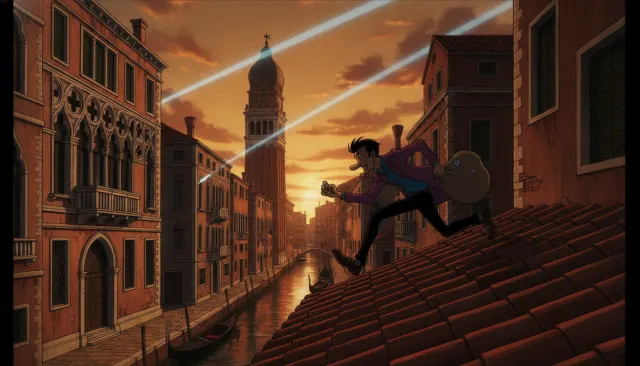
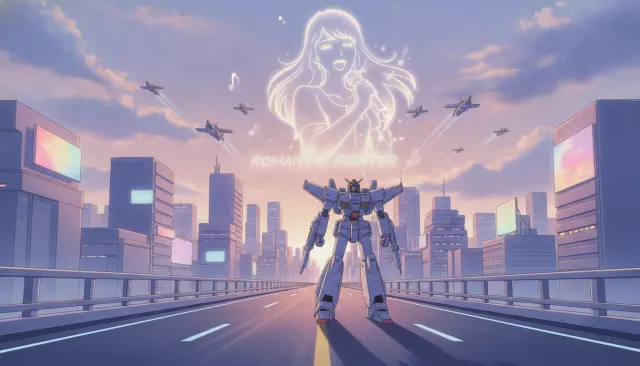
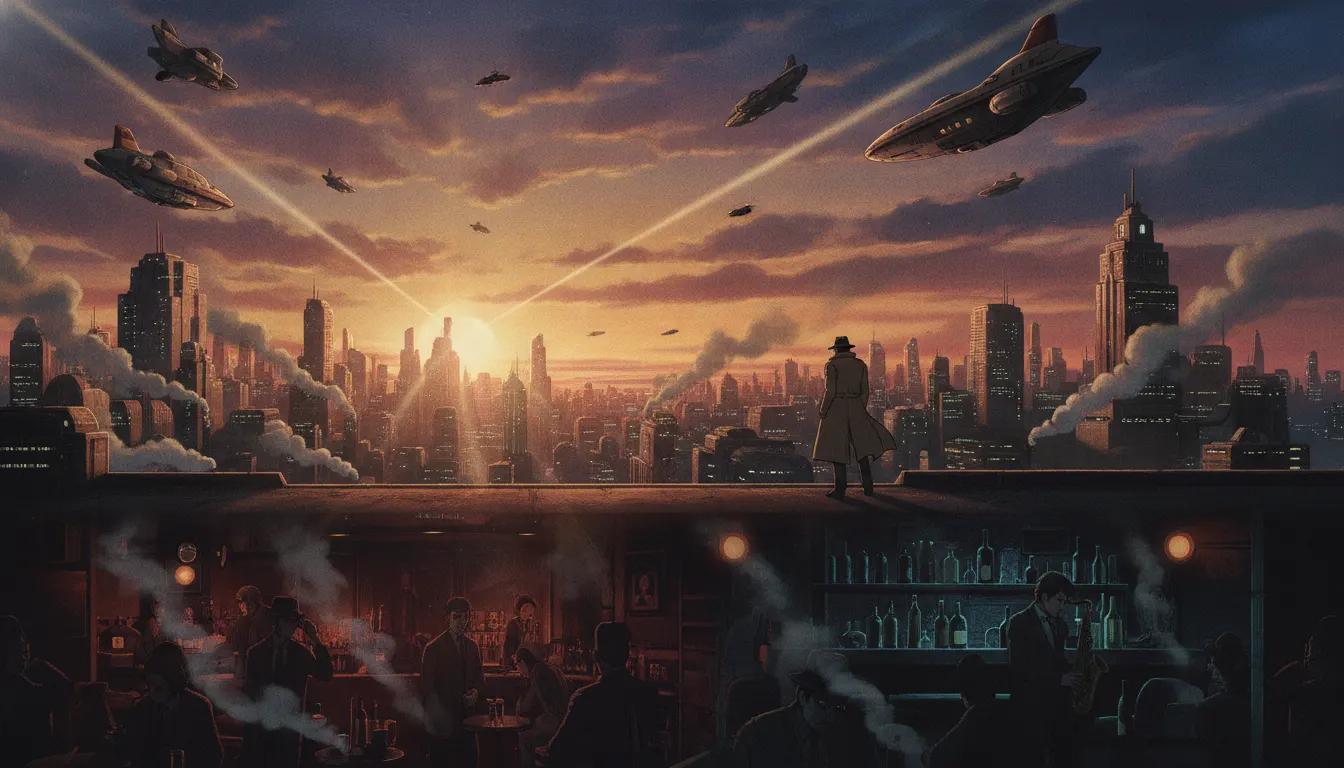
Sunrise / Shinichiro Watanabe Cowboy Bebop register. Jazz-noir mood, smoke-filled bar interiors, retro-future spaceships, hand-painted bounty-hunter cool.
The moves a human crew would use to get here. Cue applies them for you, and knowing their names is how you ask for a change.
1 or 1.78:1) composition with deliberate dead space and off-center subject placement
- movement phrases aligned with musical bar structure
analog quality suggesting the universe's lived-in age
style title cards and minimalist episode title sequences that reference jazz album design
in on still character faces during dialogue, cinema verite-influenced over the shoulder compositions
Cowboy Bebop aired in 1998-1999 on TV Tokyo, produced by Sunrise (now Bandai Namco Filmworks). Directed by Shinichiro Watanabe with character design by Toshihiro Kawamoto, music by Yoko Kanno and The Seatbelts, and series composition by Keiko Nobumoto. The 26-episode series is consistently ranked the greatest anime series of all time and is the primary gateway anime for Western audiences who discovered the medium in the late 1990s.
Watanabe explicitly built Cowboy Bebop as a synthesis of film noir (1940s-50s Hollywood), spaghetti western (Leone, Eastwood), Bruce Lee martial arts films (Jet Black's fighting style), blaxploitation (Radical Edward's character), and French New Wave cinematography. The result is anime's most cinematically self-aware work: compositional choices reference specific films, editing rhythms follow jazz phrasing, and the 'session' episode structure mirrors jazz improvisation.
The setting is the solar system in 2071 following a catastrophe that rendered Earth's surface largely uninhabitable. The visual environment synthesizes 1960s-70s retrofuturism (round-cornered CRT monitors, analog gauges, worn metal) with genuine space travel mechanics. Every spacecraft has operational detail -- the Bebop itself is a converted fishing trawler with visible plumbing and rust. This retro-analog quality against a space setting creates a distinctive lived-in texture.
The color palette is built on warm amber, tobacco brown, sunset orange, and cool blue-grey -- the visual language of film noir transposed into space. Mars is perpetually orange-hazed. The Bebop's interior is warm and cramped. Hyperspace and void sequences use stark near-black with isolated light sources. Minami Inaba's background art team created environments of extraordinary detail and tonal consistency.
Yoko Kanno's score spans bebop jazz, blues, acid jazz, rock, and flamenco. The editing rhythm in action sequences follows musical phrase structure rather than conventional action-film cutting. The show's signature move is the music-led scene -- visuals cut to serve Kanno's compositions rather than the reverse. This gives the anime a quality closer to a music video than a conventional animated series.
Cowboy Bebop directly influenced Samurai Champloo (2004, Watanabe again, with hip-hop music), Space Dandy (2014, Watanabe), and the visual DNA of 'cool' anime across the 2000s. The 2021 Netflix live-action adaptation (Marty Adelstein) demonstrated both the visual power of the original and the difficulty of replicating its precise aesthetic balance.
Cowboy Bebop's influence extends well beyond anime. The visual grammar of the series -- widescreen composition, film noir color, retro-analog space, music-led editing -- can be traced in Firefly (2002, Fox, Joss Whedon), Borderlands (2009, Gearbox, cel-shaded), and numerous Western animation projects. Video game soundtracks and visual direction in titles from Jet Set Radio (2000, SEGA) to Persona series (Atlus) draw on the Bebop aesthetic of jazz-infused visual cool. The 2021 Netflix live-action adaptation (starring John Cho) demonstrated both the cultural persistence of the source material and the specificity of the original's visual balance -- the adaptation's reception confirmed that Watanabe's exact combination of elements is not easily replicated without the anime medium's particular capacities.
Sunrise, dir. Shinichiro Watanabe, 26 episodes + film
2001
theatrical feature
2004
Manglobe, dir. Watanabe, hip-hop variant of the same vision
2014
Bones Studio, dir. Watanabe, lighter tonal variant
1998
Madhouse, parallel space-western aesthetic
1999
Sunrise, parallel noir-in-science-fiction aesthetic
1998
Sunrise, same year space opera sibling
1995
Production I.G., dir. Mamoru Oshii, cyberpunk precursor Watanabe cites
A Look is not a filter. It is a set of stored decisions the pipeline reads before it makes a single frame, so two videos in the same Look actually match.