Super Bowl LVII Broadcast
Fox Sports Production · 2023
State-of-the-art NFL multicam with 120+ cameras and 8K master capture
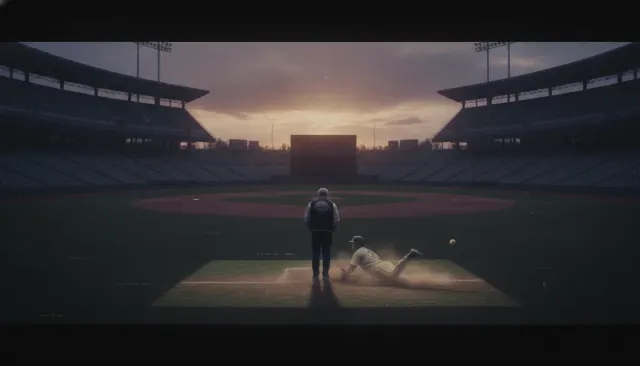
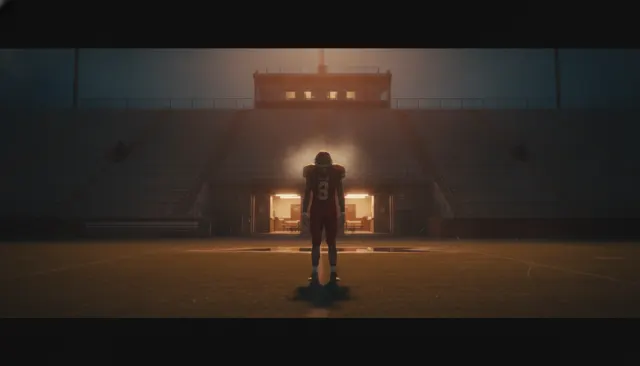
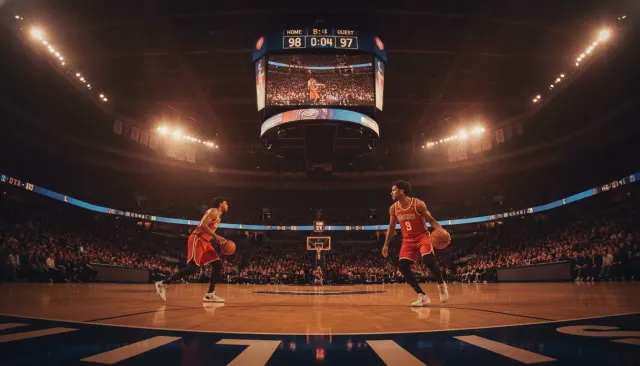
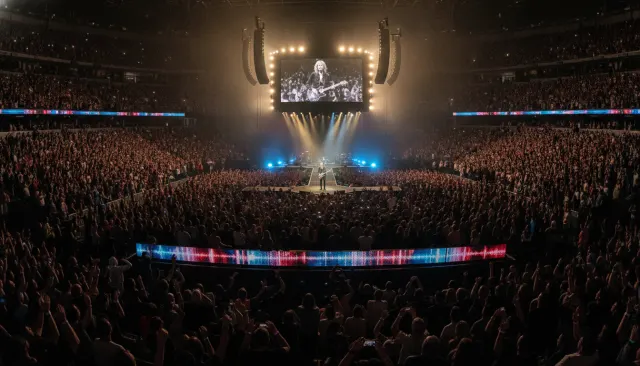
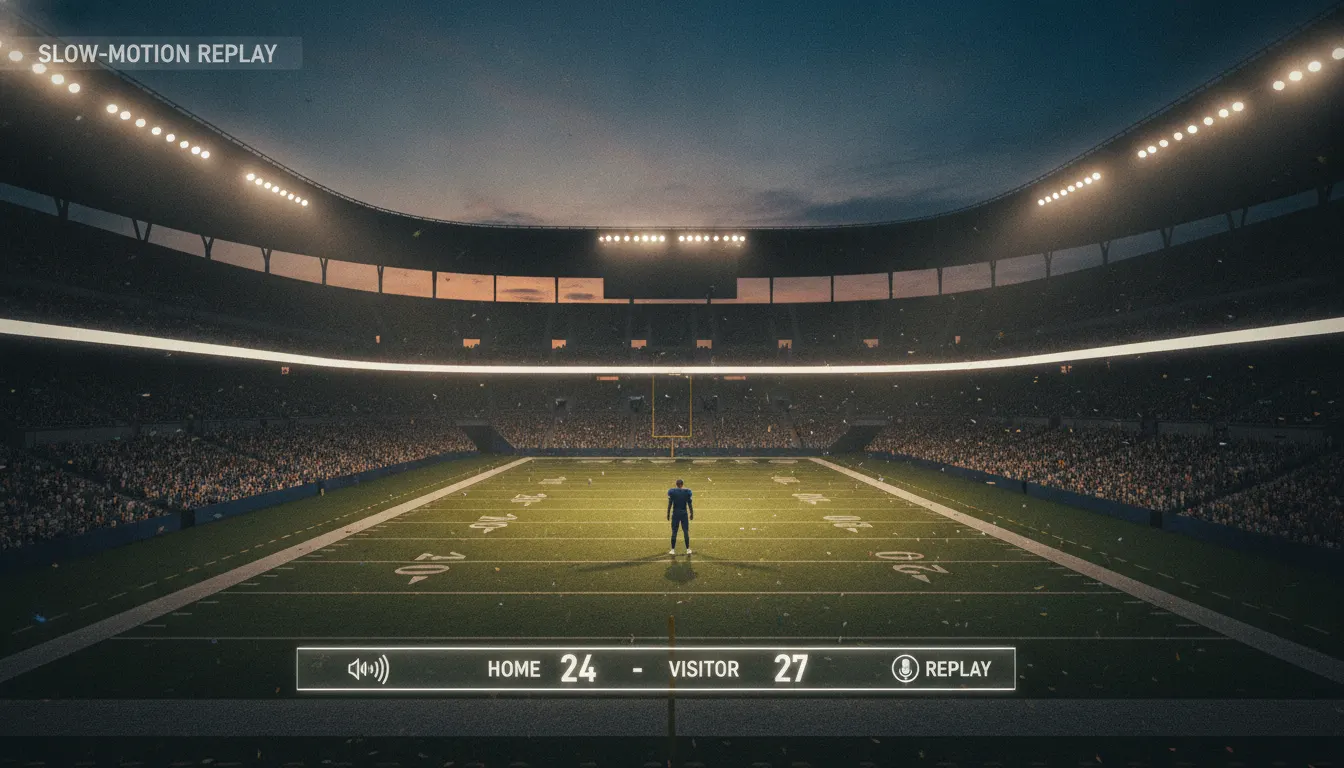
NFL Sunday multicam broadcast. ESPN-style stadium wides, lower-third score persistent, slow-mo replay, hot-mic excitement.
The moves a human crew would use to get here. Cue applies them for you, and knowing their names is how you ask for a change.
Primary camera position above playing surface establishes spatial context and records complete plays.
Long telephoto lenses from sidelines provide face-level reaction and tactical detail without obstructing play.
200-1000fps cameras record contact moments for ultra-slow replay that reveals physics invisible at normal speed.
Director in production truck makes live cuts between camera feeds, building the impression of continuous live coverage.
SkyCam and similar systems provide aerial-angle views directly above the playing surface for tactical overhead vision.
Digital graphics - down markers, speed readouts, trajectory lines - integrated in real time over the live image.
Sports broadcast multicam is not a cinematic aesthetic in the auteurist sense but rather a mature, globally standardised visual grammar developed over seventy years of live television sports production. Its conventions - multiple simultaneously operating cameras, the master wide shot from an elevated position, tight telephoto close-ups, slow-motion replay, and the instant-reaction cut to crowd or sideline - are so deeply embedded in global viewing culture that they constitute a shared visual language understood by billions of people across every sport.
The grammar originated with early American television in the late 1940s and 1950s. The first televised NFL game (1939, NBC) was shot by a single camera from one angle; by the early 1960s, NFL broadcasts were using the two-camera master-plus-close-up structure that remains the foundation of modern production. ABC's Wide World of Sports (launched 1961) expanded the visual language of sports coverage, applying it to non-mainstream events and developing the slow-motion replay grammar (first used widely in the 1960s).
The 1980s saw the introduction of steadicam operators on sidelines, ENG (electronic news-gathering) cameras for sideline and tunnel access, and the first high-speed cameras allowing extremely slow replay of contact moments. By the 1990s, ESPN and Fox Sports were competing on production quality, leading to the aerial camera innovations (cable-suspended camera rigs like the SkyCam, introduced commercially in 1984) and pylon cameras that now characterise NFL production.
The standard multicam sports broadcast deploys a hierarchy of camera positions: 1) the master wide shot, elevated above the playing surface (typically at or above the press level), which establishes spatial context and records complete plays; 2) sideline cameras at close range for player reaction and tactical detail; 3) behind-goal or behind-endzone cameras for depth perception in scoring situations; 4) handheld or ENG cameras in tunnels, locker rooms, and sidelines for access journalism; 5) specialised high-speed cameras (200-1000fps) for slow-motion replay.
The editorial grammar cuts from master to close-up to replay with a rhythm trained to maintain the continuous impression of live action. Directors in the production truck make cuts in real time, and the grammar of those cuts - when to hold wide, when to cut to the player's face, when to replay - is a refined professional discipline.
Ultra-HD (4K and 8K) production, first deployed for major events in the 2010s, has enabled the extraction of virtual close-ups from master wide shots. Drone cameras now supplement traditional rigs. Player-worn camera systems and virtual/animated overlay graphics (down-and-distance markers, speed readouts, virtual pitch lines) are fully integrated into the broadcast grammar.
Fox Sports Production · 2023
State-of-the-art NFL multicam with 120+ cameras and 8K master capture
FIFA/HBS · 2022
Global standard for football broadcast; international multicam grammar at maximum scale
ESPN/ABC Production · 2023
Basketball's evolving multicam with player-level handheld and immersive angle experimentation
Netflix / Jason Hehir · 2020
Hybrid: archival broadcast footage integrated with documentary interviews
Amazon Studios · 2022
Docuseries using broadcast multicam alongside intimate access handheld
ABC Sports · 1961
The originating grammar of broadcast sports coverage; Roone Arledge's production innovations
A Look is not a filter. It is a set of stored decisions the pipeline reads before it makes a single frame, so two videos in the same Look actually match.