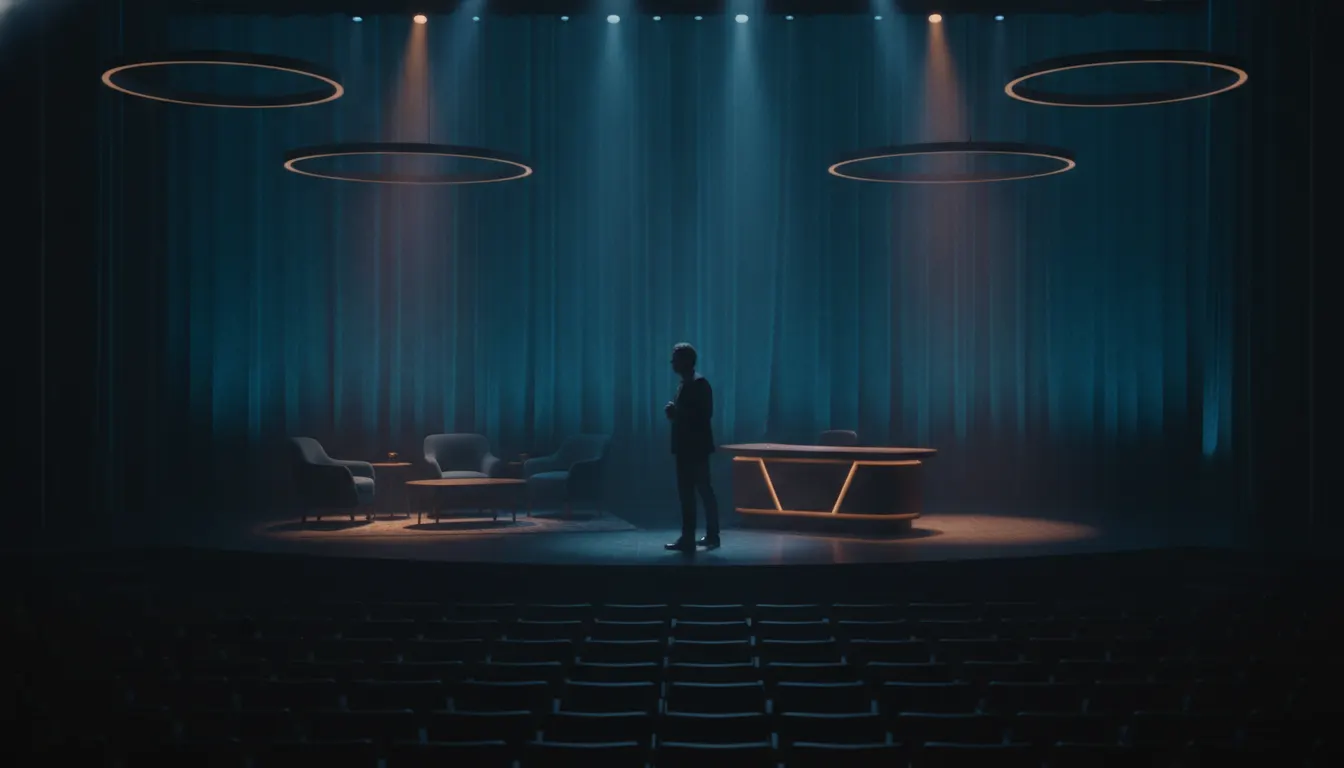
The Tonight Show with Johnny Carson
NBC / Johnny Carson · 1962
Thirty years of the canonical late-night format that established the desk, backdrop, and band grammar still in use today
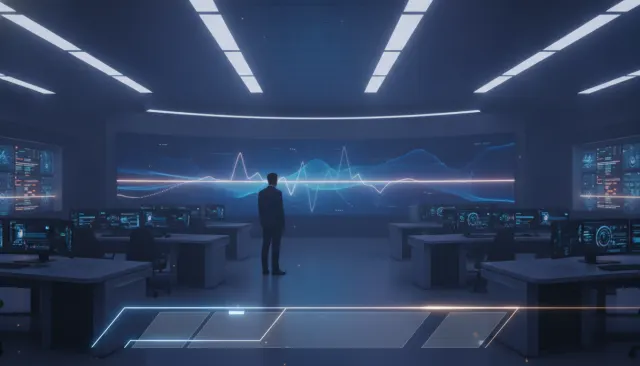
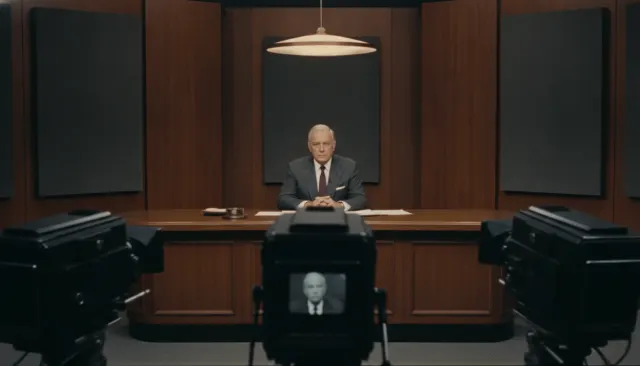
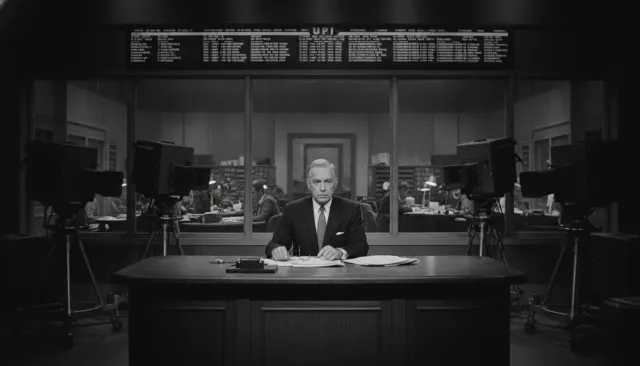
Stage-lit chat show. Deep teal backdrop, single accent house-band lighting, theatrical.
The moves a human crew would use to get here. Cue applies them for you, and knowing their names is how you ask for a change.
A backdrop in the deep teal-navy range that creates visual depth and allows warm-key lighting on subjects to pop without washing out.
Simultaneous coverage from master, single, and two-shot cameras, allowing continuous cutting without coverage pickups.
Warm amber or gold accent lighting from the band position that provides a practical light source and adds depth to the frame.
Host seated at a desk with guests at a slightly lower chair angled toward them, establishing a clear power and attention dynamic.
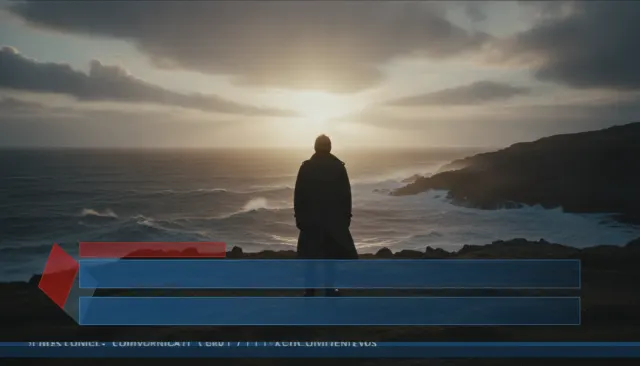
Clean typography lower-thirds identifying guests, typically in the show's brand typeface, reinforcing the broadcast television register.
Spill light from the studio audience area that adds ambient warmth to the wider shots, distinguishing the live format from a set.
The late-night talk show format is one of American television's most durable visual idioms, tracing a continuous lineage from Steve Allen's The Tonight Show in 1954 through the contemporary era of Jimmy Fallon, Stephen Colbert, and their streaming-native successors. The visual language has evolved significantly across seven decades, but its core grammar - a host at a desk, a house band to the side, a backdrop suggesting city nightlife - has remained remarkably stable.
Steve Allen established the basic format: a host desk slightly off-center, a guest chair angled toward the host, a bandstand visible in the background. Johnny Carson codified this into the canonical form during his thirty years on The Tonight Show (1962-1992), and his studio layout became the template that all successors have followed, modified, or deliberately subverted.
The visual language of the format is theatrical rather than cinematic. Multi-camera setups - typically three to five cameras - allow cutting between master shots, singles, and two-shots without the coverage production would require on a single-camera drama. The staging is proscenium: host and guest face toward the audience, the camera axis aligns with the theatrical sightline.
Late-night lighting evolved from the harsh, flat television lighting of the 1950s and 1960s toward a warmer, more theatrical approach by the 1980s. The deep teal backdrop that became standard across multiple formats - visible in the Letterman era at CBS and the Fallon era at NBC - creates a visual depth that allows warm-key lighting on hosts and guests to feel rich rather than isolated. Gold and amber accent lighting from the house band area provides warmth that balances the cool background.
David Letterman's Late Show at the Ed Sullivan Theater introduced a more sophisticated color palette: richer teals, warmer ambers, and a general sophistication that acknowledged the audience watched on increasingly high-resolution screens. The contemporary era's 4K broadcast standard has pushed studios toward even more deliberate color design.
The format adapted significantly in the 2010s as clips migrated to YouTube and the shows' social channels. The horizontal broadcast format remained standard for air, but production teams began optimizing certain segments for vertical mobile delivery. Desk-less formats, standing hosts, and outdoor segments diversified the visual vocabulary. James Corden's Carpool Karaoke and The Late Late Show sketches demonstrated that the format's visual grammar was malleable when content demanded it.
NBC / Johnny Carson · 1962
Thirty years of the canonical late-night format that established the desk, backdrop, and band grammar still in use today
CBS / David Letterman · 1993
Letterman's CBS era refined the visual palette toward richer teals and more sophisticated theatrical lighting
CBS / Stephen Colbert · 2015
Contemporary high-resolution version of the format at the Ed Sullivan Theater, with sophisticated color design for 4K broadcast
NBC / Jimmy Fallon · 2014
Social media-native adaptation of the classic format that pioneered YouTube clip culture while maintaining the broadcast visual grammar
HBO / John Oliver · 2014
Desk-forward single-host format adapted for premium cable, with a darker, more theatrical visual approach than broadcast standards
Comedy Central · 1999
Jon Stewart era defined the satirical desk format, using the talk show grammar as a comedy platform with news authority signaling
A Look is not a filter. It is a set of stored decisions the pipeline reads before it makes a single frame, so two videos in the same Look actually match.