Friday Night Lights (film)
Peter Berg / Tobias Schliessler · 2004
Originating the handheld field-level grammar for high school football drama
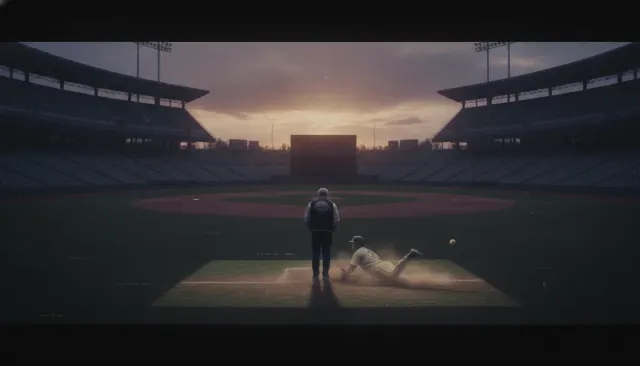
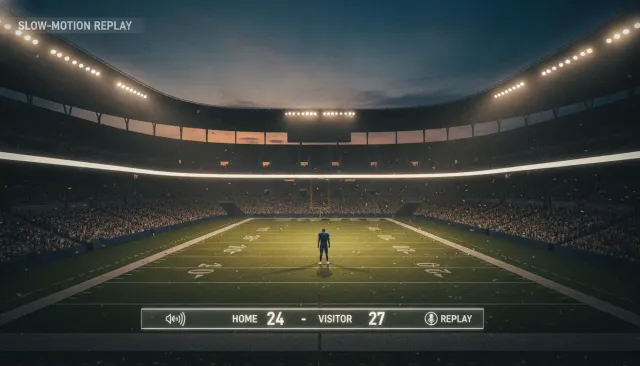
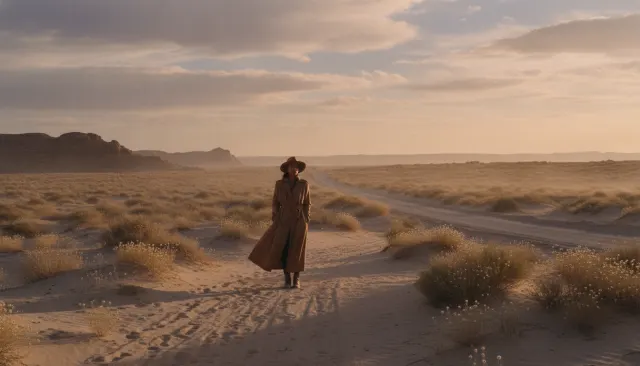
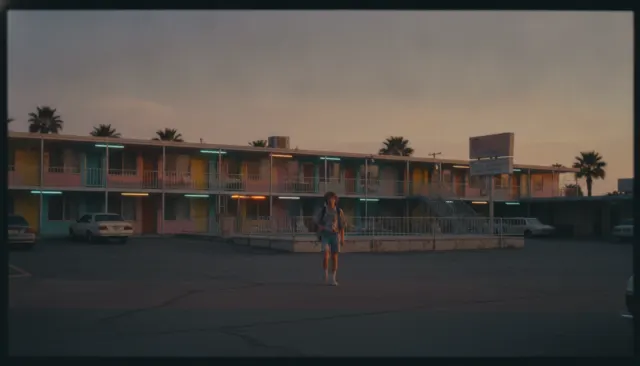
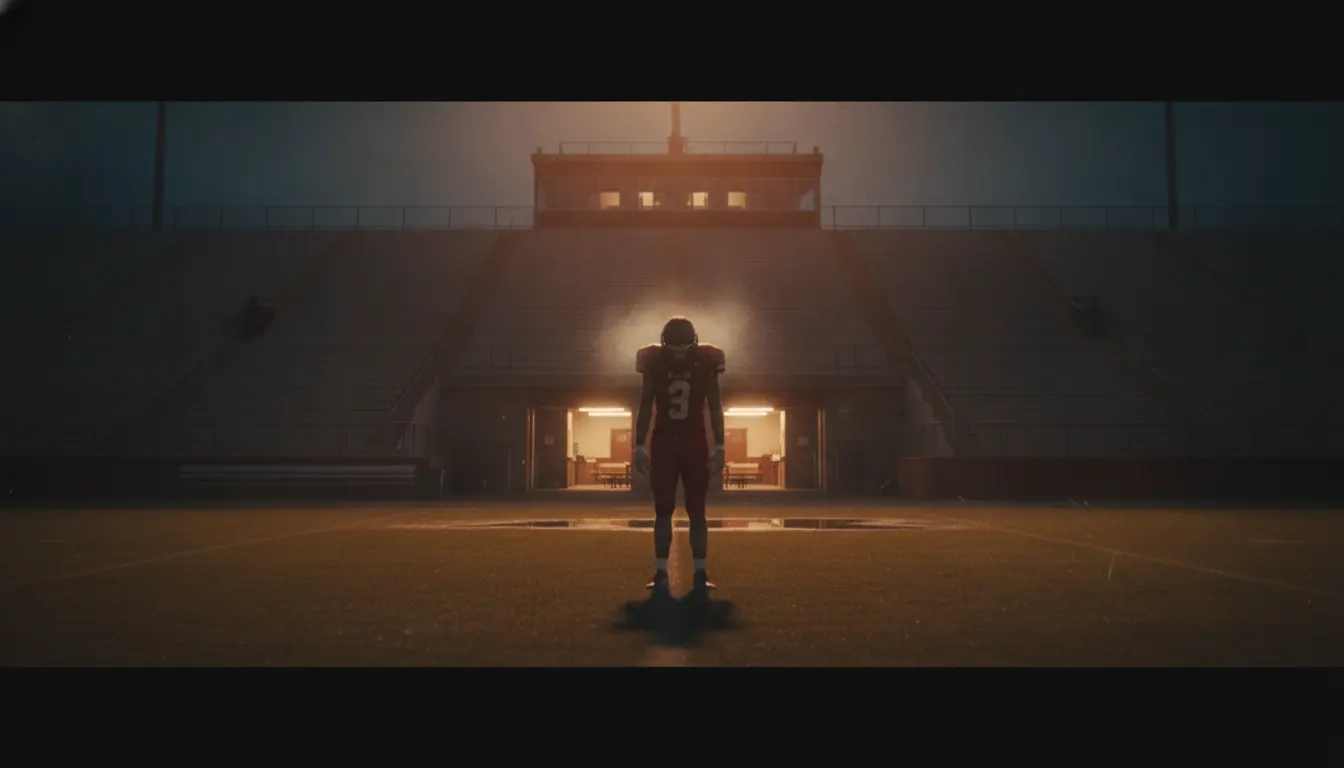
Texas-stadium sports drama. Peter Berg handheld, golden stadium lights, slow-motion locker room, sweat and Friday-night ritual.
The moves a human crew would use to get here. Cue applies them for you, and knowing their names is how you ask for a change.
Camera operators positioned inside the action at field level during game sequences, prioritising immediacy over composition.
Domestic and social scenes lit primarily by practical sources, not cinematic fill, maintaining the warmth and imperfection of real environments.
Consistent warm but slightly desaturated colour temperature that functions as geographic and emotional sense of place.
Editing rhythm is responsive rather than precise, following emotional logic rather than choreographic planning.
Domestic scenes are photographed at very close range, creating an intimacy that blurs the line between observer and participant.
Window light is allowed to slightly overexpose while interior shadows retain density, mimicking the actual experience of Texas afternoon light.
Friday Night Lights - both Peter Berg's 2004 film and the subsequent NBC/DirecTV television series (2006-2011) created by Jason Katims - represents the most fully realised deployment of handheld naturalism in sports drama, creating a visual language for athletic competition and small-town American community that influenced a decade of prestige television cinematography.
Berg, working with cinematographer Tobias Schliessler, developed a specific approach to photographing high school football that prioritised immediacy over spectacle. Unlike conventional sports film photography - which typically uses multiple telephoto cameras at distance and slow motion as the primary emotional device - Friday Night Lights (2004) used handheld cameras in the middle of the action. Cameras were placed inside the huddle, at field level during live plays, and within a few feet of blocking and tackling. Lenses were wide, coverage was genuine rather than staged, and the cutting was loose and intuitive rather than precisely choreographed.
This approach drew on the visual language of the documentary Hoop Dreams (1994, Steve James) and the ethnographic sports journalism of Buzz Bissinger's source book. Schliessler and Berg created a grammar where the camera's relationship to bodies in motion is tactile and proximate - the opposite of the television broadcast aesthetic.
The television series, photographed over its five seasons by multiple directors of photography with a consistent visual mandate from showrunner Jason Katims, extended the naturalistic grammar from the football field to the domestic and social life of Dillon, Texas. The series' most distinctive visual quality in its domestic scenes is its use of available and motivated natural light - windows, practical fixtures, day-exterior fill - combined with a handheld or light-footed Steadicam that follows characters at close range.
Colour temperature in the series is warm and slightly desaturated: the Texas plains in afternoon light, the specific quality of gymnasium fluorescents, the kitchen-lamp amber of domestic evenings. This consistent colour temperature functions as a sense of place, distinguishing Friday Night Lights from the cleaner, more studio-lit look of network drama contemporaries.
The series directly influenced the visual grammar of Parenthood (2010-2015), This Is Us (2016-2022), and a generation of NBC dramedies that adopted handheld naturalism as a signal of emotional authenticity. It also influenced the broader prestige television shift away from three-camera studio production toward single-camera, naturalistic cinematography.
Peter Berg / Tobias Schliessler · 2004
Originating the handheld field-level grammar for high school football drama
Jason Katims / Various DPs · 2006
Five-season naturalistic drama; prestige TV handheld grammar at its most consistent
Steve James / Peter Gilbert · 1994
Documentary precursor: high school basketball photographed with genuine participant access
Brian Robbins / Chuck Cohen · 1999
Earlier high school football drama using more conventional broadcast grammar for contrast
Jason Katims / Various DPs · 2010
Direct descendent: family drama using the warm handheld naturalism from FNL
Jay Roach / Jim Denault · 2016
Political drama using warm naturalistic grammar influenced by the FNL approach
A Look is not a filter. It is a set of stored decisions the pipeline reads before it makes a single frame, so two videos in the same Look actually match.