A Quiet Place
John Krasinski / Polly Morgan · 2018
Defining survival-horror naturalism; silence-driven visual storytelling
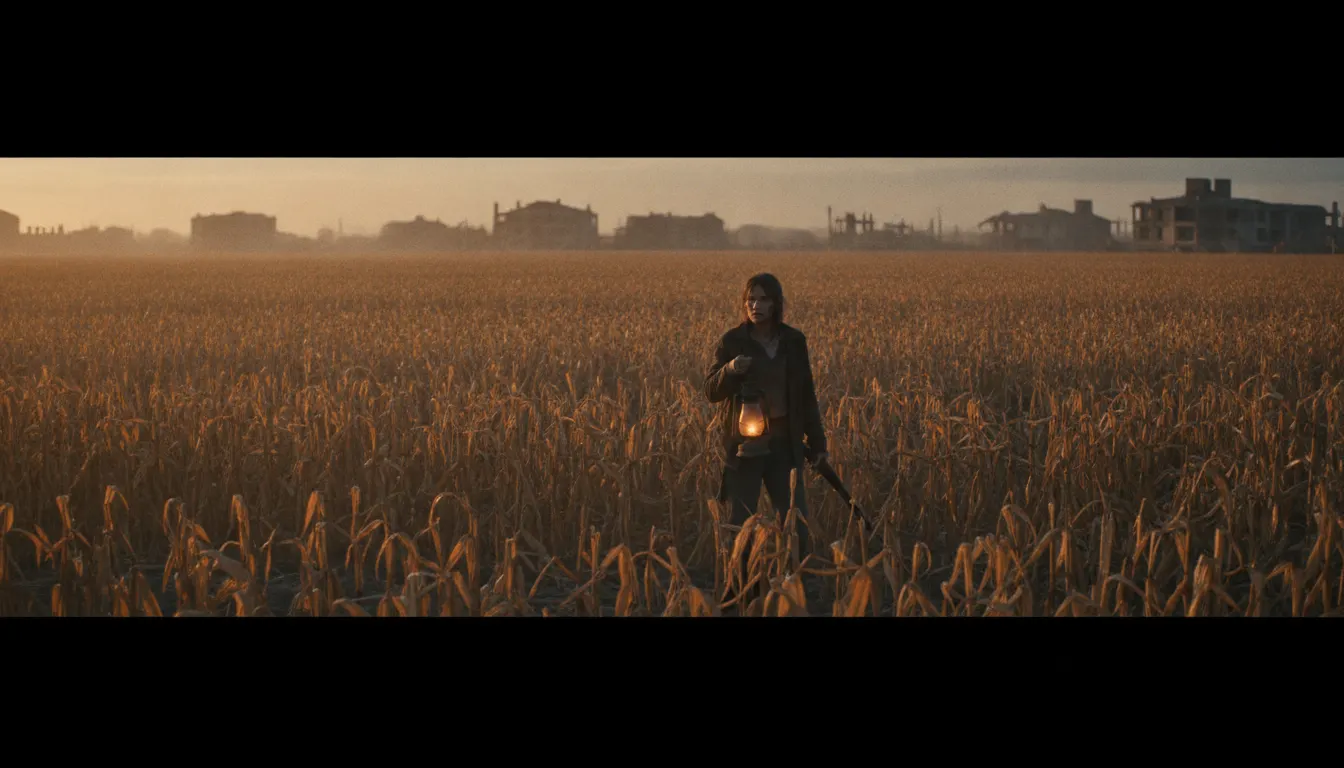
Polly Morgan A Quiet Place natural-light tension. Krasinski post-apocalypse, magic-hour cornfield silence, candle-and-lantern interior, breath-held wides.
The moves a human crew would use to get here. Cue applies them for you, and knowing their names is how you ask for a change.
All light sources are justified by in-scene fixtures - fireplaces, lanterns, windows - giving the image an organic, lived-in quality.
Camera movement is subtle and reactive, following action rather than choreographing it, creating documentary intimacy.
Muted ochres, greys, and deep greens reinforce survival-world austerity; saturated colour is reserved for emotionally charged moments.
Faces retain full grain and texture, rejecting commercial smoothing to ground characters in physical reality.
Wide shots emphasise the isolation between characters and the vastness of the surrounding environment.
Selective focus isolates subjects while keeping backgrounds identifiable and contextually meaningful.
Polly Morgan is a British cinematographer whose work is defined by an intensely observational, environment-led naturalism. Her most celebrated collaboration, A Quiet Place (2018) and A Quiet Place Part II (2020) with director John Krasinski, established her as one of the foremost practitioners of tension-through-silence cinematography, where the visual language must carry narrative weight typically borne by dialogue and sound.
Morgan's naturalistic approach draws on available and motivated light sources. Interiors are lit by practicals - lamps, fires, daylight streaming through windows - creating an organic, lived-in quality that distinguishes her work from the polished clarity of mainstream Hollywood. Exteriors favour the golden hues of late afternoon or the cool blue of overcast days, rarely manipulating natural conditions.
In A Quiet Place, the near-absence of a conventional soundtrack forced Morgan to use visual rhythm as an emotional carrier. Compositions emphasise negative space and the distance between characters, externalising isolation and dread. The farmland and waterfall sequences are photographed with a documentary intimacy, handheld camera movements suggesting a family actually living this precarious existence.
Morgan frequently employs shallow depth of field to isolate subjects from their environments, yet unlike glamour-driven bokeh, her out-of-focus backgrounds remain identifiable and contextually grounded. Skin tones are rendered with full texture, avoiding the smoothing that characterises much commercial work. She works closely with practical effects teams to ensure that light sources feel genuinely motivated.
Her colour palette tends toward muted earth tones - ochres, greys, deep greens - punctuated by the warm amber of firelight or the cold silver of moonlight. This restraint reinforces the world-building of survival narratives, where colour luxury itself has been stripped away.
Beyond the Quiet Place franchise, Morgan's portfolio includes Banana Split (2018) and early television work that demonstrated her range across genre. Her approach influenced a wave of post-2018 genre films that sought to combine horror or thriller tension with naturalistic visual grammar, rejecting the heightened stylisation common to the genre.
The cinematographic vocabulary Morgan codified - motivated practicals, textured naturalism, observational handheld work within narrative genre filmmaking - has become a touchstone for independent and mid-budget genre directors seeking authenticity without sacrificing tension.
John Krasinski / Polly Morgan · 2018
Defining survival-horror naturalism; silence-driven visual storytelling
John Krasinski / Polly Morgan · 2020
Extended world-building with the same motivated-light grammar
Benjamin Kasulke / Hannah Marks · 2018
Lighter naturalism applied to coming-of-age comedy-drama
Various / Polly Morgan · 2009
Early UK television work establishing naturalistic genre vocabulary
Various / Polly Morgan · 2017
Period naturalism applied to wartime drama
Polly Morgan · 2014
Intimate drama using natural light to excavate psychological tension
A Look is not a filter. It is a set of stored decisions the pipeline reads before it makes a single frame, so two videos in the same Look actually match.
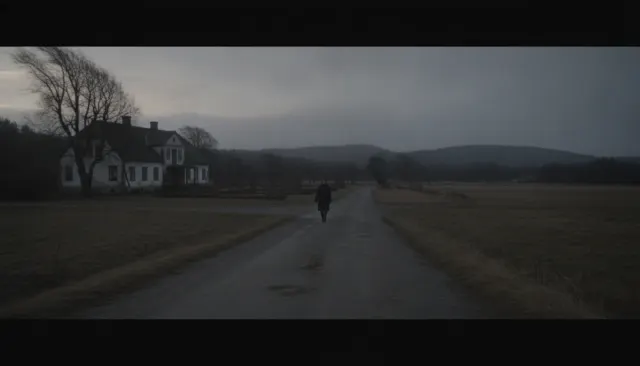 Cinema Era VintageDogme 95 Handheld Natural
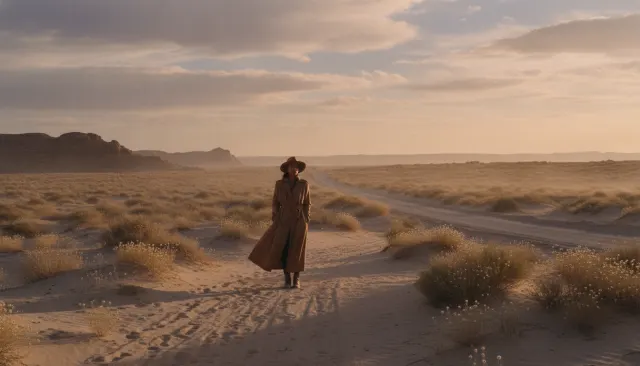 Consumer FormatKodak Portra Doc
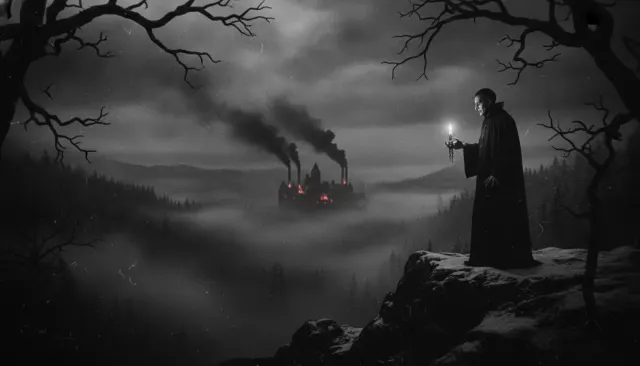 Director Aesthetic ModernRobert Eggers Historical Natural Light
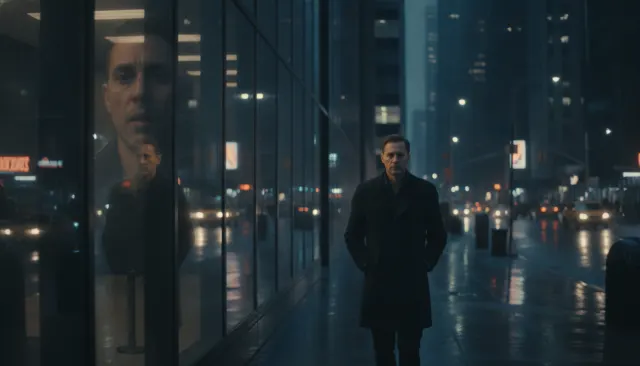 Cinematographer AcclaimedSean Bobbitt Shame Handheld Intimate
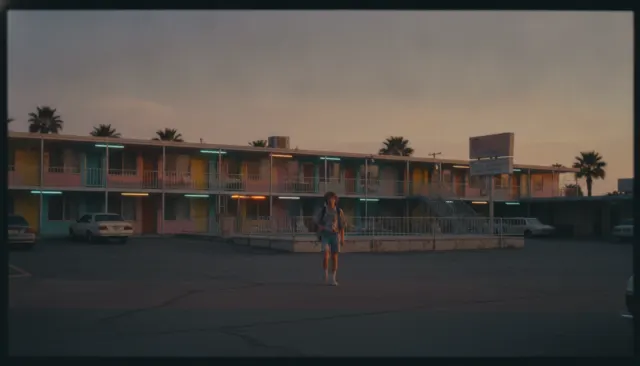 Mumblecore IndieSundance 2010s Indie Natural
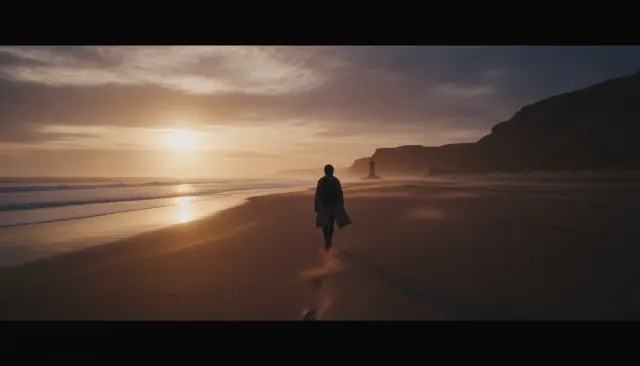 CinematographerLubezki Natural Light
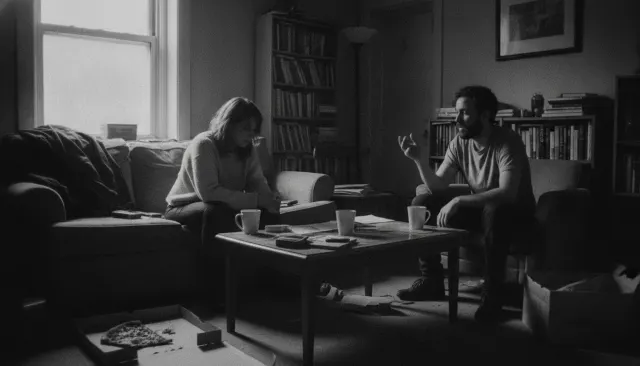 Mumblecore IndieMumblecore Natural BW