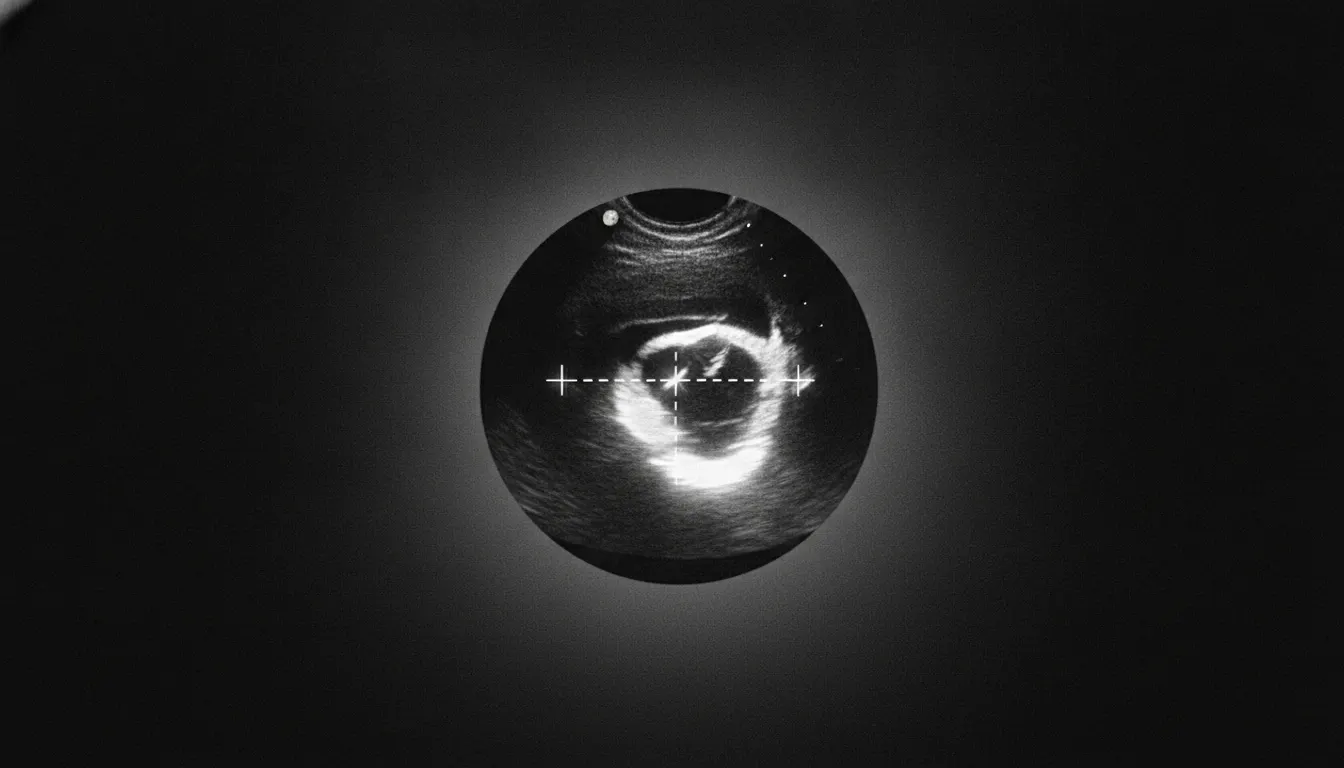
First B-mode fetal ultrasound images
Ian Donald, Tom Brown, University of Glasgow · 1958-1970s
First diagnostic ultrasound images, establishing the visual vocabulary that became the global standard for prenatal care
Ultrasound sonogram. Fan-shaped wedge frame, grainy black-and-white speckle, soft tissue interfaces bright, calipers and patient data overlay.
The moves a human crew would use to get here. Cue applies them for you, and knowing their names is how you ask for a change.
Characteristic granular noise pattern produced by constructive/destructive interference of ultrasound waves at the cellular level - impossible to eliminate without spatial filtering.
Pie-slice shaped image field from phased array transducers, with the apex at the transducer position at the top and the image widening toward the bottom.
Bone, calcification, and dense interfaces appear brilliant white with characteristic posterior acoustic shadow - the reverse of X-ray tonality.
Fluid-filled spaces (bladder, amniotic sac, cysts, blood vessels) appear as pure black voids, providing high-contrast structure definition.
Measurement scales along the image borders in centimeters, with the distinctive tick-mark and numerical labeling of clinical equipment.
Visible horizontal scan lines at lower frame rates, and the frame rate/frequency display overlays from the scanning equipment settings.
Still frame extracted from real-time imaging has characteristic motion artifact and temporal averaging that distinguishes it from purpose-made still photography.
The sonogram aesthetic reproduces the visual language of medical ultrasound imaging: high-contrast grayscale imagery with characteristic speckle noise, sector or linear scan geometry, white tissue structures on dark gray-black backgrounds, depth measurement scales on the image borders, and the pixelated resolution that characterized analog-era diagnostic imaging.
The diagnostic ultrasound image has its origin in 1956 when Ian Donald, Professor of Midwifery at the University of Glasgow, and engineer Tom Brown adapted industrial ultrasonic flaw detection equipment for medical use. Donald's first successful use of the technique to diagnose an abdominal tumor in a patient was published in The Lancet in 1958. The first obstetric application - imaging a fetal head - followed shortly after, establishing the technology that would become routine in prenatal care worldwide.
Early ultrasound images were A-mode (amplitude-mode) amplitude traces rather than 2D images. B-mode (brightness-mode) imaging, which produces the familiar 2D cross-section image, was developed through the 1960s, with the first real-time B-mode scanners appearing in the early 1970s. The characteristic fan-shaped sector scan geometry came from the phased array transducer designs of the mid-1970s, and the specific gray-scale pixelated quality of the classic sonogram is from the 8-bit analog-to-digital conversion of these systems.
The aesthetic signature of ultrasound imaging is determined by the physics of acoustic echography: tissue density determines return echo strength, which maps to brightness. Bone and calcified structures produce bright (hyperechoic) returns; fluid-filled structures are anechoic (black); soft tissues produce intermediate gray values with characteristic speckle patterns from constructive and destructive interference of sound waves at cellular scale.
The scan geometry varies by transducer type: linear transducers produce rectangular images; phased array transducers produce the classic sector (pie-slice) fan shape; curvilinear transducers produce curved rectangular images. Each geometry has a distinctive silhouette that anchors the aesthetic to its source.
Contemporary ultrasound machines produce high-resolution digital images with color Doppler overlays, 3D reconstruction, and HD-live modes that are visually quite different from the classic analog B-mode aesthetic. The specific vintage ultrasound look referenced in art and design is primarily from 1970s-1990s equipment.
Ian Donald, Tom Brown, University of Glasgow · 1958-1970s
First diagnostic ultrasound images, establishing the visual vocabulary that became the global standard for prenatal care
various conceptual artists · 2012
Ongoing tradition of recreating art historical masterworks in ultrasound image style as commentary on medicine and reproduction
various · 1990s-present
Cultural institutionalization of the sonogram image as a birth announcement and identity document that made the aesthetic universally recognizable
Ridley Scott / production design team · 2017
Sci-fi medical imaging that consciously referenced ultrasound aesthetics in body-horror alien gestation sequences
various medical equipment manufacturers · 2000s-present
Transition from classic B-mode to HD-live 3D ultrasound portrait quality, creating a secondary aesthetic layer in prenatal imaging
various cardiology labs · 1970s-present
Motion-mode and real-time cardiac echo imaging that extended the ultrasound aesthetic into temporal visualization of organ function
A Look is not a filter. It is a set of stored decisions the pipeline reads before it makes a single frame, so two videos in the same Look actually match.
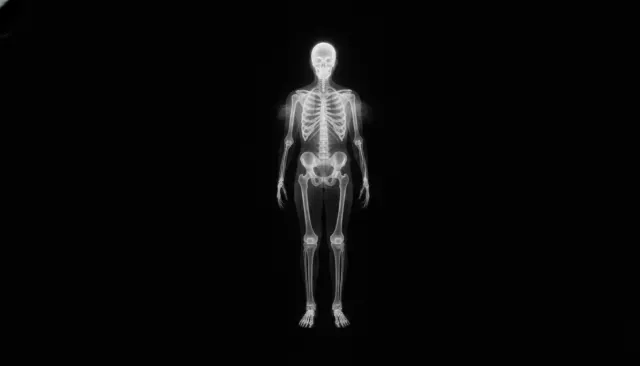 Scientific ImagingX-Ray Anatomy Translucent
 Director Aesthetic ModernDavid Cronenberg Body Horror Clinical
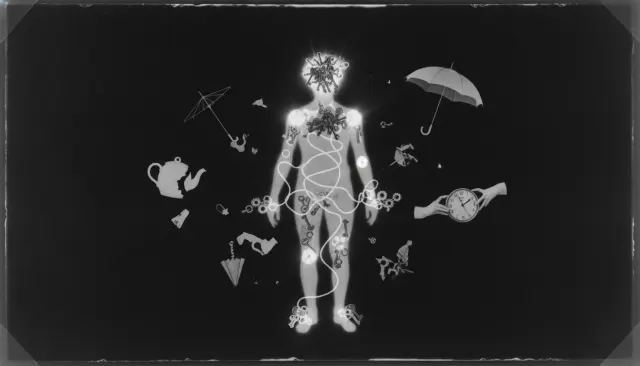 Analog Camera ExtendedPhotogram Man Ray Rayograph
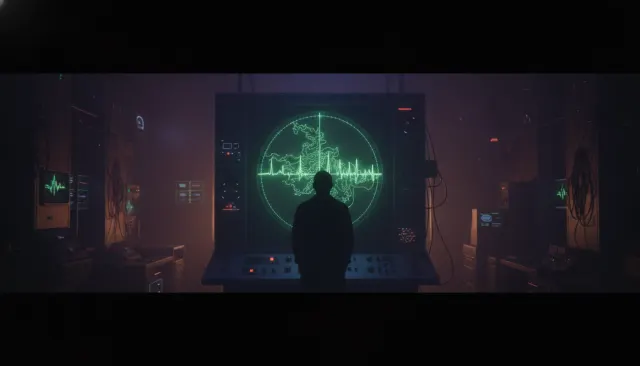 Display Format ExtremeOscilloscope Vector Green Wave
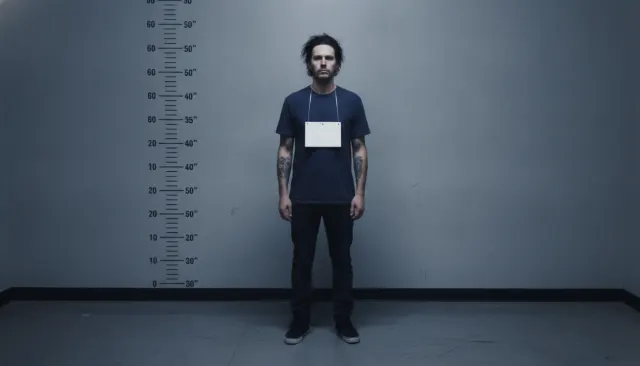 Portrait TraditionsMugshot Front Side Flash
 Analog Process ExtendedSalt Print Modern Experimental