Stargate sequence, 2001: A Space Odyssey
Douglas Trumbull / Stanley Kubrick · 1968
Definitive slit-scan motion picture sequence, produced over seven months of shooting and defining the technique for film effects
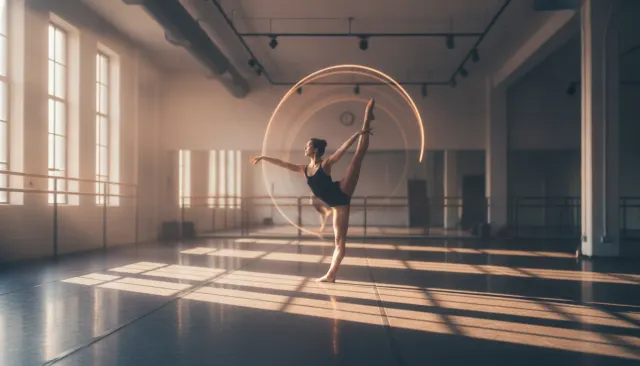
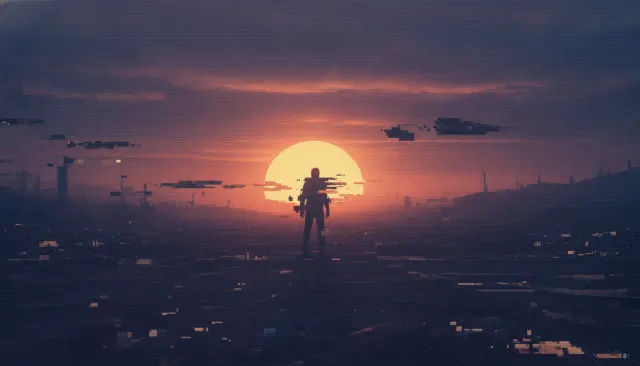
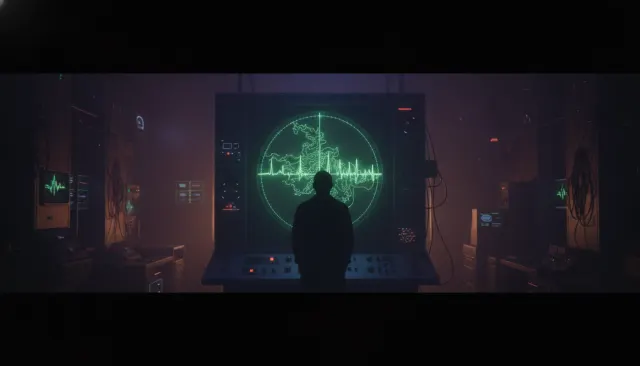
Slit-scan time-stretched photography. One-pixel column captured across many moments, time becomes a spatial axis, smear-streak abstraction.
The moves a human crew would use to get here. Cue applies them for you, and knowing their names is how you ask for a change.
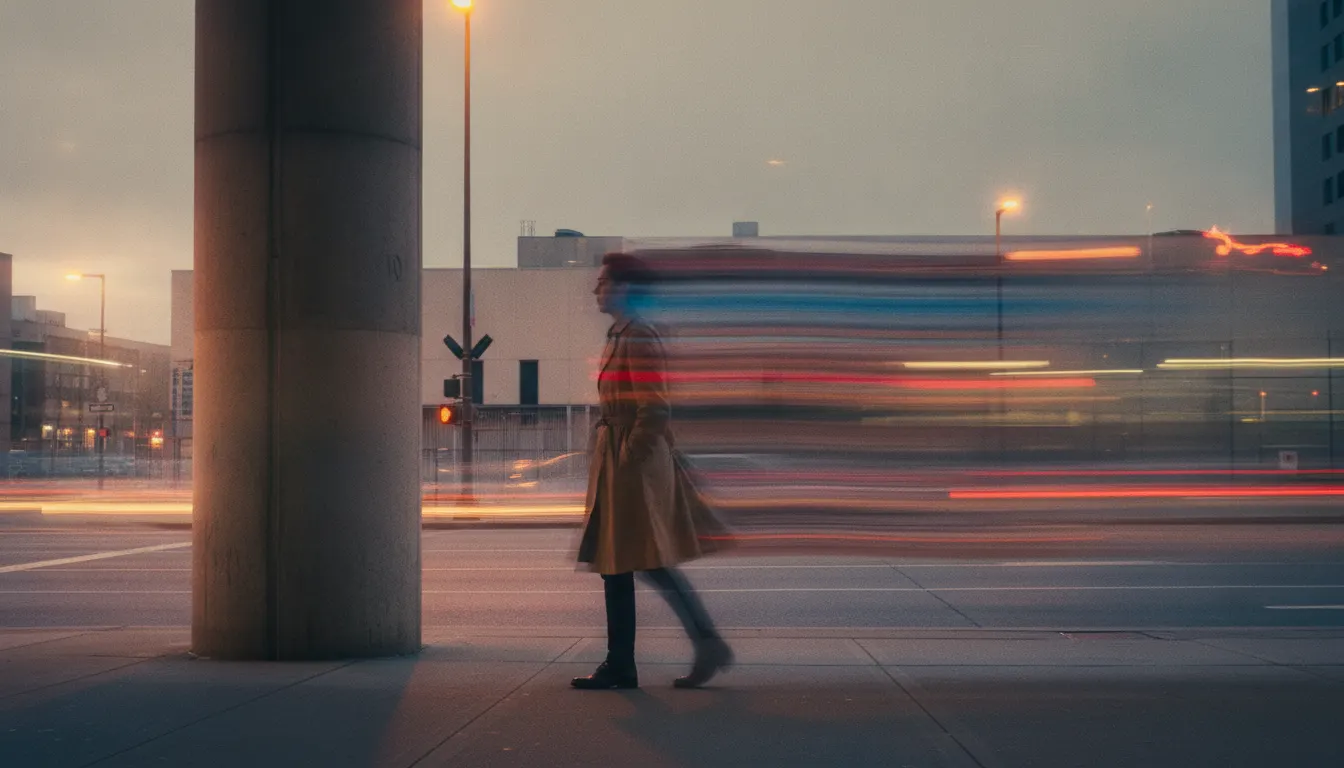
Moving subjects during the scan period appear as stretched ribbons - the length of the streak proportional to speed relative to scan rate.
Elements that are completely still during the entire scan duration reproduce normally, creating the juxtaposition of frozen architecture and flowing figures.
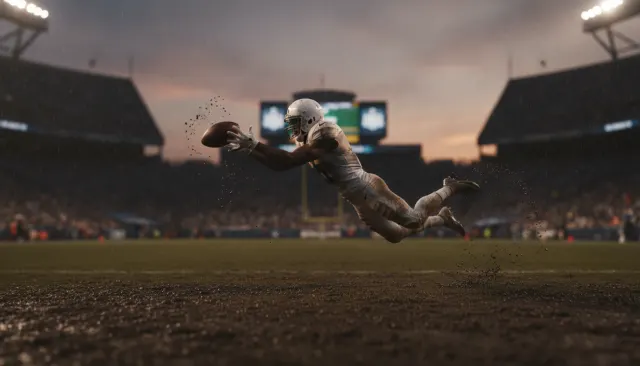
In race photography, multiple athletes crossing at different times appear in the same image as side-by-side bodies, each photographed at their own finish instant.
Color changes during a scan (light shifting, objects moving) produce horizontal color banding that represents temporal color events.
Varying the scan speed during capture produces sections of extreme stretch and compression in the same image.
Horizontal slit scanning captures spatial width over time (the typical landscape mode); vertical slit produces temporal ribbons along the image height.
Subjects moving in the same direction as the scan at exactly scan speed appear frozen; subjects moving opposite to scan speed appear doubly compressed.
Slit-scan photography captures time across a single spatial dimension, producing images where the horizontal axis represents space and the vertical axis (or the other way) represents time. A narrow slit aperture scans across the scene, building the image strip by strip - subjects that move during the scan appear stretched, compressed, or multiplied; stationary elements appear normal. The result reveals temporal events invisible to the normal frame.
The most culturally significant slit-scan moment is the Stargate sequence in Stanley Kubrick's 2001: A Space Odyssey (1968). Effects supervisor Douglas Trumbull developed the specific technique by mounting a camera on a rail and moving it toward a slit backlit by colored artwork on a rostrum frame, with long exposures capturing the approaching slit as a smeared, streaking tunnel of light. The technique took nearly a year to perfect and approximately seven months to shoot. Trumbull later patented variations and used them in Close Encounters of the Third Kind (1977), Star Trek: The Motion Picture (1979), and Blade Runner (1982).
Slit-scan has a completely separate practical application in race finish-line photography, used continuously since the 1940s. A camera positioned at the finish line with a vertical slit aperture records a continuous horizontal strip as athletes cross - the image shows every competitor at the instant they crossed the exact finish line, with their bodies stretching or compressing based on their speed relative to the scan rate. This produces the authoritative finish photograph used in Olympic events, horse racing, and cycling.
Joon Yong Park's Train series (2009) applied the race finish-line principle to street photography, scanning moving trains and pedestrians to produce dreamlike ribbon-images where bodies become fluid streaks and architecture holds still. Andy Davies' ScanCamera app (2001-era concept, widely implemented on iPhone from ~2009) made slit-scan available to anyone with a mobile phone.
Contemporary slit-scan applications include panoramic photography scanners repurposed for temporal capture (Noblex rotating cameras), custom Processing/openFrameworks implementations, and commercial After Effects plugins. Ryoji Ikeda's data.matrix and test pattern works use mathematically derived slit-scan principles at monumental scale. Instagram and TikTok effects including the "time slice" filter popularized the look to billions of users.
Douglas Trumbull / Stanley Kubrick · 1968
Definitive slit-scan motion picture sequence, produced over seven months of shooting and defining the technique for film effects
Douglas Trumbull · 1977
Extended application of slit-scan principles to UFO light sequences, second major film use of the technique
various / Athletics governing bodies · 1948-present
Continuous application of slit-scan finish-line photography to determine race outcomes at fractions of milliseconds
Joon Yong Park · 2009
Fine art street slit-scan work using transit photography to produce temporal ribbon images of urban movement
Ryoji Ikeda · 2006-present
Monumental gallery installations using data-driven slit-scan principles at billboard scale for Japanese electronic artist
various app developers · 2015-present
Mobile implementation of slit-scan principles bringing temporal ribbon photography to consumer social media platforms
A Look is not a filter. It is a set of stored decisions the pipeline reads before it makes a single frame, so two videos in the same Look actually match.