Heinz Kluetmeier
1980 US Olympic Hockey 'Miracle on Ice' (Sports Illustrated, February 1980)
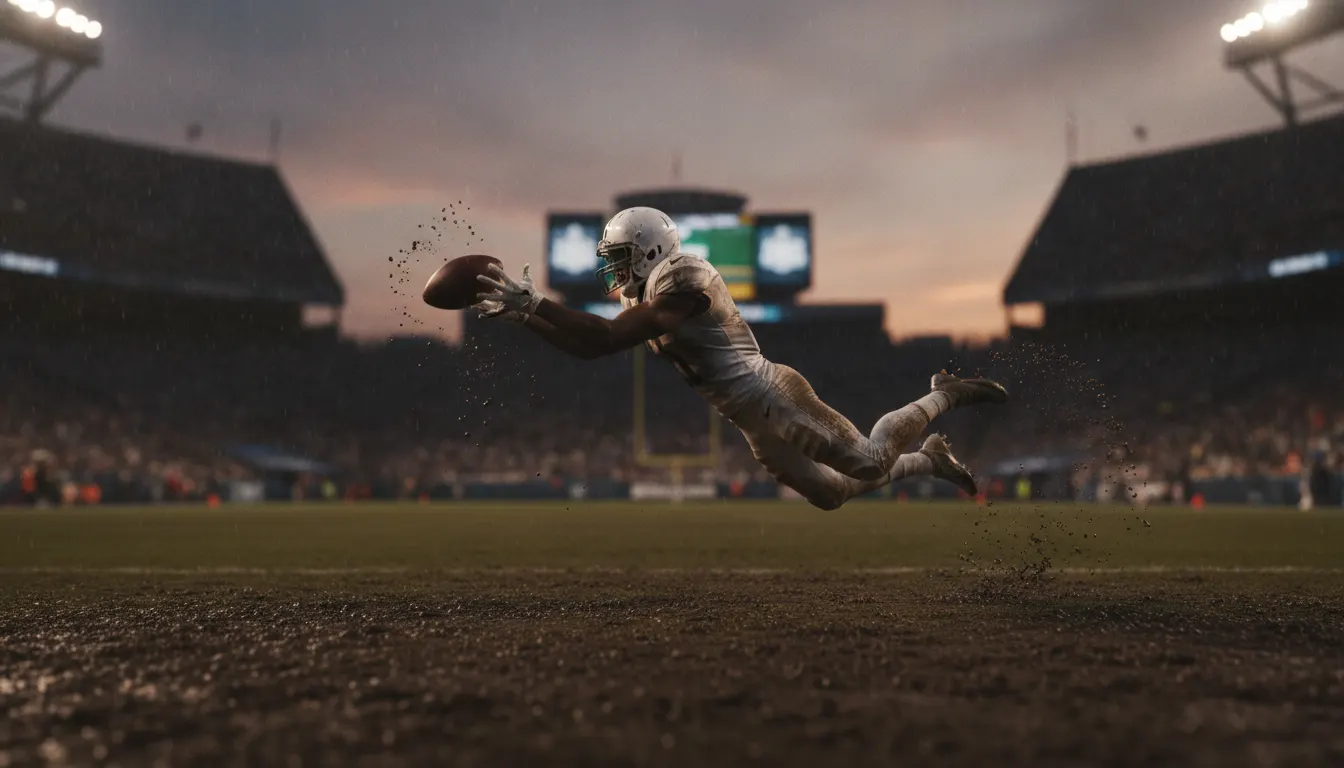
Modern Sports Illustrated action freeze. 1/4000 shutter NFL receiver mid-catch, mud and ball droplets airborne, telephoto compression.
The moves a human crew would use to get here. Cue applies them for you, and knowing their names is how you ask for a change.
1/4000 second to freeze peak athletic motion completely
14 fps to maximize peak-moment capture probability
era richness
Sports Illustrated's cover photography defined the visual language of peak athletic performance for more than six decades. From its founding in 1954 through the digital era, SI's photographers developed a rigorous technical discipline built around the decisive frozen moment - a single frame that compressed the full drama, effort, and beauty of sport into a rectangle.
Heinz Kluetmeier joined Sports Illustrated in 1971 and became one of its most decorated photographers, shooting more than 200 covers over four decades. His approach combined precise exposure timing with lighting setups that could freeze motion at 1/2000 second or faster, often on Kodachrome 64 pushed in processing. His 1980 US Olympic hockey team image ('Do You Believe in Miracles') became one of the most reproduced sports photographs in history.
Bill Frakes expanded the technical palette in the 1980s and 1990s with remote cameras positioned inside goalposts, underwater housings, and custom rigging that placed lenses where no human photographer could stand. His 1994 Super Bowl and track photography work demonstrated that the frozen moment could be engineered as much as anticipated.
The frozen-action SI look depends on shutter speed above all else: 1/1000 to 1/4000 second for ball sports, 1/2000+ for motorsport. Canon and Nikon's 400mm f/2.8 and 600mm f/4 telephotos became standard sideline equipment, allowing f/4 to f/5.6 apertures with the stadium fill-flash setups that SI pioneered to eliminate the harsh shadows of arena lighting. Motor drives advancing at 10-14 fps allowed burst sequences from which editors selected the peak frame.
SI's film-era color palette ran rich and saturated. Kodachrome 64 and Fujichrome Velvia gave colors a density and warmth that made green stadium turf glow and red uniforms pulse. The digital transition maintained this saturated palette through post-processing, with SI's photo editors consistently choosing frames with peak contrast between subject and background.
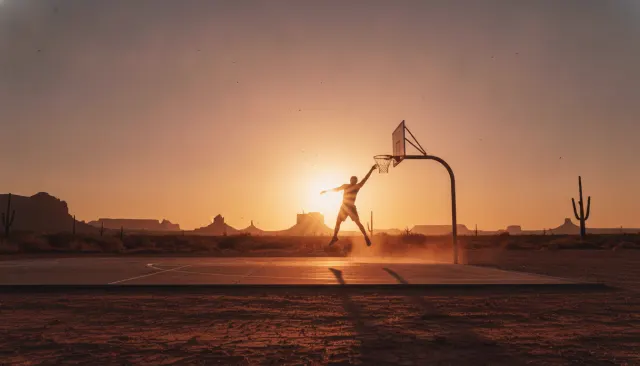
The single most iconic image in SI's frozen-action canon is arguably not a cover but a poster: Walter Iooss Jr.'s 1989 Nike Wings photograph of Michael Jordan in mid-flight, arms spread at the free-throw line. Iooss had been shooting SI covers since 1962 and brought a relationship-based intimacy to his subjects that separated his work from pure technical capture.
1980 US Olympic Hockey 'Miracle on Ice' (Sports Illustrated, February 1980)
1989
Michael Jordan Nike Wings poster
1994
Super Bowl XXIX coverage
first SI cover 1962, 200+ covers over 40-year career
Muhammad Ali vs. Sonny Liston 1965 (technically boxing, used across SI covers)
Carl Lewis Los Angeles 1984 Olympic coverage
Marion Jones Sydney 2000 track and field coverage
A Look is not a filter. It is a set of stored decisions the pipeline reads before it makes a single frame, so two videos in the same Look actually match.