Aaron Chang
Surfer Magazine covers and features 1982-2003, North Shore and Indonesia
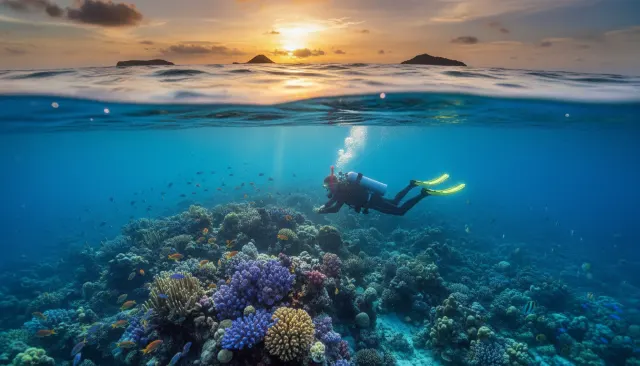
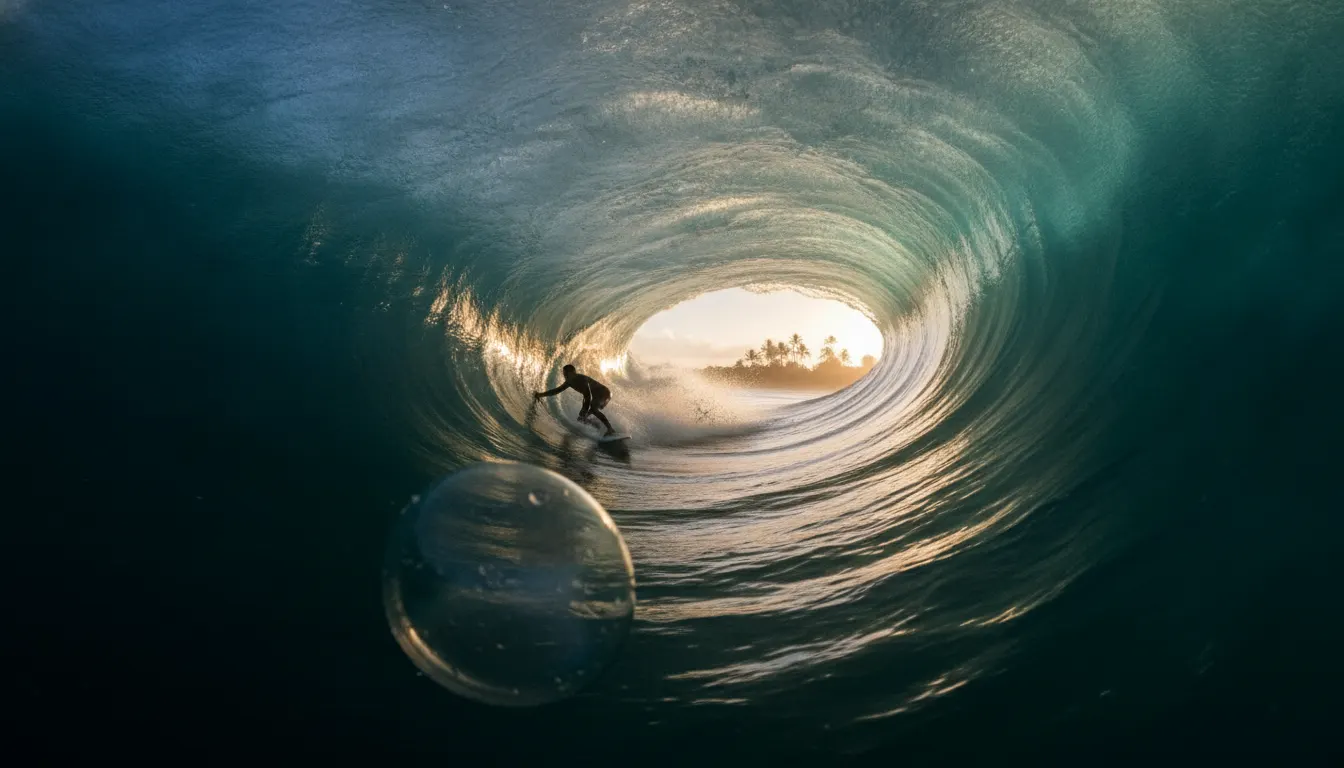
Water-housing surf photography. Pipeline barrel from inside, dome-port half-submerge, sun streak through wave wall, athlete-in-tube.
The moves a human crew would use to get here. Cue applies them for you, and knowing their names is how you ask for a change.
water position 5-15 feet from surfer inside or at the mouth of breaking wave
35mm wide zoom for maximum coverage and horizon distortion
cyan-aqua-green from sunlight refracted through wave face
camera at or below surface to maximize wave scale
1/2000s to freeze spray and water texture
Surfer water housing photography created one of the most visually distinctive niches in sports photography: images shot from inside or immediately in front of breaking waves, with the photographer in the water alongside or ahead of the surfer. The perspective is impossible from land and fundamentally changed how surfing was represented and experienced by audiences who had never seen a wave from the inside.
SPL (Sports Prestige Ltd) housings, along with competing systems from Aquatech and custom-built rigs by working photographers, enabled the in-water aesthetic. By the early 1990s, professional surf photographers were routinely paddling into heavy surf at breaks like Pipeline on Oahu North Shore, G-Land in Indonesia, and Teahupo o in Tahiti with Nikon or Canon bodies in waterproof polycarbonate housings. The wide-angle lens (typically 16mm or 17-35mm fisheye) was essential: it allowed photographers to get the camera within feet of the surfer while keeping both surfer and breaking wave in frame.
Aaron Chang shot for Surfer Magazine for more than two decades beginning in the early 1980s and became one of the most collected photographers in surf culture. His water housing work established the visual grammar that the genre still uses: low waterline angle, fisheye distortion that curves the horizon, brilliant cyan-blue water illuminated by tropical sun filtering through the wave face, and the surfer as a small bright figure set against the massive curved wall of the barrel.
Brian Bielmann, based on Oahu, specialized in the North Shore Pipeline season and worked with Sports Illustrated as well as surf-specific publications. His images of Kelly Slater, Andy Irons, and Rob Machado inside Backdoor and Pipeline barrels became defining imagery for those surfers careers. Bielmann also pioneered the use of remote cameras embedded in the reef or channel to achieve angles impossible from a swimming position.
Water housing surf photography has a specific color palette dominated by the refraction qualities of tropical water: the interior of a breaking wave illuminates with a brilliant cyan-aqua-green light as the sun passes through varying water depth. This tube light ranges from deep cobalt in large hollow waves to bright lime-cyan in shallower, faster barrels. Spray and foam add white texture against the green water, while the sky above appears as an exit tunnel of saturated blue.
Surfer Magazine covers and features 1982-2003, North Shore and Indonesia
Kelly Slater and Andy Irons Pipeline coverage, Sports Illustrated surf features
Surfer Magazine water housing work, Teahupo o documentation
early SPL housing development and Pipeline in-water work
Surfer Magazine water photography 1990s
enabling professional in-water sport photography
North Shore winter season defining the genre annually
A Look is not a filter. It is a set of stored decisions the pipeline reads before it makes a single frame, so two videos in the same Look actually match.