Metropolis
Fritz Lang / Karl Freund · 1927
Expressionist masterpiece; monumental sets and chiaroscuro lighting that defined sci-fi cinema
Silent-film tableau in black-and-white with iris transitions and intertitle cards. Murnau and Chaplin staging.
The moves a human crew would use to get here. Cue applies them for you, and knowing their names is how you ask for a change.
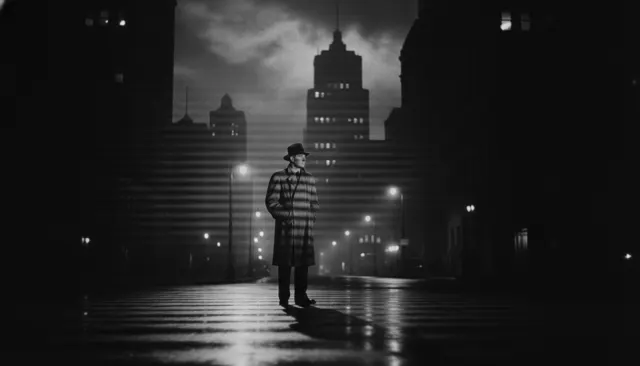
High-contrast lighting calibrated for orthochromatic stock sensitivity: blue-white highlights, deep black shadows.
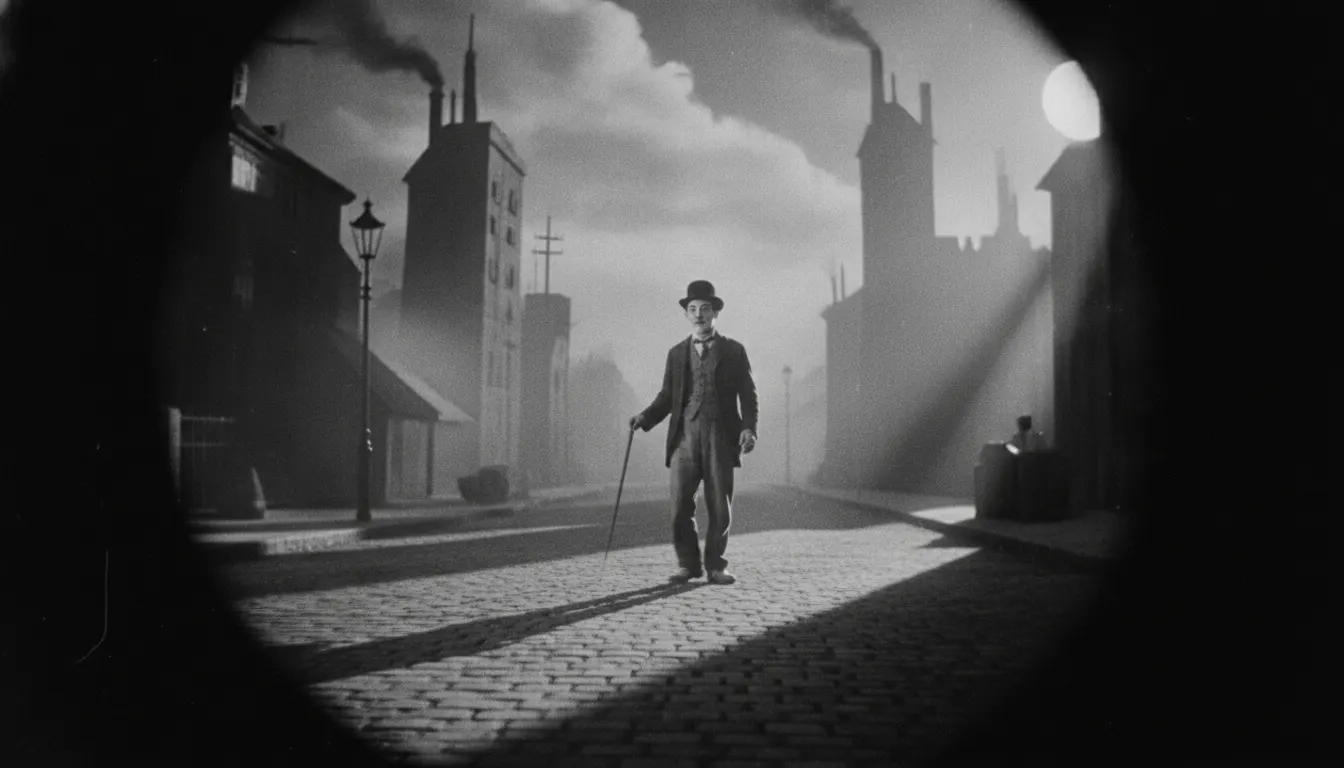
Circular vignette wipes in and out to begin and end scenes or to concentrate attention on a figure.
Amplified physical gesture and facial expression communicating emotion in the absence of dialogue.
Monochrome frames tinted amber, blue, green, or red to communicate time of day, mood, or event type.
Decorative title cards with period typography delivering dialogue and narrative information.
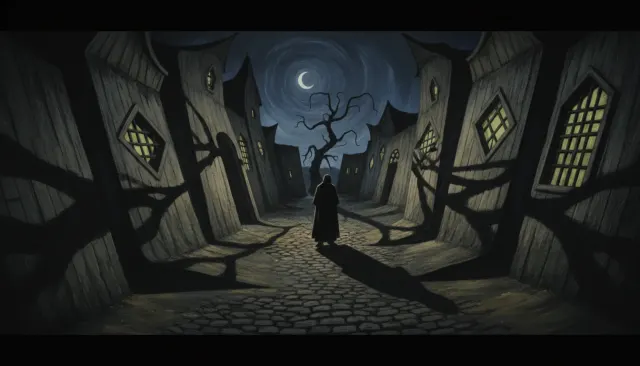
In the German Expressionist strain, deliberately warped architecture externalises psychological states.
The silent film era, spanning roughly 1895 to 1927, produced a visual language uniquely calibrated to communicate without spoken words - a cinema of gesture, intertitle, and exaggerated visual storytelling that remains one of the most influential aesthetic systems in the medium's history. The 1920s specifically represent the mature phase of silent cinema, when directors like F.W. Murnau, Fritz Lang, Erich von Stroheim, Buster Keaton, Charles Chaplin, and D.W. Griffith had developed sophisticated visual grammars far beyond the staged tableaux of early Edison and Lumière actualities.
Silent cinema's most distinctive feature is its performance style: in the absence of synchronised sound, actors communicated emotion through amplified physical gesture, facial expression, and bodily posture. This was not uniformly pantomimic - the best silent performances, particularly those of Chaplin (The Gold Rush, 1925; The Kid, 1921), Keaton (The General, 1926; Sherlock Jr., 1924), and Lillian Gish (The Birth of a Nation, 1915; Broken Blossoms, 1919), are recognisably naturalistic by the standards of their time and remarkably affecting today.
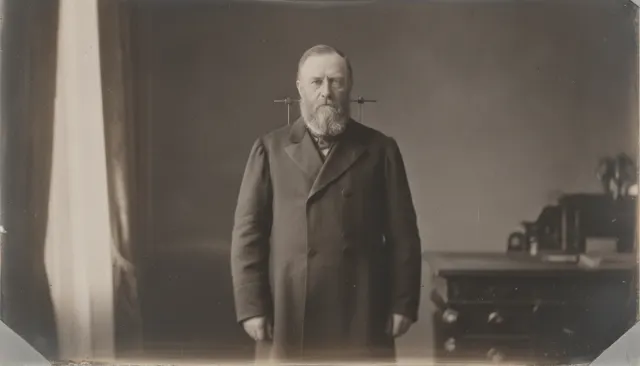
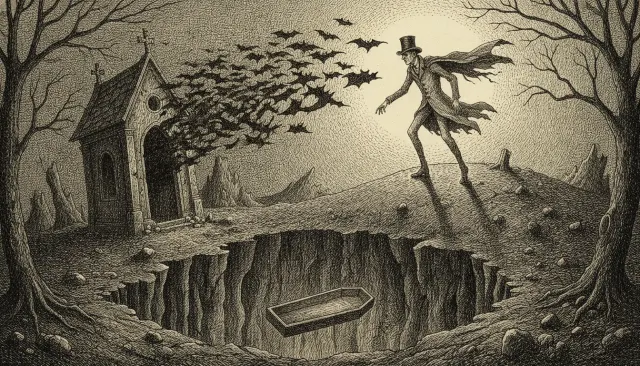
The German Expressionist branch of silent cinema - Lang's Metropolis (1927), Murnau's Nosferatu (1922) and Sunrise (1927), Wiene's The Cabinet of Dr. Caligari (1920) - used distorted sets, extreme chiaroscuro lighting, and deliberately theatrical staging to externalise psychological states. The chiaroscuro of cinematographers like Karl Freund and Fritz Arno Wagner (high-contrast shadows, angular light shafts, fog machines) created an expressionist visual vocabulary that directly influenced film noir and horror cinematography for decades.
Silent films were shot on orthochromatic film stock, which is more sensitive to blue and green light than red. This made blue eyes appear white, red lips appear nearly black, and red-filtered images extremely dark. The colour tinting common in exhibition prints - amber for day interiors, blue for night, red for fire sequences - was a chromatic narrative coding system that modern audiences rarely encounter. Projection speeds varied, and many films were projected at speeds that now make performers look unnaturally rapid or jerky.
The iris shot - a circular vignette used as a transition or to direct attention - is among the most iconic silent-era devices, along with split-screen techniques, double exposures for dreams and visions, and elaborate mechanical camera tracking shots (Sunrise contains some of the most extraordinary moving camera work in early cinema).
Silent films were never truly silent in exhibition: they were accompanied by live orchestras, solo pianists, or, in many theatres, a Wurlitzer organ. The music was often specifically composed or compiled. The visual grammar was inseparable from this musical accompaniment.
Fritz Lang / Karl Freund · 1927
Expressionist masterpiece; monumental sets and chiaroscuro lighting that defined sci-fi cinema
F.W. Murnau / Charles Rosher · 1927
Extraordinary moving camera work; transition from village to city as visual grammar
F.W. Murnau / Fritz Arno Wagner · 1922
Proto-horror expressionism; shadow as narrative agent
Buster Keaton · 1926
Peak mechanical comedy cinematography; real-action stunt work in wide master shots
Robert Wiene / Willy Hameister · 1920
Expressionist psychology; painted distorted sets as subjective distortion
Charles Chaplin / Rollie Totheroh · 1925
Chaplin's most photogenic film; naturalistic performance within constructed comedy
A Look is not a filter. It is a set of stored decisions the pipeline reads before it makes a single frame, so two videos in the same Look actually match.