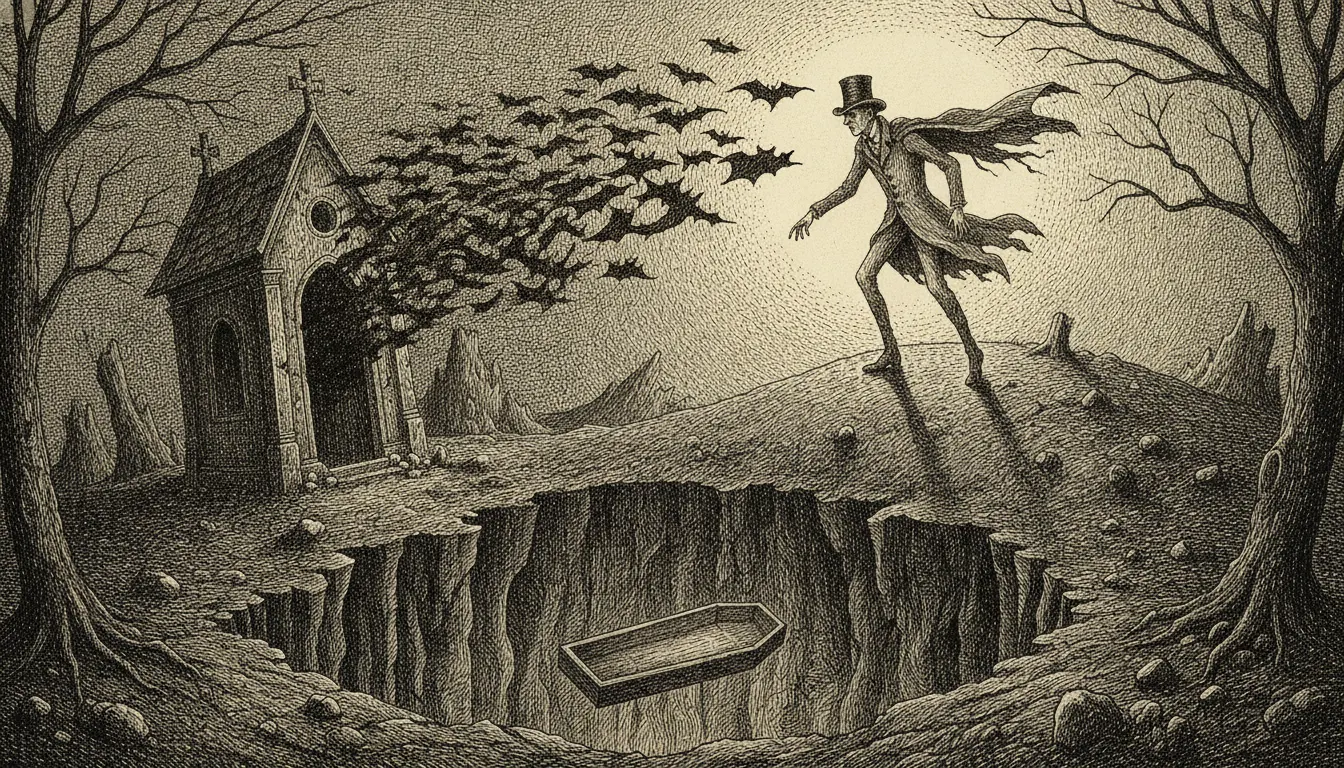
The Gashlycrumb Tinies
Edward Gorey · 1963
Illustrated alphabet of children's deaths; the most cited single Gorey work
Edward Gorey Gashlycrumb Tinies spooky cross-hatch. Tight Edwardian crosshatch, droll macabre child fate, sepia limited palette.
The moves a human crew would use to get here. Cue applies them for you, and knowing their names is how you ask for a change.
Form and tone built up through multiple layers of parallel and crossing fine ink lines rather than solid fills, producing a dense, textile-like shadow.
Stone buildings, wallpapered interiors, and fog-shrouded exteriors rendered with meticulous pen detail, creating spaces that feel oppressively detailed.
Narrative text delivered in a dry, matter-of-fact register that amplifies the horror or absurdity of what the images depict.
Human characters rendered slightly undersized relative to architectural masses, emphasizing vulnerability and institutional indifference.
Animal fur, tweed coats, and textiles differentiated through distinct cross-hatch angle and density variations - a visual taxonomy of surfaces.
Hand-lettered or Edwardian-typeface text integrated into composition asymmetrically, functioning as a visual element as well as information carrier.
Edward St. John Gorey (1925-2000) was an American author-illustrator whose work occupies a completely singular position in graphic art: a Victorian visual vocabulary deployed in service of scenarios that are simultaneously comic, sinister, melancholy, and inexplicable. His technique - dense, systematic cross-hatching in India ink over washes, printed primarily in black and white - produces images that feel both very old and timeless.
Gorey graduated from Harvard in 1950 after studying Chinese literature. He worked as a book designer at Doubleday before self-publishing through his Fantod Press imprint. His output was prolific and formally experimental: he wrote, illustrated, and designed the typography and layout of roughly 100 books.
The Gashlycrumb Tinies (1963) is the work most cited as definitional: an illustrated alphabet in which twenty-six children die in alphabetical order by their initial, rendered with such funereal precision that the sequence reads as both horror and parody. The Doubtful Guest (1957) features a wordless narrative in which an unexplained arctic creature arrives at a Victorian manor and simply remains, generating domestic disruption. The Hapless Child (1961) follows a small girl's Dickensian descent through misfortune with the same affectless prose and cross-hatched images.
The Fantod Pack (1995), a tarot-like oracle deck, and his stage designs for Dracula on Broadway (1977), for which he won a Tony Award for costume design, extended the aesthetic into theatrical contexts.
Gorey worked with fine-nibbed crow-quill pen and India ink, building up form and shadow through parallel hatching and cross-hatching rather than solid fill. The lines are fine, consistent, and numerous - shadows in a dark fur coat might involve four or five overlapping layers of hatching at different angles. This produces a texture that reads as both decorative pattern and tonal modeling.
His architectural environments - Victorian drawing rooms, stone mansions, fog-shrouded moorland - are drawn with the same cross-hatched exactitude as the figures, creating spaces that feel simultaneously cluttered with detail and emptied of air. The scale relationship between figures and environments is often slightly off, with humans appearing small and vulnerable against architectural masses.
Typography was central to his books: hand-lettered or set in period typefaces that matched the Edwardian visual register, often arranged asymmetrically to create compositional tension.
Gorey's aesthetic is foundational to the visual vocabulary of gothic, macabre, and quirky-sinister design. Tim Burton's early animated work, the visual style of Neil Gaiman's illustrated collaborations, and Halloween design more broadly owe a direct debt. His cross-hatch texture is a recognized shorthand for Victorian-gothic sensibility.
Edward Gorey · 1963
Illustrated alphabet of children's deaths; the most cited single Gorey work
Edward Gorey · 1957
Wordless narrative of an inexplicable arctic creature in a Victorian manor
Edward Gorey · 1961
Dickensian decline narrative with affectless prose and cross-hatch illustration
Edward Gorey (as Ogdred Weary) · 1961
Pseudonymously published; implied adult content rendered in Victorian euphemism
Edward Gorey (costume/set design) · 1977
Tony Award-winning stage design extending the visual vocabulary into theater
Edward Gorey · 1995
Oracle card deck; 20 cards with enigmatic cross-hatched imagery
Edward Gorey · 1953
Early book about a novelist; one of his few semi-autobiographical works
A Look is not a filter. It is a set of stored decisions the pipeline reads before it makes a single frame, so two videos in the same Look actually match.
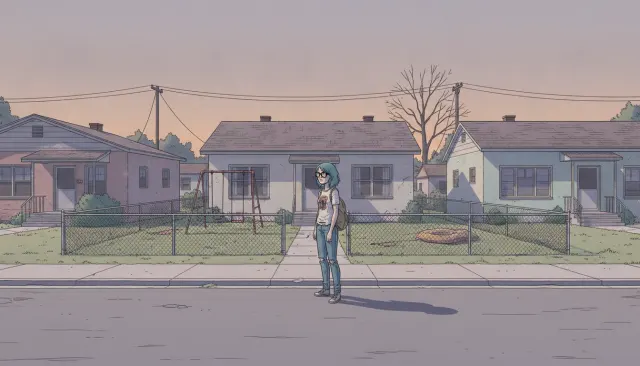 Illustrators ExtendedDaniel Clowes Deadpan Suburban Comic
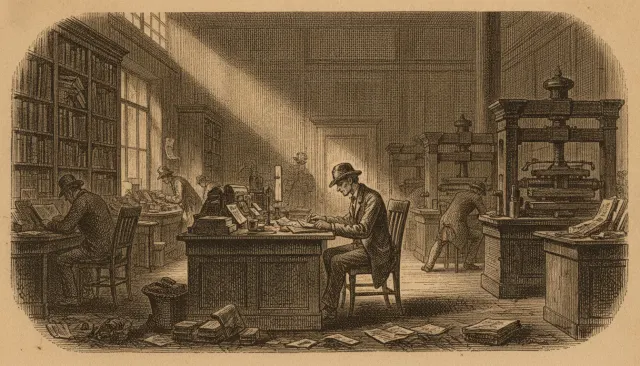 Editorial MagazineHarpers Magazine Old Engraving
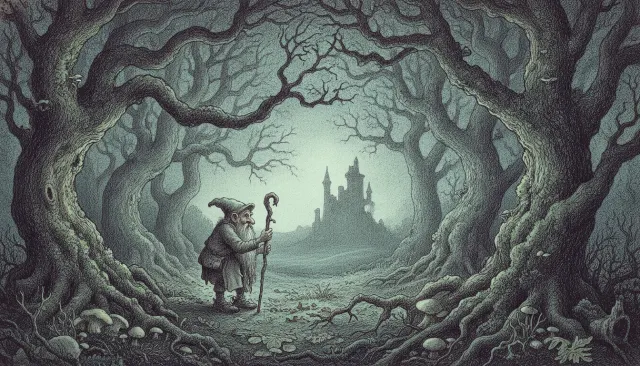 Medieval VictorianEdwardian Illustration Pen Ink
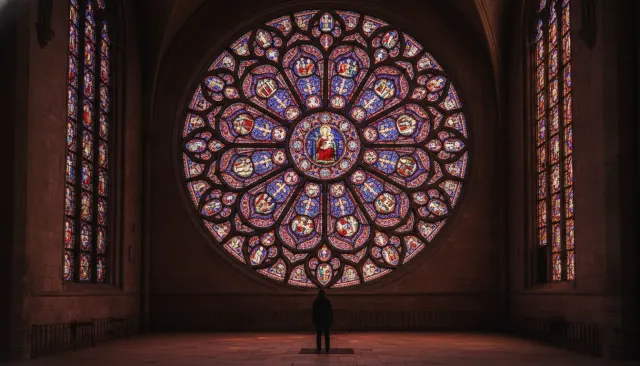 Medieval VictorianGothic Cathedral Stained Glass
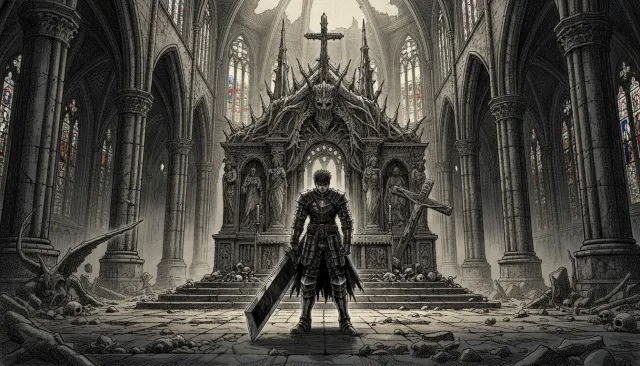 90S Manga AestheticsBerserk Dark Fantasy Ink Detail
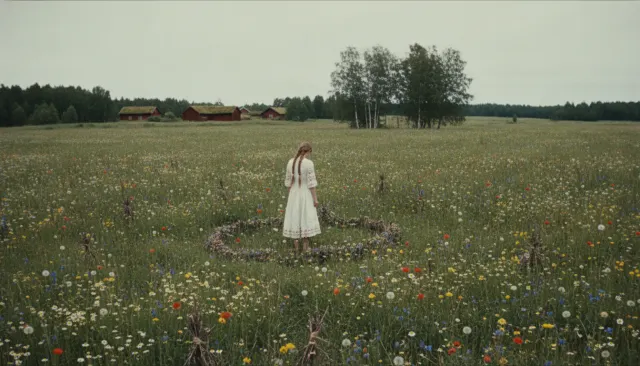 Director Aesthetic ModernAri Aster Folk Horror Eggshell