Grimm's Fairy Tales (Rackham edition)
Arthur Rackham (illustrator) · 1900
First major Rackham book; establishes the gnarled-tree and attenuated-fairy visual vocabulary
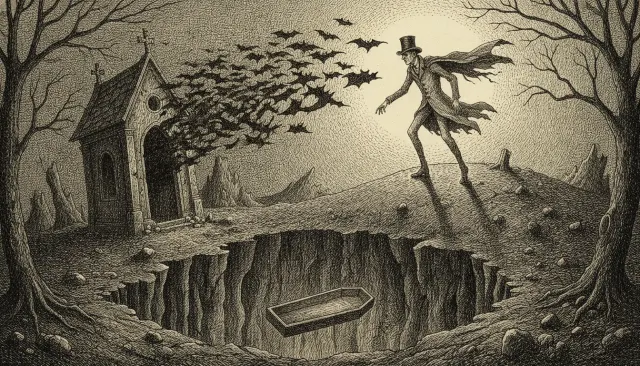
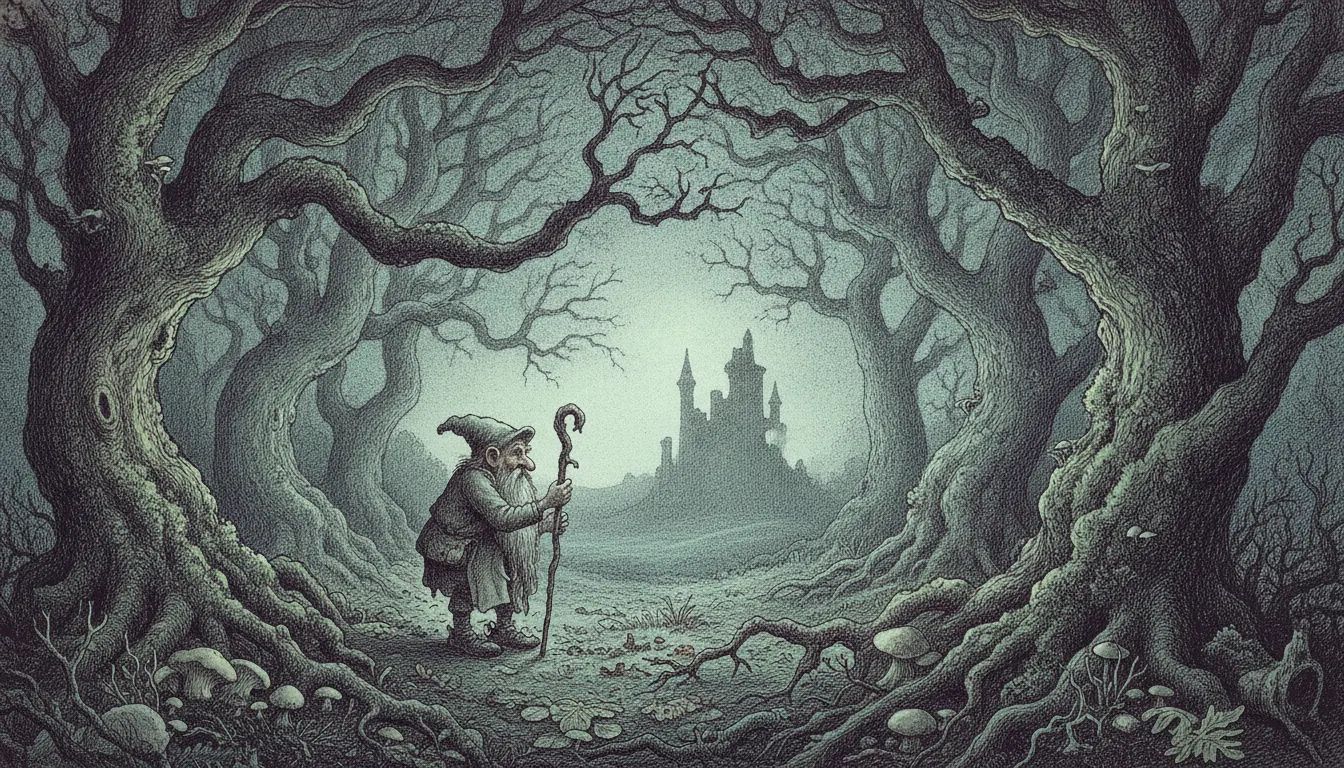
Arthur Rackham Edwardian fairy-tale pen-and-ink. Spidery branching tree limbs, gnarled gnome, soft watercolour wash, Brothers Grimm gloom.
The moves a human crew would use to get here. Cue applies them for you, and knowing their names is how you ask for a change.
Fine lines for distant backgrounds graduate to thicker, more fluid strokes for foreground figures, creating depth and visual hierarchy.
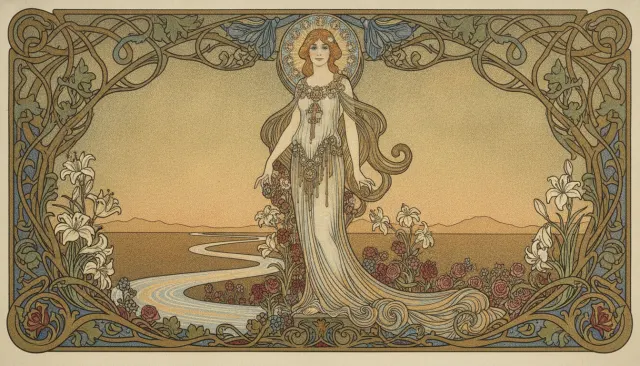
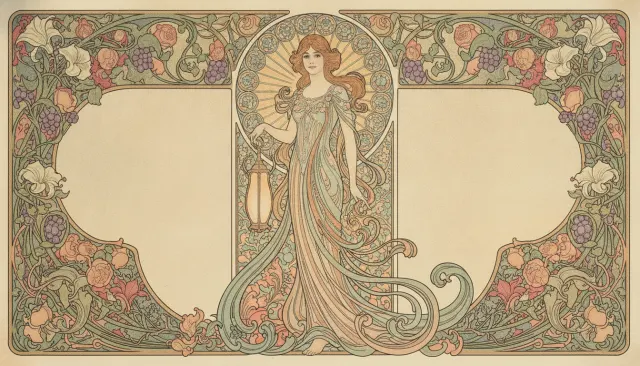
Frames and borders drawn from Art Nouveau and Aesthetic Movement sources - stylized flowers, geometric repeats, foliate patterns - integrate with narrative imagery.
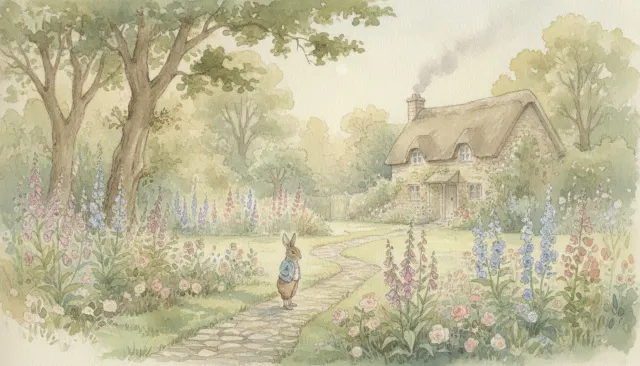
Transparent watercolor washes applied over pen-and-ink foundations produce translucent jeweled tones - especially characteristic of Dulac and Rackham color plates.
Trees, roots, and landscape elements given human-like qualities - particularly the gnarled, reaching-limb vocabulary of Rackham.
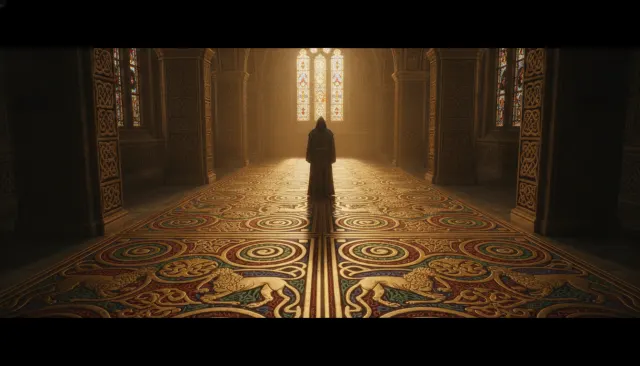
Background surfaces rendered with complex textile patterns, wallpaper, foliage, or architectural ornament, creating visual density that frames and amplifies the figure.
Human and creature figures slightly elongated, with fluid postures drawn from Art Nouveau's S-curve line, giving subjects elegance and unreality simultaneously.
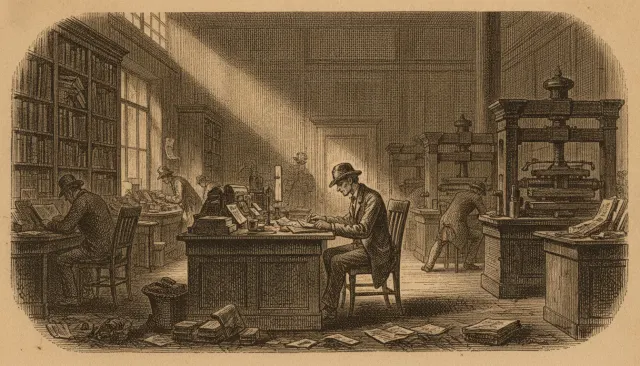
The Edwardian period (1901-1910, broadly extended through the 1910s) produced some of the most refined commercial illustration in the English-language tradition. Advances in photomechanical reproduction allowed pen-and-ink drawings to be reproduced faithfully in books and periodicals for the first time, and a generation of British and American illustrators developed a virtuosic line vocabulary to exploit the new medium.
The pivotal figures worked primarily in black ink on white board, using fine-nibbed pens, brushwork, and occasionally scraperboard techniques to produce tonal ranges that could survive reduction to print. Arthur Rackham (1867-1939) brought a sinuous, gnarled line quality to fairy tales and classic literature - his illustrations for Grimm's Fairy Tales (1900), Peter Pan in Kensington Gardens (1906), and A Midsummer Night's Dream (1908) established a visual vocabulary for the English literary fairy tale that persisted for decades. Trees in Rackham's illustrations have knobbed, anthropomorphic roots and branches; fairies are attenuated and slightly menacing; interiors are richly patterned with decorative detail.
Edmund Dulac (1882-1953), French-born and working in London, brought a different quality: jewel-like color work influenced by Persian miniatures and Japanese prints, applied over fine pen-and-ink foundations. His Stories from the Arabian Nights (1907) and Fairy Book editions used watercolor washes over detailed ink linework, producing images of extraordinary surface richness.
Walter Crane (1845-1915) and Kate Greenaway (1846-1901) worked in a slightly earlier mode that fed into the Edwardian aesthetic: decorative flat pattern, Aesthetic Movement influence, figures in historical costume, ornamental borders.
Beatrix Potter (1866-1943), though primarily a watercolorist, worked in the same cultural milieu; her pen-and-ink animal studies underpin even her most painterly plate work.
Edwardian pen-and-ink illustration is characterized by varied line weight deployed expressively: fine, even lines for background distance; heavier, more fluid lines for foreground figures; hatching and cross-hatching for shadow. Decorative border elements drawn from Art Nouveau and Aesthetic Movement sources - stylized flowers, geometric frames, repeating ornamental motifs - frequently integrate with the narrative image.
Composition often places the primary subject against a highly detailed decorative ground, creating a density of visual information that contrasts with modern minimalist editorial illustration. The prevailing tonal range is typically a warm black-on-cream, and original watercolor-over-ink work shows translucent glazed washes in muted, jeweled tones.
Edwardian pen-and-ink illustration established the visual template for literary fantasy illustration that persisted through the mid-20th century, influencing Howard Pyle, N.C. Wyeth, and through them, the entire tradition of adventure and children's book illustration.
Arthur Rackham (illustrator) · 1900
First major Rackham book; establishes the gnarled-tree and attenuated-fairy visual vocabulary
Arthur Rackham · 1906
Definitive Rackham color plate work; pen-and-ink with watercolor wash
Edmund Dulac · 1907
Persian miniature-influenced color work over pen-and-ink; jeweled palette
Arthur Rackham · 1908
Shakespeare illustration; the fairy subject matter at full Rackham development
Edmund Dulac · 1916
Dulac's most sustained color-plate fairy tale collection
Kate Greenaway · 1899
Late Greenaway; Aesthetic Movement flat pattern and decorative border work
Charles and Edward Detmold · 1903
Animal illustration in pen-and-ink with watercolor; naturalist-fantasy synthesis
A Look is not a filter. It is a set of stored decisions the pipeline reads before it makes a single frame, so two videos in the same Look actually match.