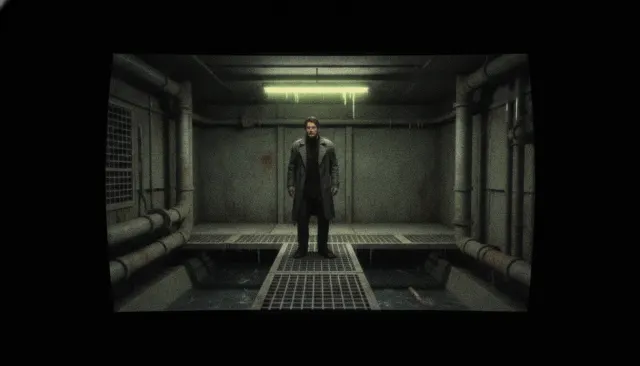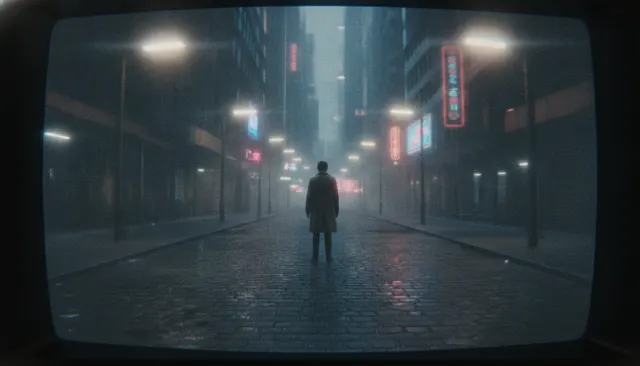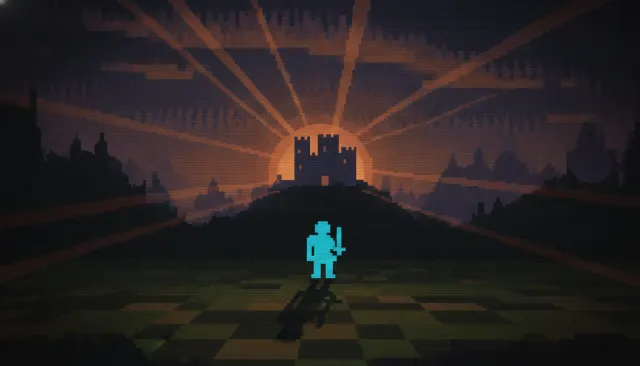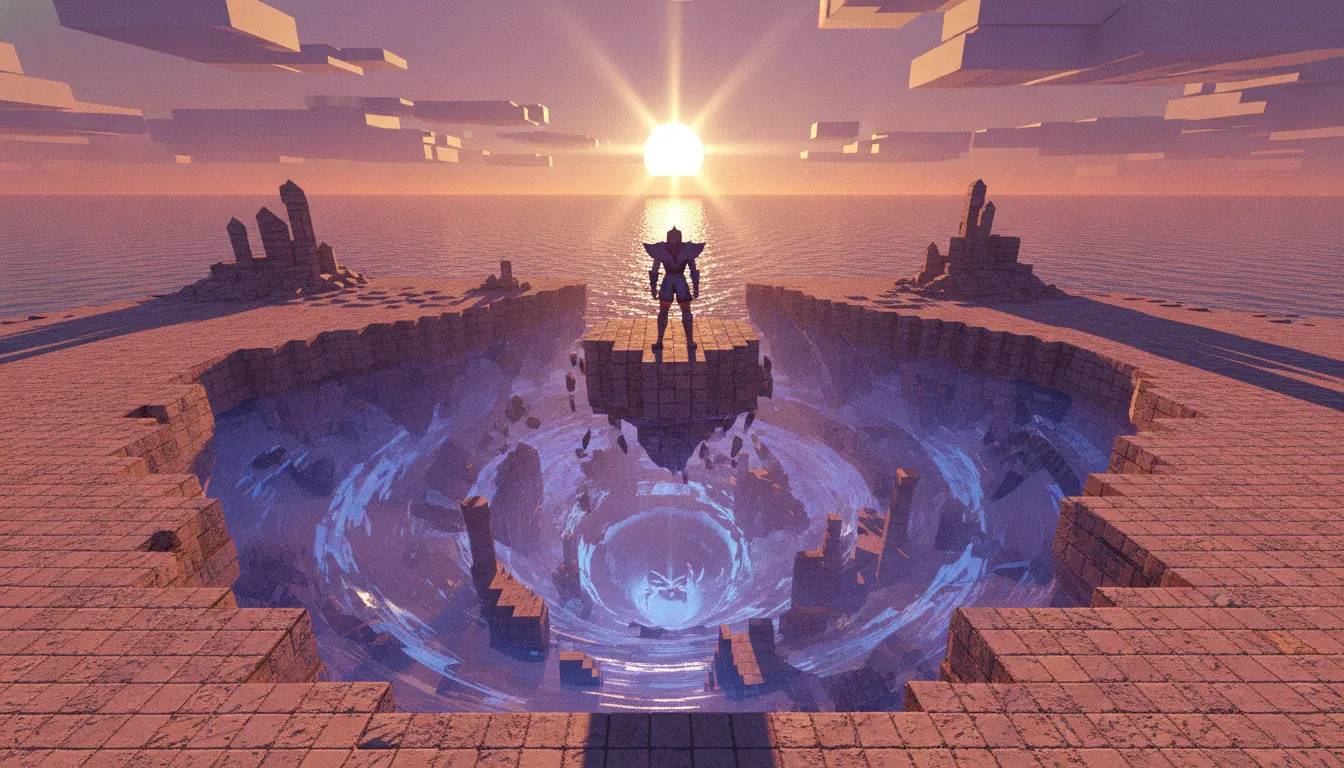
NiGHTS into Dreams (Sonic Team / Sega, 1996)
Saturn aesthetic peak
Sega Saturn quadrilateral-poly 3D aesthetic. Virtua Fighter NiGHTS Panzer Dragoon era, dithered transparency, quad-based polygon distortion.
The moves a human crew would use to get here. Cue applies them for you, and knowing their names is how you ask for a change.
shaded and Gouraud-shaded surfaces with limited or no texture mapping on many objects
scrolled background layers with rich 2D color palette
saturated color palette with rich ambient lighting due to flat-shading approach
in at close distances due to depth sorting limitations
The Sega Saturn (released 1994 in Japan, 1995 in North America and Europe) competed directly with Sony's PlayStation but took a fundamentally different architectural approach to 3D rendering. Where the PlayStation used triangles as its primitive polygon shape, the Saturn used quadrilaterals - four-sided polygons. This architectural decision, combined with the Saturn's unusual dual-CPU design, created a distinctive visual aesthetic immediately recognizable to players of the era.
The Saturn's VDP1 rendering chip processed quadrilaterals natively. Triangles, the universal primitive of 3D rendering, had to be approximated as degenerate quads (with one vertex doubled). This made triangle-based PlayStation ports difficult and contributed to the Saturn's reputation for being hard to develop for. However, games built natively for the Saturn's quad architecture had a distinct visual character: geometry with more angular, hard-edged profiles, and a flatter-looking shading model.
The Saturn lacked hardware perspective correction for textures (as did the PS1), but its quad-based texture mapping handled certain surfaces - large flat planes and boxy geometry - more naturally than the PS1's triangle pipeline. Floors, walls, and flat architectural surfaces could look more stable on Saturn, while complex organic shapes suffered more distortion.
NiGHTS into Dreams (Sonic Team / Sega, 1996) is widely considered the Saturn's most visually sophisticated title. The game used a combination of 3D flying sections and 2D side-scrolling, with pastel-toned dreamscapes rendered in the Saturn's color-rich palette. The VDP2 background processor handled flat-shaded scrolling layers while VDP1 rendered the polygonal characters and obstacles. The result - soft curved geometry, minimal texture mapping in many scenes, and rich ambient color - became the visual benchmark for Saturn artistry.
Virtua Fighter 2 (Sega AM2, 1994 arcade, 1995 Saturn) demonstrated the Saturn's capacity for flat-shaded polygon work. The characters were more geometric than competitors, lacking the texture mapping that softened the PS1's fighters, but the crisp, angular design had its own aesthetic power. Sega's AM2 team, led by Yu Suzuki, consistently produced some of the era's most striking geometry work within these constraints.
Saturn aesthetic peak
angular polygon fighting game benchmark
late Saturn technical showpiece
JRPG on Saturn hardware
atmospheric Saturn RPG
arcade racing adapted to Saturn architecture
A Look is not a filter. It is a set of stored decisions the pipeline reads before it makes a single frame, so two videos in the same Look actually match.