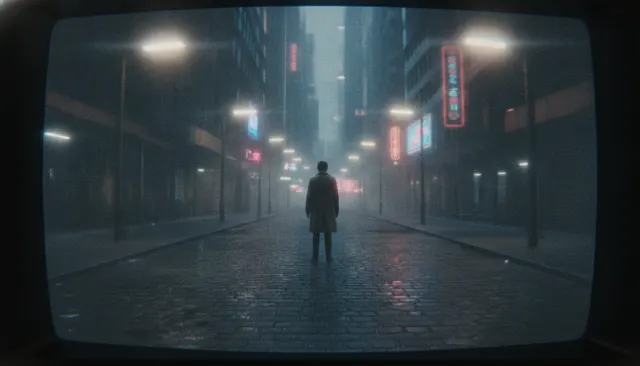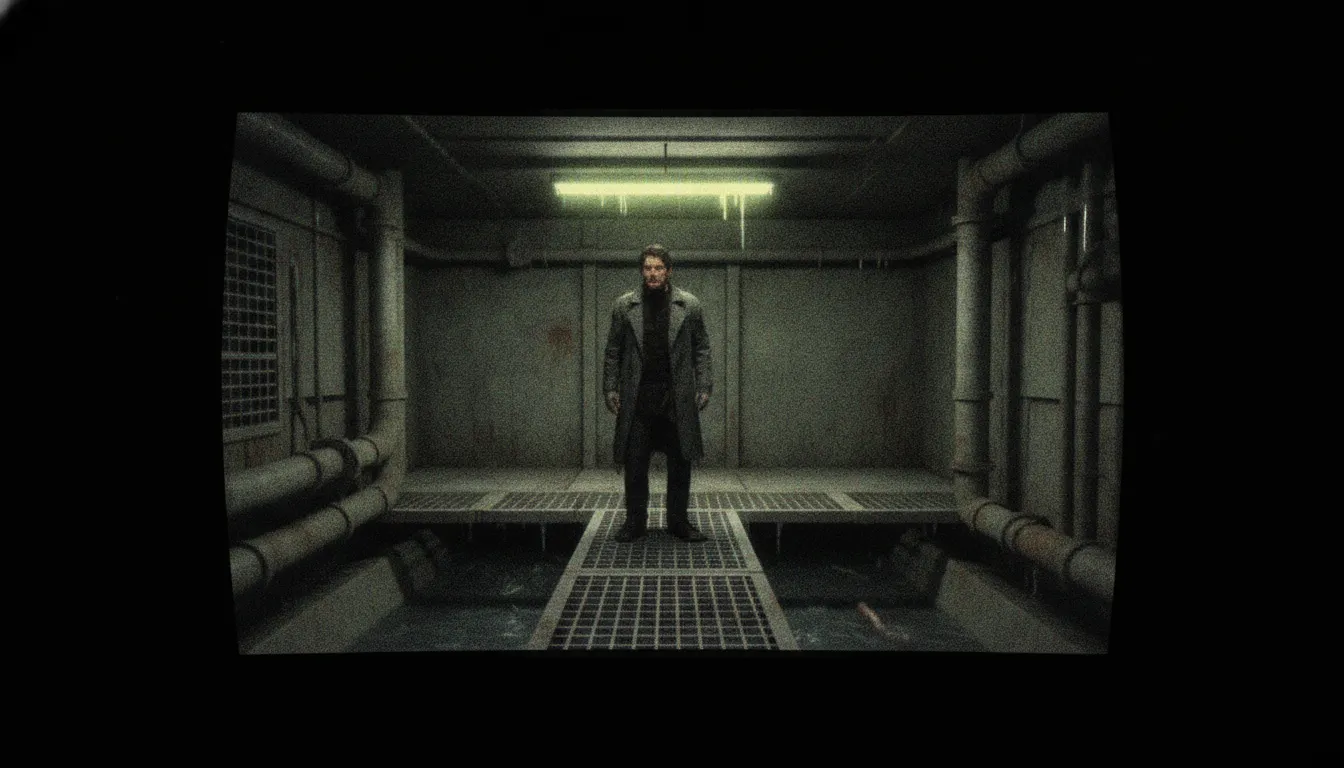
Night Trap (Digital Pictures / Sega, 1992)
the Mega CD FMV flagship title
Sega Mega-CD CD-i FMV grainy aesthetic. Postage-stamp video window, 64-color dithered playback, Night Trap and Sewer Shark era live-action interactive movie cheese.
The moves a human crew would use to get here. Cue applies them for you, and knowing their names is how you ask for a change.
block artifacts in motion areas - rectangular averaged-color patches
15 fps) live-action video creating choppy motion
color information spreading horizontally beyond object edges
luminance noise distinct from digital sensor grain
bit Genesis palette applied to digitized video
The Sega Mega CD (known as the Sega CD in North America, released 1991) added a CD-ROM drive to the Sega Genesis, enabling games to include extended audio soundtracks and, most infamously, full-motion video sequences. The FMV games that defined the platform - Night Trap (Digital Pictures, 1992), Sewer Shark (Digital Pictures, 1992), and Sherlock Holmes: Consulting Detective (ICOM Simulations, 1991) - created an aesthetic of digitized live-action footage rendered through early video compression that is now irresistibly, comically lo-fi.
The Mega CD's FMV playback used a proprietary video compression format operating at roughly 1/4 screen resolution (160x112 pixels in the video window) and low frame rates (typically 12-15 fps). The compression algorithms produced heavy block artifacts - the distinctive MPEG macro-block degradation visible as rectangular patches of averaged color in areas of motion. Combined with the 16-bit Genesis palette, the result was video that had a characteristic "painted" quality in any shot with movement.
VHS tape was the primary acquisition medium for most Mega CD FMV productions. The entire production chain - shot on consumer VHS cameras, edited on VHS tape, digitized through a computer capture card with further compression - accumulated artifacts at every stage. The final product showed tape noise, color bleeding from VHS chroma subsampling, and the characteristic VHS edge definition loss on high-contrast outlines.
Night Trap became the emblematic (and controversial) Mega CD title. Set in a haunted house, players switched between security camera feeds to catch vampiric attackers - the entire game was filmed footage of 1980s horror movie quality. The acting was deliberate B-movie camp, the sets were clearly residential interiors, and the "gameplay" was essentially a pointing exercise. This formula - live-action footage as game content - was the Mega CD's defining promise and its ultimate commercial failure.
The Mega CD FMV aesthetic has achieved ironic cultural appreciation. The low-quality digitized actors, the compression blocks, the VHS color bleed - these are now read as charming period pieces rather than technical failures. Documentary filmmakers, vaporwave artists, and retro-gaming YouTubers deliberately emulate the aesthetic for its association with a specific, naive optimism about CD-ROM as a transformative medium.
the Mega CD FMV flagship title
launch-era FMV rail shooter
CD-ROM FMV pioneer
FMV arcade shooter
late-era Mega CD FMV adventure
digitized boxing FMV game
A Look is not a filter. It is a set of stored decisions the pipeline reads before it makes a single frame, so two videos in the same Look actually match.