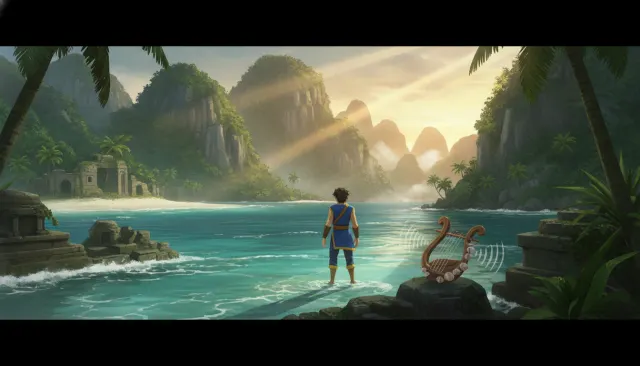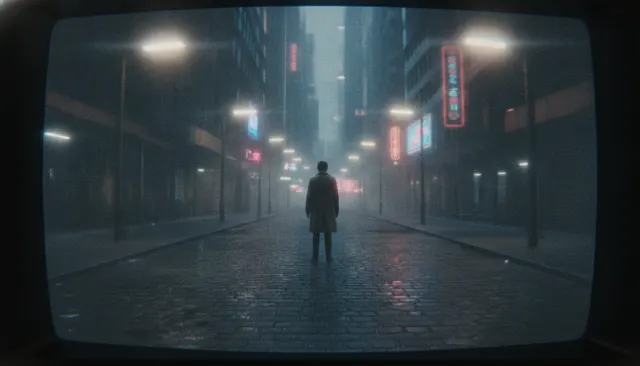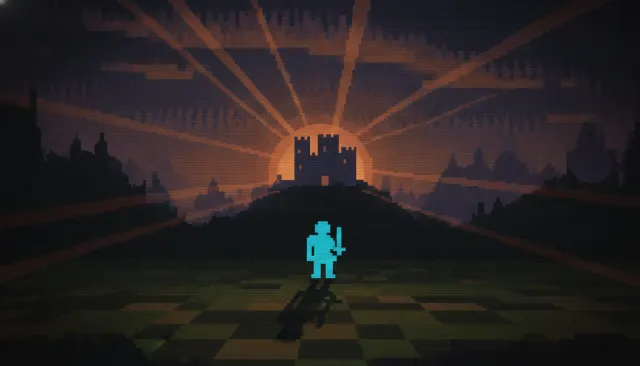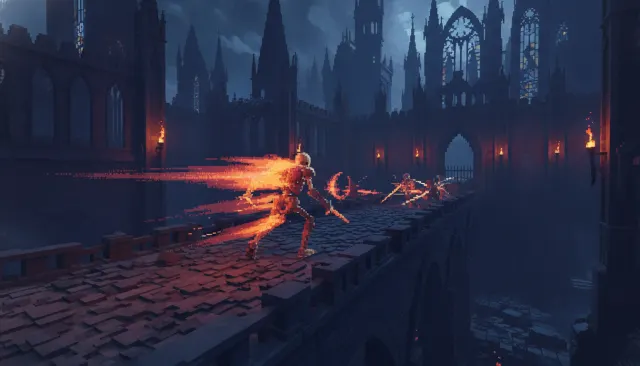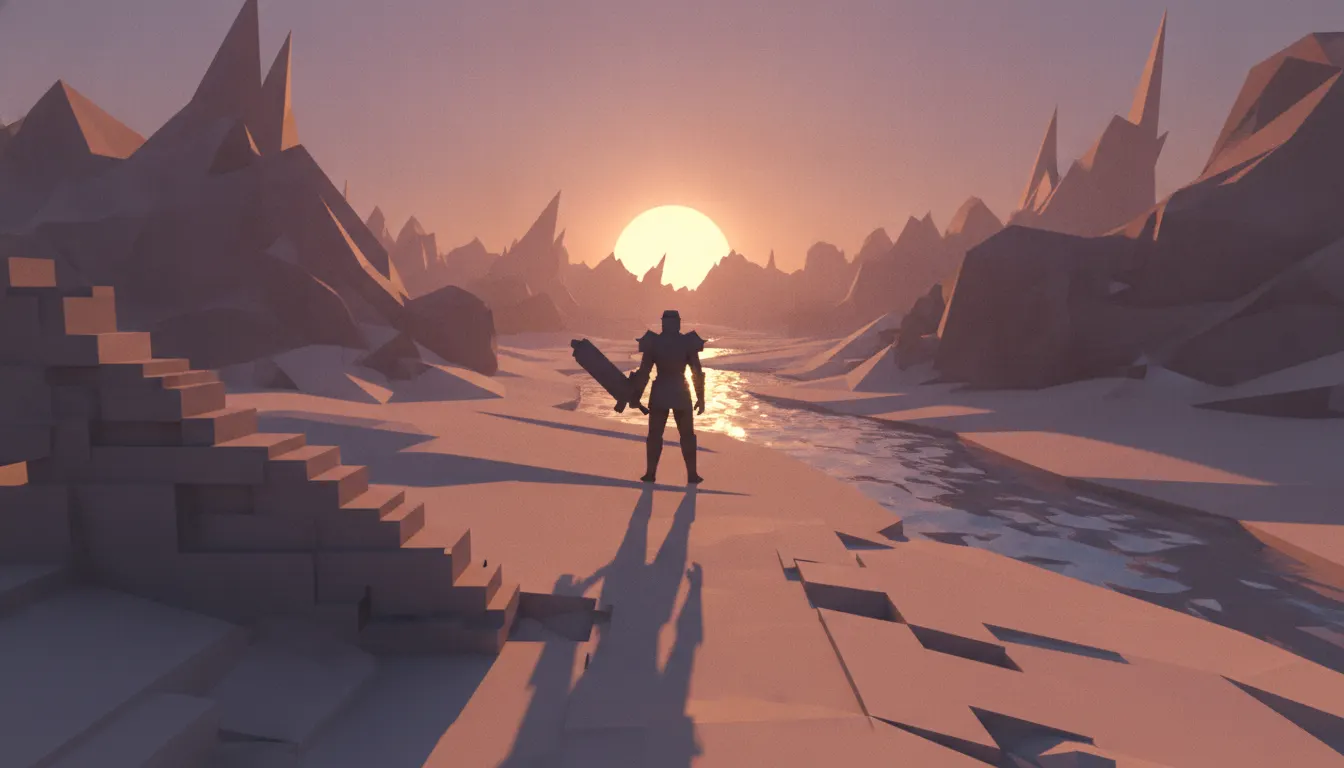
Final Fantasy VII (Square, 1997)
pre-rendered backgrounds + low-poly characters + CG FMV
Original PlayStation low-poly aesthetic. Vertex jitter, no texture filtering, affine texture warping, FMV-cutscene compression, Final Fantasy VII era 3D.
The moves a human crew would use to get here. Cue applies them for you, and knowing their names is how you ask for a change.
textures slide and smear on geometry movement
800 polygons per character) with flat or Gouraud shading
rendered background plates with painted depth, against which 3D characters move
bit color palette and limited texture resolution (typically 64x64 or 128x128)
The original PlayStation (Sony, 1994) created one of the most recognizable and nostalgically charged visual aesthetics in gaming history. Unlike the Sega Saturn's quadrilateral polygon engine, the PS1 used a fixed-function rendering pipeline incapable of perspective-correct texture mapping. The result - affine texture warping, vertex jitter, and hard-edged low-polygon models floating against pre-rendered backgrounds - became the defining look of mid-to-late 1990s console gaming.
The PS1 rendered at 320x240 resolution using a 15-bit color palette (32,768 possible colors). Its GPU processed roughly 360,000 flat-shaded polygons or 180,000 texture-mapped polygons per second - numbers that sound vast but produce visibly chunky character models by modern standards. Crucially, the hardware lacked a depth buffer (z-buffer). Instead it relied on a painter's algorithm that frequently caused polygons to sort incorrectly, producing flickering and interpenetration artifacts that players came to associate with the era.
Texture warping is the most distinctive artifact. Because the PS1 mapped textures linearly across triangles rather than perspectively, textures appear to slide and smear as the camera or geometry moves. Metal Gear Solid (Konami, 1998) showed this most prominently on floors and walls. Crash Bandicoot (Naughty Dog, 1996) minimized it through careful art direction.
The PS1 era was also the golden age of FMV (full-motion video) cutscenes. Final Fantasy VII (Square, 1997) used pre-rendered CG movies compressed to fit on CD-ROM, appearing alongside chunky in-game character models. The VHS-quality compression artifacts, interlacing lines, and MPEG blocking in these cutscenes are now read as aesthetic signifiers of authenticity. Resident Evil (Capcom, 1996) placed low-poly characters against pre-rendered painted backgrounds, a technique that created striking visual contrast.
The PS1 aesthetic has experienced sustained indie revival. Games like Lunacid (Kira LLC, 2022), Signalis (rose-engine, 2022), and Dredge (Black Salt Games, 2023) deliberately emulate low-poly vertex wobble and affine warping as a nostalgic language. The look signals early 3D experimentation, imperfection-as-charm, and a specific slice of 1990s consumer technology culture.
pre-rendered backgrounds + low-poly characters + CG FMV
cinematic PS1 with codec cutscenes and texture warping
pre-rendered backgrounds defining PS1 horror
optimized PS1 polygon art with careful art direction
hybrid 2D/3D PS1 classic
angular low-poly character design at its peak
modern revival of PS1 lo-fi horror aesthetic
A Look is not a filter. It is a set of stored decisions the pipeline reads before it makes a single frame, so two videos in the same Look actually match.