Amazônia
book published by Taschen, 2021
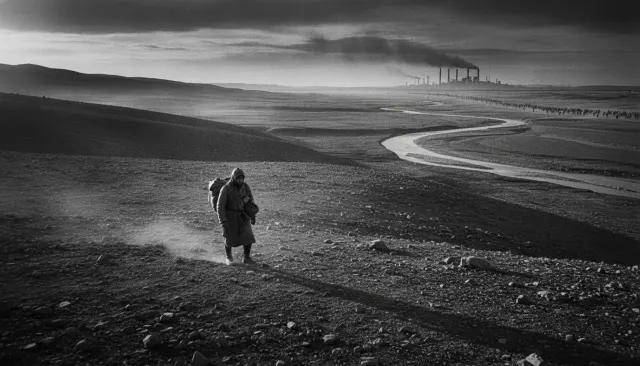
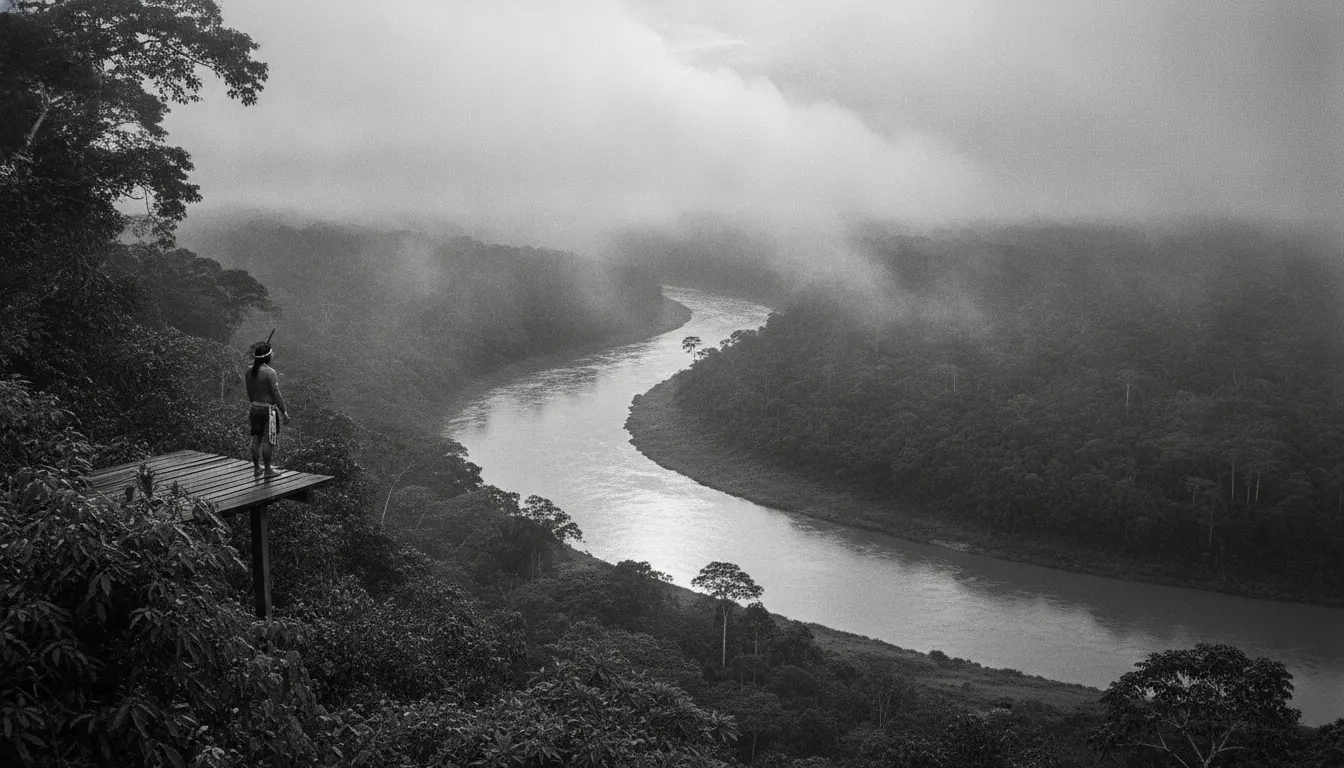
Sebastião Salgado Amazonia bw rainforest. Aerial mist over canopy, indigenous portrait, monumental river-system grandeur, silver-gelatin epic.
The moves a human crew would use to get here. Cue applies them for you, and knowing their names is how you ask for a change.
Salgado shoots color but converts, allowing him to precisely control final tonal values
deep blacks with texture, luminous highlights, and rich midtone detail
scale landscape: helicopter platform for overhead texture shots
preserving portrait approach: community elders, children, daily activities documented without exoticizing
shafts of sunlight through canopy creating strong light-dark drama
aerial views followed by close community portraits
term access: multiple extended visits over six years for genuine community familiarity
Sebastião Salgado (born Aimorés, Brazil, 1944) published Amazônia in 2021 after a six-year project documenting the Amazon rainforest and its indigenous communities, with direct access facilitated by Brazil's FUNAI (National Indian Foundation) and the collaboration of indigenous leaders who recognized Salgado as a trustworthy documentarian. The project represents his most personal work: Salgado was born in Brazil and the Amazon is, for him, simultaneously political subject and ancestral territory.
Amazônia covers approximately 12 indigenous peoples of the Brazilian Amazon, several of whom had only recently made first contact with the outside world. Among these are the Zo'é, Awá, Yanomami, and Kuikuro communities. Salgado made multiple extended visits to remote communities reachable only by small aircraft or days of river travel. The work was simultaneously a photographic project and an advocacy effort: the book and the exhibition (which toured major world museums from 2021 through 2024) were explicitly positioned against the deforestation and indigenous rights violations accelerating under Brazilian federal policy of the late 2010s and early 2020s.
Salgado continued his black and white practice from Genesis (2013) but Amazônia introduces a greater range of scale and contrast between intimate community portraiture and vast aerial and landscape frames. The aerial photography - commissioned from helicopter and small aircraft platforms - shows the Amazon canopy as an abstract ocean of texture, occasionally interrupted by river meanders reflecting silver light. At ground level, indigenous portraits are made with the same patient, dignified approach Salgado has always applied to human subjects: he photographs people as they are, not as outsider curiosities.
Salgado and his wife Lélia Wanick Salgado co-founded Instituto Terra in 1998 to reforest a portion of the degraded Mata Atlântica forest in Minas Gerais, Brazil. The success of that project - planting over 3 million trees on the former Salgado family ranch - informed the environmental advocacy framing of Amazônia and gave Salgado standing to speak about Brazilian ecological issues from personal practice rather than external observation.
book published by Taschen, 2021
exhibition, Philharmonie de Paris, April 2021 (inaugural venue)
A Look is not a filter. It is a set of stored decisions the pipeline reads before it makes a single frame, so two videos in the same Look actually match.