MEDIEVAL VICTORIAN · 1880S · USA
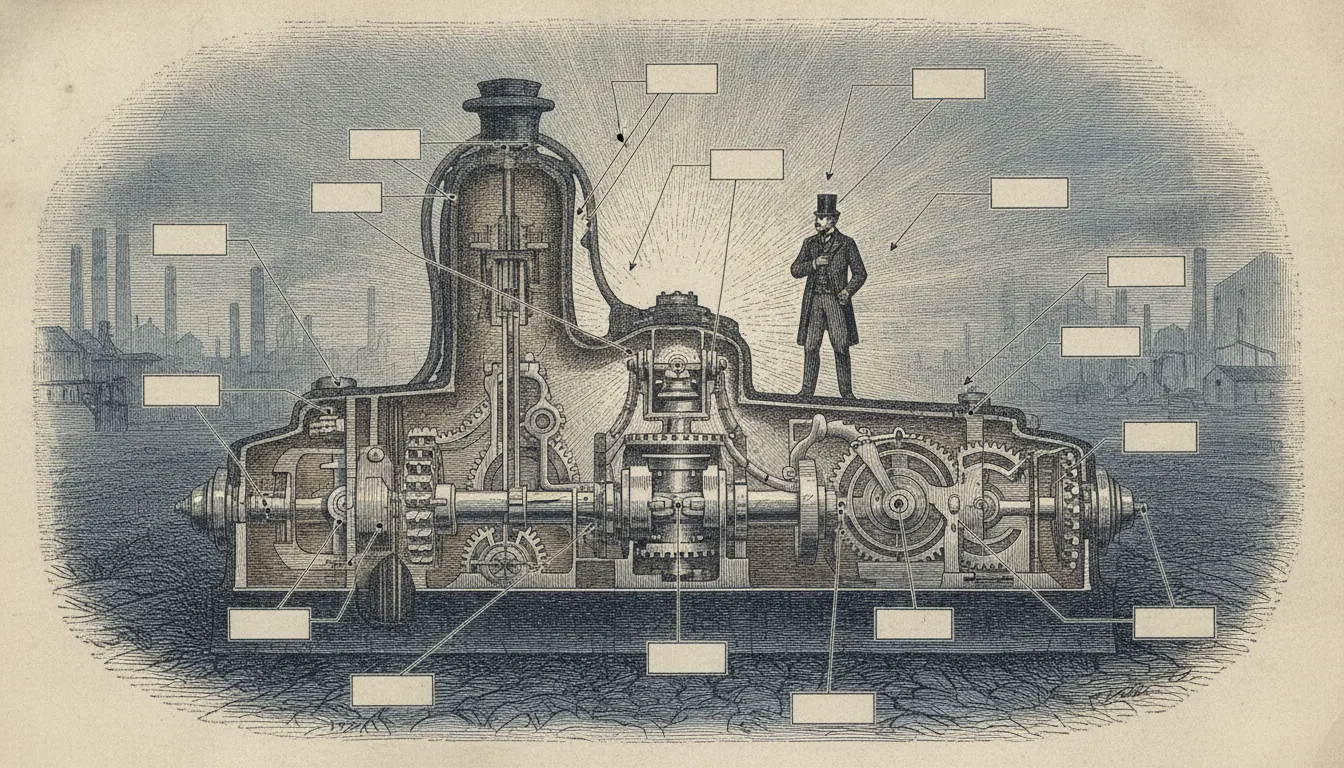
Scientific American 1800s Engraving
Scientific American 1880s steel-engraved diagram. Cutaway industrial machine, cross-sectional detail, labelled parts, late-Victorian technical plate.
scientificengravingcutawayvictorian
WHEN TO USE
- Science, technology, natural history, or engineering content where precision, curiosity, and documentary accuracy are the register
- Heritage, museum, botanical garden, or institutional brand content communicating 19th-century craft and intellectual seriousness
- Steampunk, Victorian, or historical fiction content that wants authentic period visual language
- Craft, artisan, or specialty goods branding (beer, spirits, coffee, food) where the 19th-century engravings signal provenance and quality
- Educational content for children or adults where the detailed, clear engraving style communicates information without photographic distraction
WHEN NOT TO USE
- Youth or entertainment content where the Victorian-institutional register creates unnecessary formality
- Digital-native or tech startup content where the 19th-century aesthetic is directly contradicted by the product's modernity
- Bright, playful, or colourful brand content where the monochrome hatching is tonally wrong
- Fast-moving social content where the slow, detailed reading the engravings reward is unavailable
SIGNATURE TECHNIQUES
How the look is made.
The moves a human crew would use to get here. Cue applies them for you, and knowing their names is how you ask for a change.
- 01Meticulous parallel hatching and crosshatching to build tonal range in monochrome -- line direction and spacing encode surface material
- 02Three
quarter-view technical drawings of machines and objects that reveal internal structure and external form simultaneously
- 03Cutaway and exploded
view diagrams showing mechanism interiors without the obscuring exterior
- 04Consistent, fine line weight that maintains legibility at reproduction size (2-4 column widths in a magazine)
- 05Annotations, callout arrows, and figure numbers integrated into the image as a unified graphic
- 06Natural history specimens rendered in precise isolation against plain white ground, scientifically accurate in proportion
- 07Border rules and typeset captions in period typefaces that frame the engraving as part of a coherent page design
HISTORY & CONTEXT
Where it comes from.
Scientific American 1800s Engraving
Scientific American was founded in 1845 by Rufus Porter and quickly became the definitive American popular science publication of the 19th century. Its illustrations -- printed as wood engravings in the early decades and steel engravings as the century progressed -- represent the peak of technical scientific illustration in American publishing and a visual language that has become synonymous with 19th-century curiosity and invention.
The Engraving Tradition
Before photographic reproduction was practical in print (halftone photo reproduction was not widely adopted until the 1880s-90s), all magazine and newspaper illustrations required hand-engraving. Wood engravers worked from artists' drawings or, later, from photographs, cutting images into the endgrain of hardwood blocks; the blocks were locked into the same forme as the type and printed simultaneously. Steel engravers worked on metal plates with a burin, creating finer, more precise lines capable of greater tonal range.
The Scientific American illustrations of the 1860s-1890s show the wood-engraving tradition at its most technically developed: complex machines -- steam engines, early electrical devices, bridges, submarines, agricultural machinery -- rendered in precise three-quarter views with hatching and crosshatching that describes both form and material surface simultaneously. A polished metal gear reads differently from a cast iron wheel reads differently from a wooden beam, all through variations in line direction, spacing, and density.
Natural History Parallel
The same tradition produced natural history engraving: specimens of insects, plants, fossils, and anatomical sections rendered with the same meticulous systematic clarity. John James Audubon's Birds of America (1827-1838) -- aquatint rather than wood engraving, but the same documentary impulse -- is the supreme American achievement of this adjacent tradition. Ernst Haeckel's Kunstformen der Natur (1904, though drawn from earlier work) represents the European equivalent, where natural history specimens become art objects.
Cultural Legacy
The 19th-century scientific engraving aesthetic has been continuously revived: in steampunk visual culture, in craft beer and artisan brand identities, in editorial illustration, and in the visual language of institutions (museums, botanical gardens, libraries) communicating heritage and authority.
NOTABLE WORKS
Where you have seen it.
John James Audubon, The Birds of America (1827-1838) -- 435 hand-coloured aquatint plates
Ernst Haeckel, Kunstformen der Natur -- natural history as decorative art
1904
Thomas Henry Huxley, anatomical engravings (various publications, 1860s-80s)
Harper's Weekly and Frank Leslie's Illustrated Newspaper -- parallel 19th-century engraving traditions
THE RECIPE
The exact knobs
the renderer turns.
A Look is not a filter. It is a set of stored decisions the pipeline reads before it makes a single frame, so two videos in the same Look actually match.
SettingValue
TransitionHow one shot becomes the next
hard cuts · 160ms · linearKen BurnsCamera move applied to stills
Slow push · 0.02 · centerTypographyDisplay / body / mono pairing
Playfair Display · Lora · JetBrains MonoMusic moodWhat the bed under the voice sounds like
music-hall-piano · mechanical-clockworkPrompt suffixAppended to every shot prompt in this Look
Scientific American 1880s steel engraving diagram, cutaway industrial machine, cross-sectional detail, labelled parts, late Victorian technical platePALETTE
Primary
#3A2A1A
Secondary
#F0E6D0
Accent
#D4A574
Text/Light
#0F0805
Text/Dark
#F5EFE0
BG 900
#F5EFE0
BG 800
#E8E0CC
RELATED LOOKS
Next to it on the shelf.
 Vintage Formats ExtendedCyanotype Blue Print Historical
 Vintage Formats ExtendedAlbumen Print 1860s Portrait
 Photographic EraDaguerreotype 1840s Portrait
 Print Process HybridBlueprint Cyanotype Mix with Photo
 Book Traditions ExtendedPenguin Classics Cover Modernist
 Art Movement ExtendedPrecisionism Charles Demuth American
Your first cut
is on us.
+ New videoFree plan · no card · 1080p export