BOOK TRADITIONS EXTENDED · 1960S · UK
Penguin Classics Cover Modernist
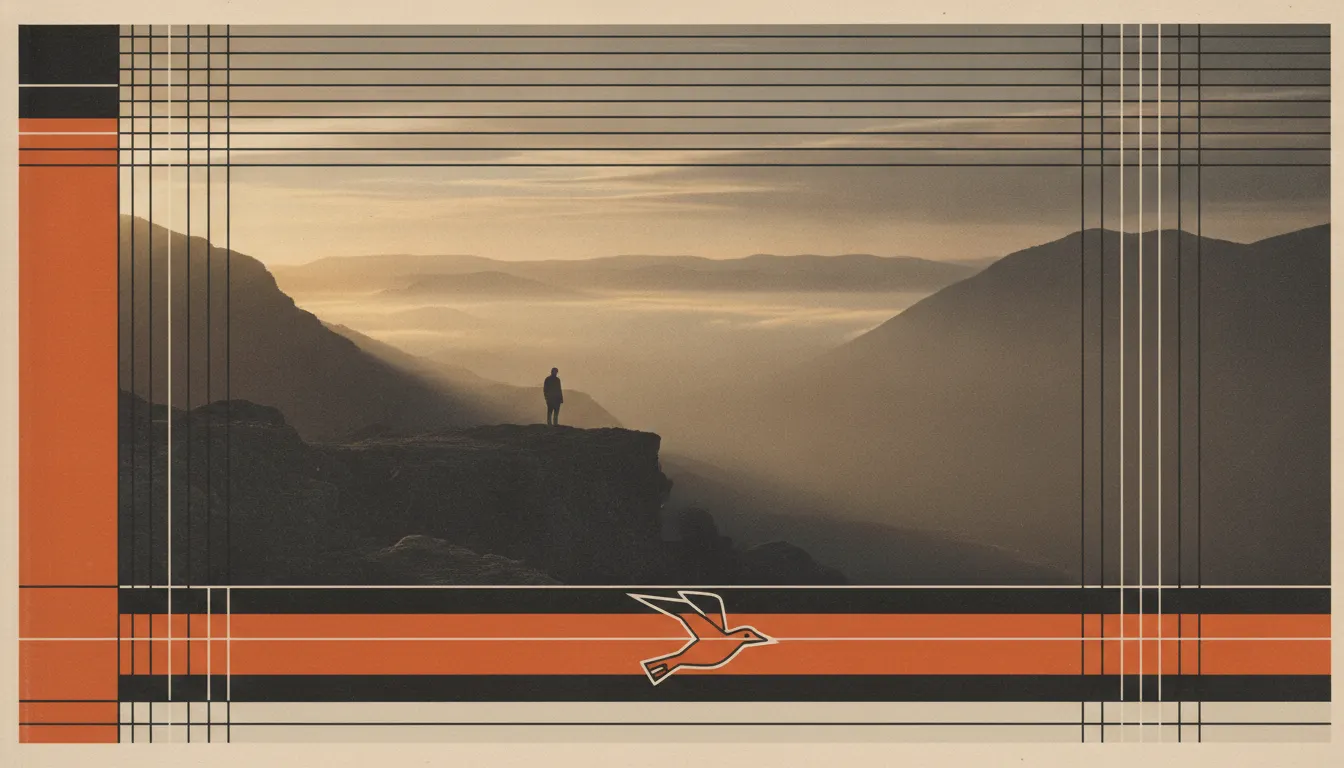
Penguin Classics paperback cover Romek Marber grid era. Tricolour horizontal bands, central simple illustration or photograph, classic Penguin orange or black spine.
penguinmarber-gridmodernistpaperback
LUT penguin-classics-orange
WHEN TO USE
- Literary, editorial, or cultural brand content where design sophistication and intellectual authority are the goal
- Book-related thumbnails, trailers, or promotional graphics where a recognisable publishing-world aesthetic signals quality
- Education or humanities content that benefits from association with classic literature and typographic rigour
- Retro-modernist brand identity projects that need clean grids, Gill Sans, and a triband colour system
- Publishers, newsletters, or Substack creators targeting literary audiences
WHEN NOT TO USE
- Youth, streetwear, or entertainment content where the academic register feels stiff or uninviting
- Tech product marketing where minimal-UI or data-driven aesthetics are more appropriate
- Content requiring photographic immediacy -- news, sports, breaking events
SIGNATURE TECHNIQUES
How the look is made.
The moves a human crew would use to get here. Cue applies them for you, and knowing their names is how you ask for a change.
- 01Three
band horizontal layout: solid colour top band, white central panel, colour bottom band
- 02Gill Sans or humanist sans
serif for author name and title, set in strict hierarchy
- 03Penguin logo (penguin in oval) locked to bottom right or top right corner
- 04Restricted colour palette
- original orange (#E75B22 approx), green (crime), red (drama), blue (pelican non-fiction)
- 05Minimal or no illustration in the triband system; pure type and colour as the visual statement
- 06For Classics Deluxe
full-bleed commissioned illustration with type reversed or overprinted at top
HISTORY & CONTEXT
Where it comes from.
Penguin Classics Cover Modernist
Few design systems have shaped reading culture as profoundly as the Penguin cover. From Edward Young's original 1935 triband template through Jan Tschichold's 1947 systematic overhaul to today's Penguin Classics Deluxe illustrated editions, the brand represents a sustained conversation between modernist typography and literary identity.
Jan Tschichold's Grid (1947-1949)
In 1947, Penguin hired Swiss typographer Jan Tschichold, fresh from his New Typography manifesto, to systematise the chaotic inconsistency that had crept into the series. Tschichold produced the Penguin Composition Rules -- a two-page memo that standardised margins, type sizes, spacing, and hierarchy across every Penguin imprint. The iconic orange band with Gill Sans or Times New Roman lettering, flanked by white panels above and below, is essentially his rationalisation. He also introduced the penguin-in-oval device drawn by Morison. Tschichold left in 1949 but his system governed Penguin for decades.
Penguin Classics Deluxe (2000s-present)
Paul Buckley, Vice President and Executive Creative Director at Penguin, revived the full-bleed illustrated Classics Deluxe line in the 2000s. Working with contemporary illustrators -- Chip Kidd, Jillian Tamaki, Dave McKean -- Buckley created Trade Paperback editions where the entire cover is a single commissioned illustration: dark, layered, thematically dense. These stand apart from the triband system while retaining Penguin's typographic rigour in their spine and back-cover treatment.
Design Language
The core tension that makes Penguin covers interesting to study is the dialogue between constraint (grid, typography, brand colour) and expression (illustration, photography, contemporary design movements). The triband system is inherently modernist: function dictates form, type is king, ornament is suspect. The Classics Deluxe line inverts this, letting image dominate -- but always with disciplined type set in a Penguin-sanctioned manner.
NOTABLE WORKS
Where you have seen it.
Jan Tschichold's Penguin Composition Rules, 1947 -- the foundational typographic system
Penguin Modern Classics black covers introduced 1961 by Germano Facetti
Paul Buckley Penguin Classics Deluxe editions, 2003-present
Chip Kidd cover for Frankenstein, Penguin Classics Deluxe
Jillian Tamaki illustrated covers for various Penguin editions, 2010s
THE RECIPE
The exact knobs
the renderer turns.
A Look is not a filter. It is a set of stored decisions the pipeline reads before it makes a single frame, so two videos in the same Look actually match.
SettingValue
GradeColour LUT applied to every frame
penguin-classics-orangeTransitionHow one shot becomes the next
hard cuts · 160ms · linearKen BurnsCamera move applied to stills
Slow push · 0.02 · centerTypographyDisplay / body / mono pairing
Gill Sans · Lora · JetBrains MonoMusic moodWhat the bed under the voice sounds like
piano-literary · string-quartetPrompt suffixAppended to every shot prompt in this Look
Penguin Classics paperback cover Romek Marber grid 1960s, tricolour horizontal band, central simple illustration, Penguin orange black spinePALETTE
Primary
#FF6F00
Secondary
#F5F0E0
Accent
#0A0A0A
Text/Light
#0A0A0A
Text/Dark
#FFFFFF
BG 900
#1A1208
BG 800
#2A1F10
RELATED LOOKS
Next to it on the shelf.



Your first cut
is on us.
+ New videoFree plan · no card · 1080p export