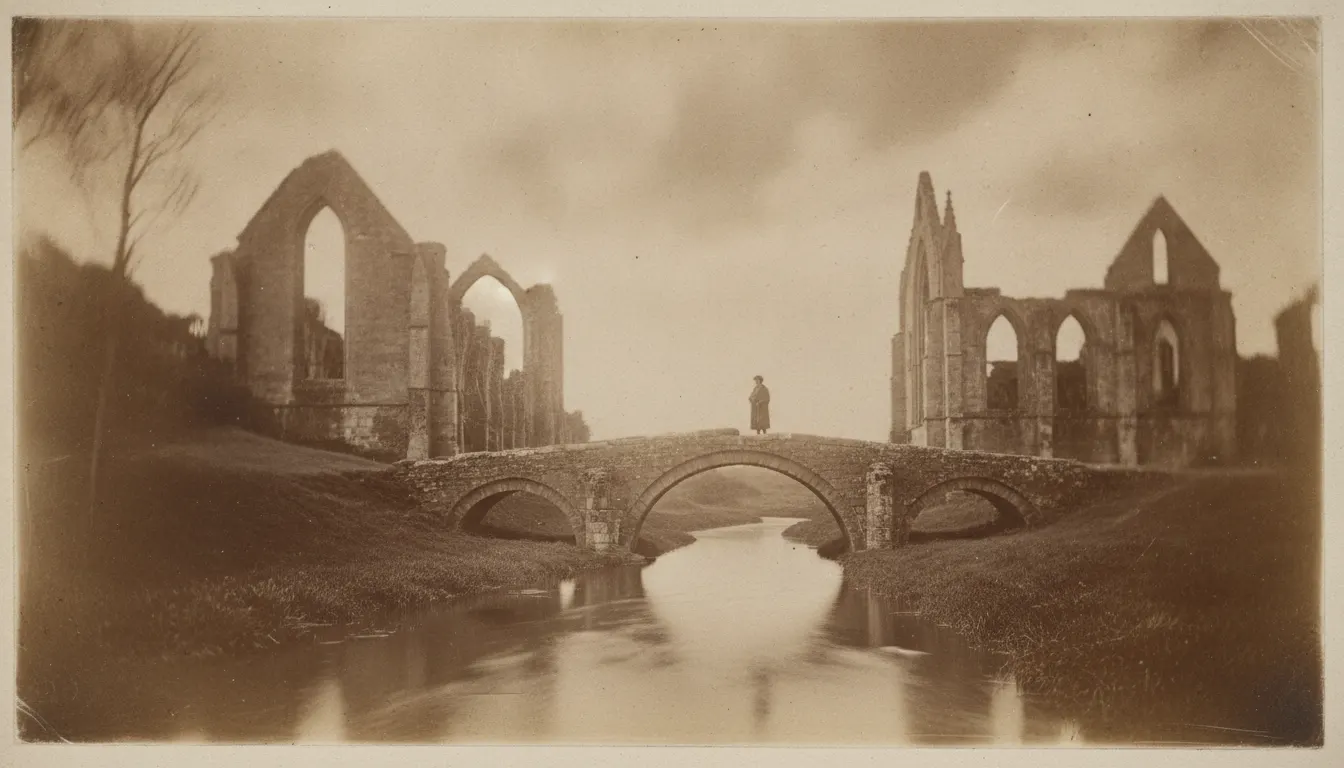
VINTAGE FORMATS EXTENDED · 1850S · INTERNATIONAL
Salt Print 1850s
Salt print 1850s calotype-derived process. Talbot Pencil of Nature, matte paper surface, warm sepia midtone, soft fibrous architectural study.
salt-printhistoricalcalotypematte
LUT salt-print-matte-warm
WHEN TO USE
- Historical or period content explicitly set in the 1840s-1860s, when salt prints were the dominant photographic medium
- Fine art photography projects engaging with early photographic history or the ontology of the photograph
- Editorial or documentary content about William Henry Fox Talbot, the history of photography, or Victorian visual culture
- Brand or identity content for heritage brands, archival collections, libraries, or cultural institutions invoking historical depth
- Personal or artistic photography projects where the handmade, fragile quality of early photographic materials is conceptually central
- Wedding or portraiture content that wants to invoke Victorian or Edwardian-era visual culture and material history
WHEN NOT TO USE
- Commercial photography requiring sharp, consistent, high-resolution results
- Color photography contexts - salt prints are monochromatic in warm brown-to-purple tones
- Contemporary brand content where the historical aesthetic conflicts with modern positioning
- Social media or digital-first content where the subtle tonal qualities of salt prints are lost at screen resolution
- Sports, action, or any context requiring crisp motion freezing (long salt print exposures preclude action subjects)
SIGNATURE TECHNIQUES
How the look is made.
The moves a human crew would use to get here. Cue applies them for you, and knowing their names is how you ask for a change.
- 01Warm reddish
brown to purple-brown monochromatic tone range - no neutral grey or cool black
- 02Matte surface texture
image embedded within paper fiber, not sitting on glossy coating
- 03Soft overall resolution with slightly diffuse edges reflecting the paper-negative or early glass-negative source
- 04Compressed tonal range
both shadows and highlights slightly diffuse, lacking the full density of later processes
- 05Visible paper fiber texture in highlights and neutral areas
the paper itself is part of the image
- 06Gold or platinum toning (as historical practice) for purple
to-neutral tone shift and improved archival stability
- 07Edge irregularities
brush-applied sensitizer creates slightly uneven borders around the image area
HISTORY & CONTEXT
Where it comes from.
Salt Print 1850s
The salt print is the earliest widespread positive photographic process and the direct ancestor of all subsequent paper-based photography. Invented by William Henry Fox Talbot (1800-1877) and first described in his 1839 paper 'Some Account of the Art of Photogenic Drawing,' the salt print process was refined through the early 1840s and dominated portrait and landscape photography until approximately 1860, when the albumen print (made with egg-white coating rather than salt) replaced it for commercial use.
William Henry Fox Talbot and the Calotype Process
Talbot's invention was announced on 25 January 1839 at the Royal Institution in London, in explicit competition with Louis Daguerre's simultaneous announcement of the daguerreotype to the French Academy of Sciences on 7 January 1839. While the daguerreotype produced unique, sharper, metallic images, Talbot's process produced paper negatives (calotypes) from which multiple positive prints could be made - the foundational negative-positive workflow that all film photography would use until the digital transition.
The Salt Print Process
A sheet of good-quality writing paper was soaked in sodium chloride (common table salt) solution and dried. It was then brushed with silver nitrate solution, which reacted with the salt to form silver chloride in the paper fibers. The paper, now photosensitive, was placed in contact with a paper negative or, later, a glass collodion negative and exposed to bright sunlight. The image formed by the direct action of light on silver chloride. The resulting print was fixed in sodium hyposulfite (hypo) and washed.
Visual Characteristics
Salt prints have a distinctive warm, slightly matte tone ranging from reddish-brown to purple-brown to warm sepia depending on the exact chemistry, water quality, toning, and age. Unlike albumen prints (which have a glossy surface), salt prints have a soft, slightly textured matte surface where the image appears embedded within the paper rather than sitting on a surface coating. Resolution is slightly softer than albumen or silver gelatin. The image's tonal range is compressed compared to modern prints: deep shadows and bright highlights both have a slightly diffuse quality. Age typically shifts the tone further toward warm brown and may introduce fading or yellow-brown staining.
NOTABLE WORKS
Where you have seen it.
William Henry Fox Talbot, Latticed Window, Lacock Abbey, 1835 (possibly earliest surviving camera negative)
David Octavius Hill and Robert Adamson, calotype portrait series, Edinburgh, 1843-1847
Roger Fenton, Crimean War photography, 1855 (transition to waxed paper calotype negatives)
Anna Atkins, cyanotype botanical specimens (contemporary with salt prints), 1843-1853
Calvert Richard Jones, architectural and landscape calotypes, 1845-1855
THE RECIPE
The exact knobs
the renderer turns.
A Look is not a filter. It is a set of stored decisions the pipeline reads before it makes a single frame, so two videos in the same Look actually match.
SettingValue
GradeColour LUT applied to every frame
salt-print-matte-warmTransitionHow one shot becomes the next
dissolve cuts · 720ms · ease-in-outKen BurnsCamera move applied to stills
Slow push · 0.014 · centerTypographyDisplay / body / mono pairing
Cormorant · Lora · CourierMusic moodWhat the bed under the voice sounds like
salon-harpsichord · baroque-celloPrompt suffixAppended to every shot prompt in this Look
salt print 1850s calotype derived, Talbot Pencil of Nature, matte paper surface, warm sepia midtone, soft fibrous architectural studyPALETTE
Primary
#7A5A3E
Secondary
#A88860
Accent
#D4B098
Text/Light
#1F1408
Text/Dark
#F0DEC0
BG 900
#150E08
BG 800
#251A10
RELATED LOOKS
Next to it on the shelf.
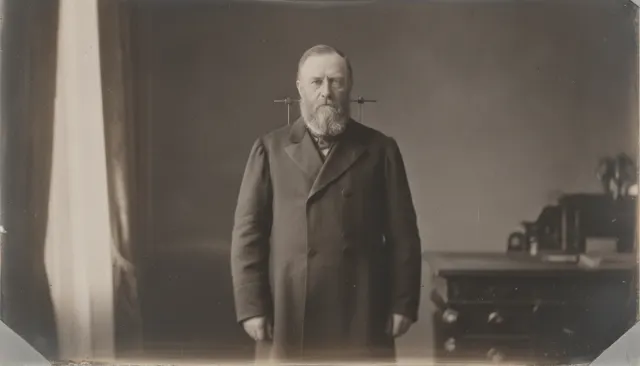 Photographic EraDaguerreotype 1840s Portrait
 Analog Process ExtendedDaguerreotype Modern Recreation
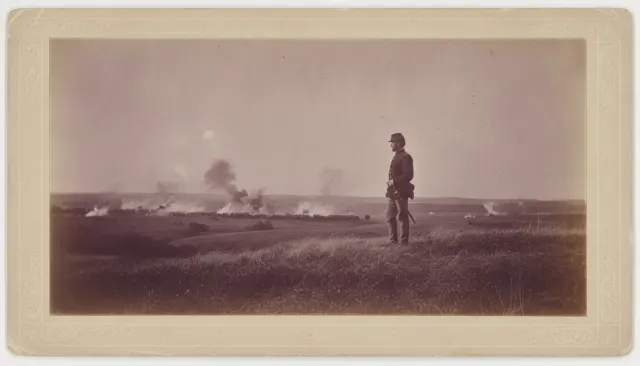 Vintage Formats ExtendedAlbumen Print 1860s Portrait
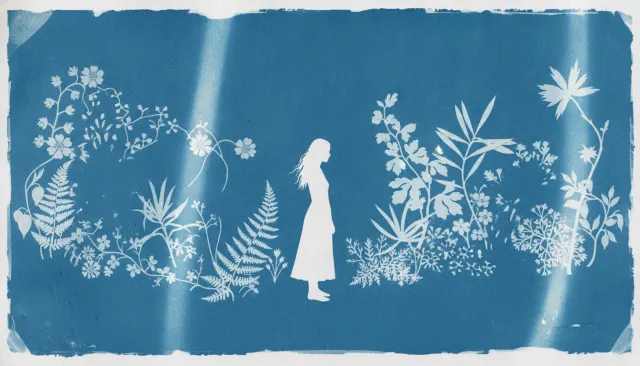 Vintage Formats ExtendedCyanotype Blue Print Historical
 Analog Camera ExtendedCamera Obscura Pinhole Historical Aesthetic
 Photographic EraPolaroid SX-70 1970s Instant
Your first cut
is on us.
+ New videoFree plan · no card · 1080p export