PHOTOGRAPHIC ERA · 1970S · INTERNATIONAL
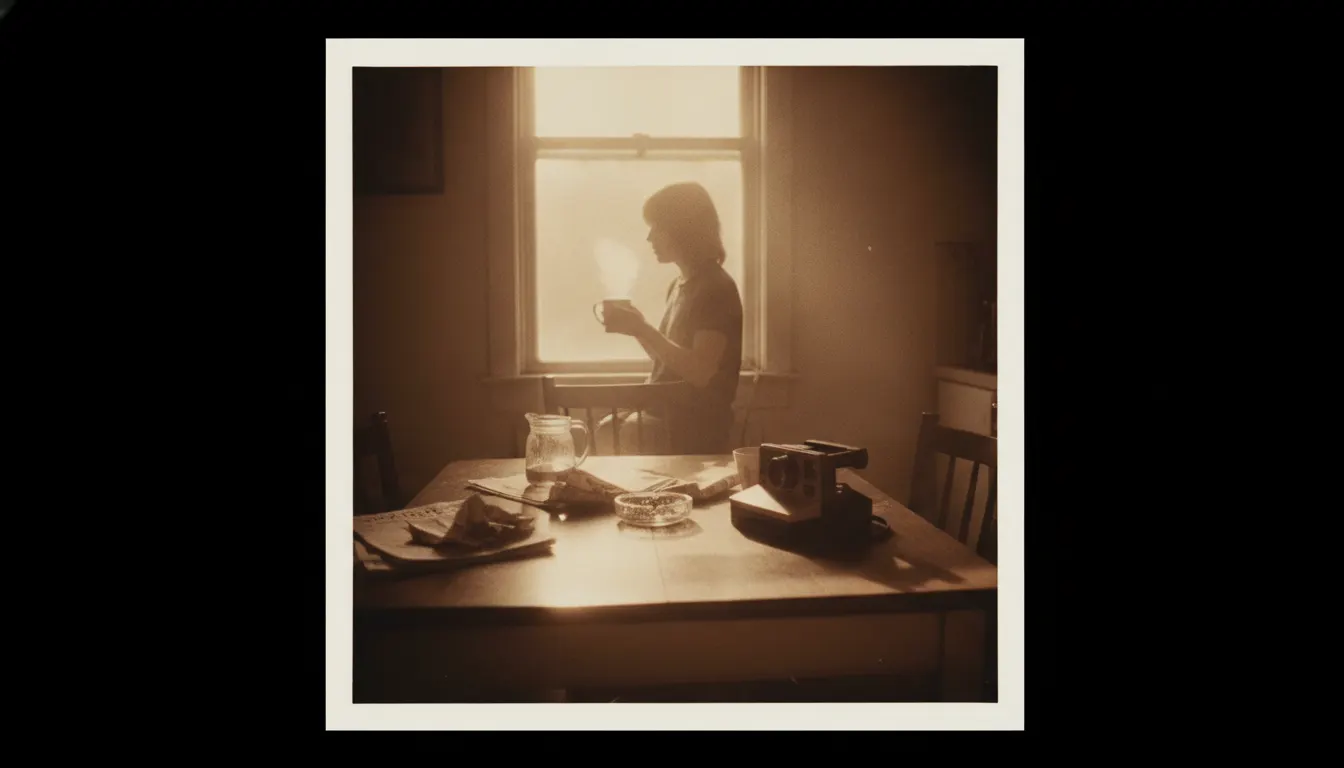
Polaroid SX-70 1970s Instant
Polaroid SX-70 integral film. Soft warm color shift, square white border, low contrast, kitchen-table snapshot, Walker Evans late-life vibe.
polaroidinstantnostalgicsnapshot
LUT polaroid-sx70-faded
WHEN TO USE
- Nostalgia-driven content explicitly invoking 1970s visual culture, domestic life, or personal memory
- Personal or diary photography projects where the physical object quality of the instant print is central to the concept
- Intimate portrait sessions where the square format and soft rendering create warmth and immediacy
- Brand content for vintage, handcraft, or artisanal products positioning against digital perfection
- Music content for artists whose aesthetic draws on 1970s rock, folk, or personal narrative traditions
- Wedding or lifestyle photography with a vintage, film-photography aesthetic positioning
WHEN NOT TO USE
- Commercial photography requiring high resolution, sharp edges, or precise color reproduction
- Fashion editorial where the soft focus and warm color shift conflicts with clean production values
- Brand content for technology, finance, or professional services where vintage aesthetics undermine authority
- Content for audiences without nostalgia for the analog photography era (young demographic campaigns)
- Large-format printing contexts where the inherent resolution limitations of the format are exposed
SIGNATURE TECHNIQUES
How the look is made.
The moves a human crew would use to get here. Cue applies them for you, and knowing their names is how you ask for a change.
- 01Square format (approximately 1
1 aspect ratio) with characteristic white-bordered mount
- 02Warm, creamy overall color shift
no pure whites or cool neutral tones
- 03Slightly soft focus at image edges and corners; center sharpness characteristic of SLR optics
- 04Milky black density
shadows never fully saturated, creating slight fog quality
- 05Low saturation relative to contemporary film or digital capture
- 06Optional emulsion manipulation for physically deformed images (Samaras-style)
- 07Visible chemical 'bleed' or development variation as authentic artifact
HISTORY & CONTEXT
Where it comes from.
Polaroid SX-70 1970s Instant
The Polaroid SX-70 was introduced in October 1972 and represented a genuine technological revolution: the world's first single-lens-reflex instant camera using Polaroid's newly developed integral film chemistry. Unlike earlier 'peel-apart' Polaroid films that required the user to separate negative from print and coat the image, SX-70 film developed entirely within the sealed print unit, producing a finished photograph within minutes without any user intervention beyond pressing the shutter.
Technical Innovation, 1972
Edwin Land, Polaroid's founder, presented the SX-70 at the 1972 annual shareholders meeting with characteristic showmanship, photographing shareholders and handing them the developing prints. The camera's integral film (Type 600 succeeded it; SX-70 film operates at ISO 160) used a ten-layer chemical sandwich in which developer migrated upward through the layers as light exposure triggered the process. The characteristic soft, warm, slightly milky quality of SX-70 prints derives from this chemistry: the image forms continuously for approximately five minutes, producing a unique temporal dimension in the photograph - the same frame contains multiple moments of development.
The Artistic Community
Ansel Adams was commissioned by Polaroid in 1976 to evaluate the SX-70 system and produced a series of technically revealing test images that became art objects. Andy Warhol became one of the camera's most famous practitioners, using the SX-70 extensively in the 1970s to make intimate documentary portraits of his Factory circle and social world. Artists discovered that the partially developed SX-70 print could be physically manipulated - pushed, swirled, pressed - to deform the still-soft image layer, a technique known as SX-70 manipulation or 'emulsion manipulation' that Lucas Samaras explored extensively.
The Look
SX-70 photographs are square (approximately 79mm x 79mm image area within a white-bordered mount). Color is warm, slightly desaturated compared to contemporary film stocks, with a characteristic creamy quality. Edges and corners often exhibit soft focus. Blacks are deep but rarely fully dense - there's a slightly milky quality throughout. Whites are warm rather than neutral.
NOTABLE WORKS
Where you have seen it.
Ansel Adams, Polaroid SX-70 test series commissioned by Polaroid, 1976
Lucas Samaras, Photo-Transformations series (SX-70 emulsion manipulation), 1973-1976
Helmut Newton, SX-70 test session outtakes for Vogue, 1973-1974
The Impossible Project (rebranded as Polaroid Originals), SX-70 revival film, 2010-present
Polaroid One 600 campaign photography, 1980s
THE RECIPE
The exact knobs
the renderer turns.
A Look is not a filter. It is a set of stored decisions the pipeline reads before it makes a single frame, so two videos in the same Look actually match.
SettingValue
GradeColour LUT applied to every frame
polaroid-sx70-fadedTransitionHow one shot becomes the next
hard cuts · 240ms · ease-in-outKen BurnsCamera move applied to stills
Slow push · 0.025 · centerTypographyDisplay / body / mono pairing
Cooper Hewitt · Lora · CourierMusic moodWhat the bed under the voice sounds like
soft-rock-70s · mellow-singer-songwriterPrompt suffixAppended to every shot prompt in this Look
Polaroid SX-70 1970s instant film, soft warm color shift, square white border, low contrast snapshot, kitchen tablePALETTE
Primary
#C8A57A
Secondary
#A88860
Accent
#7A5A3E
Text/Light
#2A1F10
Text/Dark
#F5E5C8
BG 900
#1A1208
BG 800
#2A1F10
RELATED LOOKS
Next to it on the shelf.

Your first cut
is on us.
+ New videoFree plan · no card · 1080p export