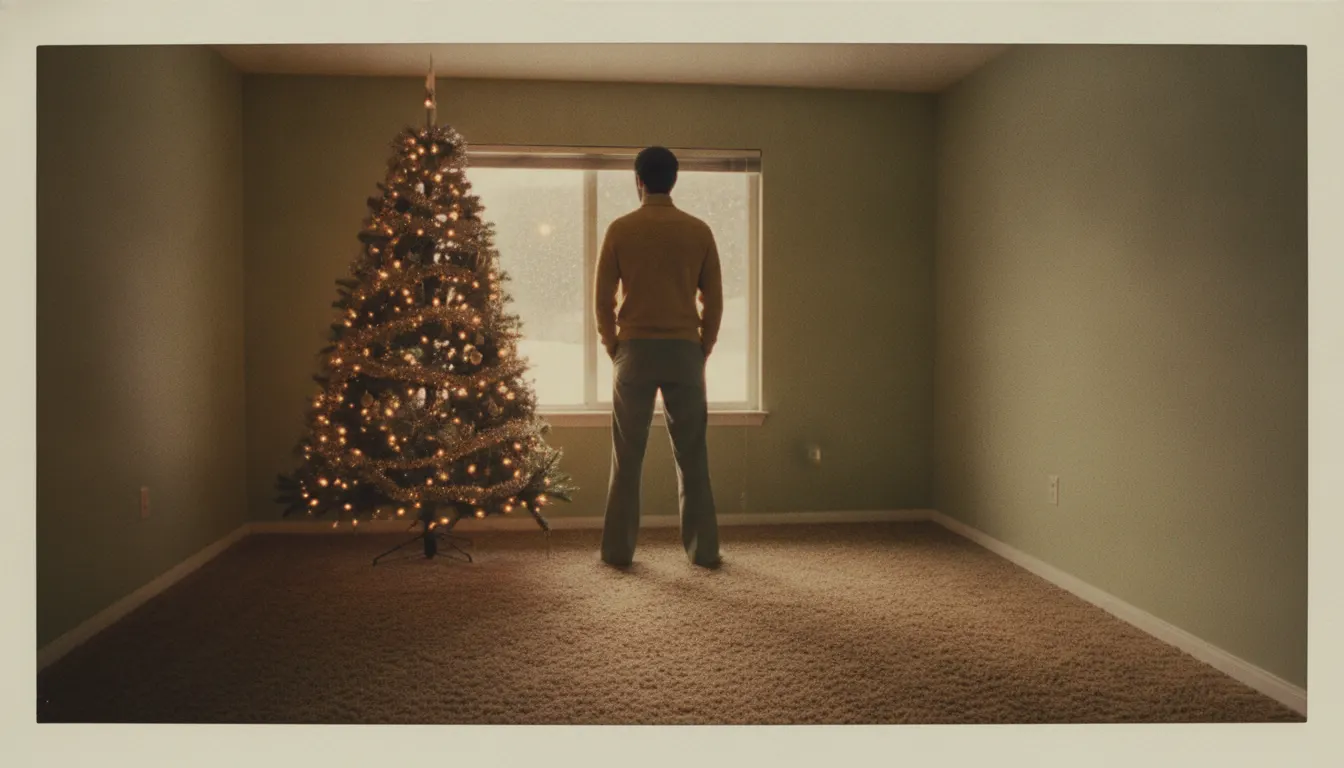
FAMILY EVENT CASUAL · 1970S · USA
Christmas Card 1970s Color
1970s Christmas-card snapshot. Tinsel-laden tree, shag carpet, polyester turtleneck, Polaroid SX-70 warm shift, harvest-gold and avocado palette.
christmasseventiespolaroidharvest-gold
LUT polaroid-1970s-christmas
WHEN TO USE
- Holiday, Christmas, or family celebration content referencing the 1970s-80s consumer snapshot tradition
- Nostalgic content about family rituals, American domestic culture, or mid-century holiday tradition
- Ironic or meta commentary on Christmas card conventions and family photograph rituals
- Brand content for holiday gifting, seasonal products, or family-oriented consumer goods
- Content for audiences with a nostalgic relationship to this specific photographic era
- Seasonal social media content where period-authentic warmth differentiates from contemporary filters
WHEN NOT TO USE
- Contemporary, fresh holiday content where the retro associations would date the material
- Content for diverse family structures or non-Christian holiday traditions where the specific visual conventions feel exclusionary
- Luxury or aspirational holiday content where the consumer snapshot quality undermines premium positioning
- Year-round content where the strong seasonal associations would create temporal confusion
SIGNATURE TECHNIQUES
How the look is made.
The moves a human crew would use to get here. Cue applies them for you, and knowing their names is how you ask for a change.
- 01Kodacolor negative film color palette
warm amber skin tones, slightly soft greens, warm shadow rendering
- 02Consumer pop flash or Magicube frontal direct light
flat, democratic, slightly harsh
- 03Slight overexposure
shadows luminous rather than blocked, highlights soft rather than clean
- 04Subjects posed in coordinated or complementary outfits for seasonal coherence
- 05Christmas tree with colored lights as background element contributing warm ambient fill
- 06Interior domestic or studio setting with seasonal decorations as environmental signifiers
- 07Even, frontally
lit family grouping: everyone visible, everyone smiling
- 08Print
on-card-stock format implied by the visual conventions - portrait ratio, clean centering
HISTORY & CONTEXT
Where it comes from.
1970s Christmas Card Color Photography
The Christmas card photograph is one of the most persistent and culturally specific genres in consumer snapshot photography. The 1970s version of this tradition has a distinctive visual character shaped by the film stocks, camera equipment, and lighting conventions of the decade - Kodacolor negative film, consumer flashcubes or early electronic flash, consumer SLRs and rangefinders, and professional portrait studios.
The Film Era Look
Kodacolor II (introduced 1972) and the earlier Kodacolor-X produced color negatives with a characteristic warmth - particularly in skin tones and in the rendering of tungsten interior light sources. The transition from black-and-white family Christmas photographs (dominant through the 1950s) to color in the 1960s-1970s introduced a specific palette that feels inseparably associated with the era.
Characteristics: slightly warm (amber-shifted) skin tones from Kodacolor's warm color response; slight overexposure producing luminous, soft-edged shadows; green trees and red and gold Christmas decorations in slightly supersaturated but soft color; flashcube or Magicube pop flash creating the harsh, direct frontal light that defines consumer snapshot photography of the 1970s.
Professional portrait studios offered Christmas portrait packages using large-format cameras on tripods with studio flash - typically two-light setups with a main light and fill. These studio images had a cleaner, more formally lit quality than the home snapshot, though the Kodacolor film base and the era's color correction conventions unified all variants under a common warm palette.
Cultural Rituals of the Form
The Christmas card portrait operates at the intersection of photography and social obligation. As Susan Sontag noted, the family photograph functions as evidence and enforcement of family identity. The Christmas card photograph specifically enacts the normative family - typically nuclear, coordinated, smiling - and distributes it as social communication to networks of acquaintances.
Coordinated outfits (matching sweaters, plaid shirts, formal dress) became a defining visual convention, sometimes ironic in contemporary usage. Red and green holiday decoration as environmental context signals the season without ambiguity.
Contemporary Ironic Revival
The 1970s Christmas card aesthetic is now widely referenced in ironic and nostalgic contexts - the 'ugly sweater' cultural phenomenon, the deliberately retro-styled holiday portrait, and the annual wave of social media pastiche. The warm film look, the coordinated outfits, and the slightly earnest formal quality have been embraced as signals of authenticity and anti-irony as much as actual nostalgia.
NOTABLE WORKS
Where you have seen it.
Richard Misrach, early color American vernacular photographs (1970s context)
Joel Meyerowitz, 'Cape Light'
1978
Kodachrome color sensibility of the era
Larry Sultan, 'Pictures from Home'
1992
reframes 1970s-80s family snapshots as fine art
Nicholas Nixon, 'The Brown Sisters' (1975-present)
annual portrait ritual, formal black and white parallel
Stephen Shore, 'Uncommon Places'
1982
contemporaneous American color vernacular
THE RECIPE
The exact knobs
the renderer turns.
A Look is not a filter. It is a set of stored decisions the pipeline reads before it makes a single frame, so two videos in the same Look actually match.
SettingValue
GradeColour LUT applied to every frame
polaroid-1970s-christmasTransitionHow one shot becomes the next
dissolve cuts · 380ms · ease-in-outKen BurnsCamera move applied to stills
Slow push · 0.02 · centerTypographyDisplay / body / mono pairing
Cooper Hewitt · Lora · CourierMusic moodWhat the bed under the voice sounds like
carpenters-soft-rock · christmas-easy-listeningPrompt suffixAppended to every shot prompt in this Look
1970s Christmas card snapshot, tinsel tree shag carpet polyester turtleneck, Polaroid SX-70 warm shift, harvest gold avocadoPALETTE
Primary
#A85A3E
Secondary
#7AC95C
Accent
#E8A05A
Text/Light
#1F1208
Text/Dark
#FBE5C0
BG 900
#1A1008
BG 800
#2A1810
RELATED LOOKS
Next to it on the shelf.





Your first cut
is on us.
+ New videoFree plan · no card · 1080p export