Anne Geddes, 'Down in the Garden'
1996
3 million copies sold globally
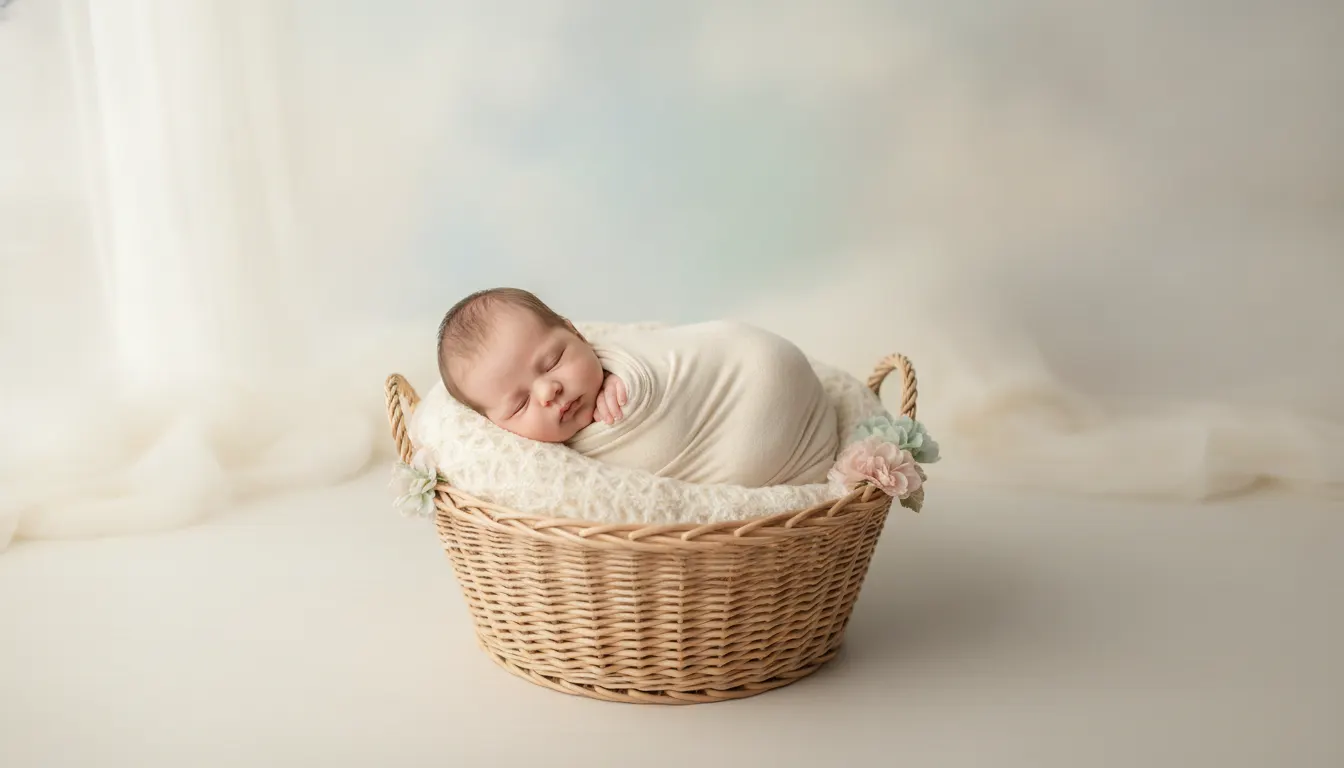
Newborn portrait photography. Swaddled in cream blanket, prop basket, soft-pastel posed studio, Anne Geddes-influenced sleeping pose.
The moves a human crew would use to get here. Cue applies them for you, and knowing their names is how you ask for a change.
highlights blown just to luminous, not clipped - whites glow rather than block
5500K) rendering skin tones amber-cream rather than photo-realistic
no shadows, no directional modeling
chunky wool, organic cotton, linen in muted cream, blush, and grey tones
up detail shots: hands, feet, eyelashes at 1:1 reproduction
blush, sage, dusty rose, cream - no primaries or saturated colors
processing with raised blacks in shadow areas eliminating harsh contrast
Newborn photography as a distinct professional genre emerged in the late 1980s and early 1990s, crystallized by the theatrical, conceptual work of Anne Geddes, and subsequently democratized into a domestic portrait market defined by specific aesthetic conventions that persist to the present day.
Anne Geddes (b. 1956, Australia) established the genre's visual language with her staged conceptual images of newborns and infants placed within natural environments - curled inside flower pods, nestled in seed pods, arranged as organic elements in garden compositions. Her book Down in the Garden (1996) sold over 3 million copies worldwide and established the dominant visual metaphor for newborn photography: the infant as natural object, as pure potential, as organic form prior to social identity.
Geddes' technical approach used large-format medium cameras (Hasselblad, Mamiya) with elaborate studio lighting designed to mimic soft natural light. The resulting color palette - pale cream skin tones against desaturated or muted natural materials - created a visual language of safety, purity, and vulnerability that shaped every subsequent practitioner in the genre.
Contemporary newborn photography has standardized a set of visual conventions derived from the Geddes influence:
Overexposed high-key whites: window or large softbox lighting creates slightly blown highlights, rendering whites and creams luminous rather than sharp. The deliberate slight overexposure signals softness and delicacy.
Warm cream-to-peach skin tones: white balance is set warmer than daylight (approximately 4500-5500K) to render skin tones in the creamy amber range rather than cooler photo-realistic tones. This color shift simultaneously flatters diverse skin tones while reinforcing the aesthetic of warmth and safety.
Natural texture materials: wool wraps, organic cotton, linen, wood, and plant materials serve as props and nest materials, connecting the infant to natural rather than synthetic environments.
Posed sleeping positions: infants photographed within the first 10-14 days of life when they remain sufficiently flexible and sleep-inclined for the curled, posed positions that define the genre.
Newborn photography is now a substantial professional market, with Jasmine Star, Ana Brandt, and Kelly Brown among the photographers who have codified contemporary practice through workshops, presets, and instructional platforms. The aesthetic has converged around a highly consistent visual vocabulary across regional markets.
1996
3 million copies sold globally
1999
botanical and natural environment series
2012
2004
music/photography album collaboration
contemporary standard-setting
A Look is not a filter. It is a set of stored decisions the pipeline reads before it makes a single frame, so two videos in the same Look actually match.