ART MOVEMENT CLASSICAL · 1700S · FRANCE
Rococo Fragonard
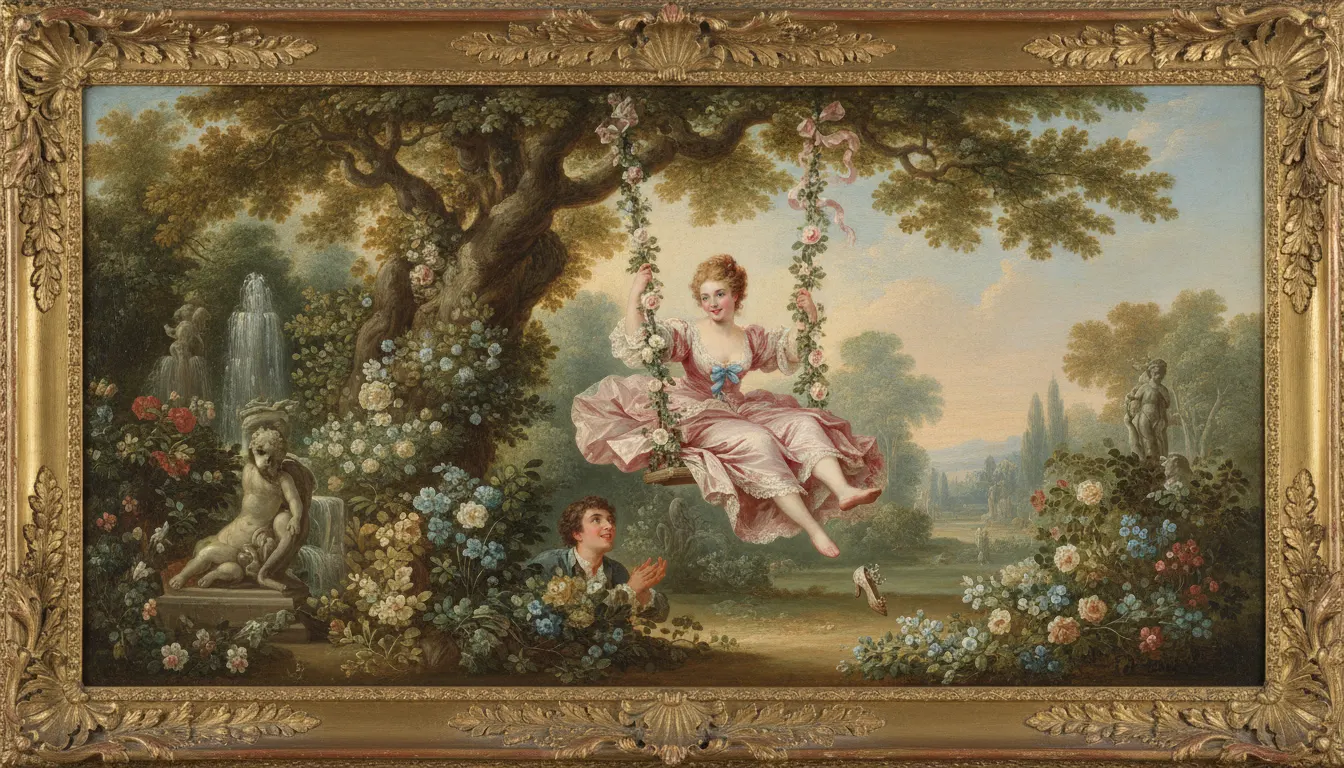
French Rococo in the Fragonard pastel-and-flirtation manner. Frothy garden swings, pink silks, cherubic gilt frames.
rococoflirtatiouspastelfrothy
WHEN TO USE
- Luxury, fragrance, or fashion content that draws on 18th-century French aristocratic aesthetic as a signifier of historical prestige
- Period drama, historical fiction, or art-historical content set in pre-Revolutionary France
- Romantic, Valentine's Day, or amorous-themed content where the language of elegant desire is appropriate
- Wedding or event brand content that wants a sense of exquisite, pastel-toned formality with a light touch
- Fine art or museum content about Rococo, the French 18th century, or the collections of the Wallace Collection and Frick
WHEN NOT TO USE
- Content representing equality, democracy, or social progress -- Rococo is inseparably associated with aristocratic excess
- Masculine-coded brand campaigns where the soft, feminine palette reads as misaligned
- Contemporary youth or streetwear content where the ancien régime associations are alienating
- Dark, gritty, or serious subject matter where the confectionery palette creates tonal dissonance
SIGNATURE TECHNIQUES
How the look is made.
The moves a human crew would use to get here. Cue applies them for you, and knowing their names is how you ask for a change.
- 01Feathery, rapid brushwork in impasto that implies rather than defines forms -- fabric folds and foliage both rendered in fast, suggestive strokes
- 02Pastel palette
pink, pale gold, soft green, powder blue, and cream as the dominant register
- 03Asymmetric, sinuous compositions organised around S
curves and diagonal movement
- 04Lush garden and parkland settings as the primary stage
- formal French gardens, statues, overhanging trees
- 05Soft, diffuse lighting with no strong shadows
- Rococo avoids Baroque chiaroscuro in favour of even, flattering illumination
- 06Erotic subtext encoded in composition and gesture rather than explicit imagery
- 07Elaborate costumes
- silk gowns, ribbons, lace -- rendered with technical delight in fabric representation
HISTORY & CONTEXT
Where it comes from.
Rococo: Fragonard
Rococo is the final expression of Baroque energy transmuted into something lighter, sweeter, and more intimate: a style of asymmetric curves, pastel confections, and aristocratic leisure developed in France in the early 18th century and reaching its peak of refinement in the paintings of Jean-Honoré Fragonard (1732-1806).
The French Court Context
Rococo (from the French rocaille, decorative shellwork) emerged at the court of Louis XV as a deliberate move away from the formal grandeur of Louis XIV's Versailles. Where Baroque painting aimed at overwhelming scale and religious or dynastic authority, Rococo aimed at charm, wit, and amorous pleasure. Watteau's Fêtes galantes paintings (Embarkation for Cythera, 1717, Louvre) established the genre: elegantly dressed figures in parkland settings, engaged in courtly love rituals. François Boucher, Fragonard's teacher, developed the erotic and pastoral dimensions: plump, pink goddesses in improbable landscapes (Reclining Girl, 1751).
Fragonard (1732-1806)
Fragonard is Rococo's supreme technician. The Swing (L'Escarpolette, 1767, Wallace Collection, London) is the defining image: a young woman in a pink silk dress, swinging in a garden, her shoe flying off toward a hidden lover -- who, lying in the shrubbery below, looks up her skirts. The baron who commissioned it specified this exact scenario. The painting is pure Rococo: a conspiracy of pleasure, lush with garden greens and dress pinks, the whole scene rendered in Fragonard's characteristic feathery, swift impasto.
The Progress of Love series (1771-1773 and 1790-91, Frick Collection, New York) -- four large panels depicting courtship: The Meeting, The Pursuit, The Lover Crowned, Love Letters -- was commissioned for Madame du Barry's pavilion at Louveciennes but rejected, reportedly for being too old-fashioned. They remain the most sustained expression of Rococo's subject matter.
NOTABLE WORKS
Where you have seen it.
François Boucher, Reclining Girl (1751, Alte Pinakothek Munich)
Fragonard, The Swing (L'Escarpolette, 1767, Wallace Collection London) -- defining Rococo image
Fragonard, The Progress of Love (1771-73, 1790-91, Frick Collection New York) -- four-panel series
Fragonard, The Bathers (c. 1765, Louvre)
Fragonard, Young Girl Reading (c. 1776, National Gallery of Art Washington)
THE RECIPE
The exact knobs
the renderer turns.
A Look is not a filter. It is a set of stored decisions the pipeline reads before it makes a single frame, so two videos in the same Look actually match.
SettingValue
TransitionHow one shot becomes the next
hard cuts · 160ms · linearKen BurnsCamera move applied to stills
Slow push · 0.02 · centerTypographyDisplay / body / mono pairing
Playfair Display · Lora · JetBrains MonoMusic moodWhat the bed under the voice sounds like
harpsichord-courtly · string-quartetPrompt suffixAppended to every shot prompt in this Look
Jean-Honore Fragonard French Rococo painting, frothy garden swing, pink silk gown, cherubic gilt frame, pastel flirtationPALETTE
Primary
#F5C2D6
Secondary
#A8D5BA
Accent
#9CC9E0
Text/Light
#3A1F2A
Text/Dark
#FFF1F5
BG 900
#2A1820
BG 800
#3A2030
RELATED LOOKS
Next to it on the shelf.
Your first cut
is on us.
+ New videoFree plan · no card · 1080p export