
Robot Chicken Season 1
Seth Green + Matthew Senreich / Adult Swim · 2005
Debut season establishing the toy stop-motion parody format with Boba Fett and Star Wars sketches
Seth Green and Matthew Senreich Adult Swim sketch parody. Stop-motion action figure cast with cut-in 2D pop-culture inserts, Saturday morning toybox palette.
The moves a human crew would use to get here. Cue applies them for you, and knowing their names is how you ask for a change.
Using mass-produced action figures, Barbie dolls, and plastic toys as animation subjects without modification - their plastic sheen and fixed expressions as aesthetic features
Meticulously built small-scale environments matching toy scale, photographed with macro lenses to appear full-size
Characters speaking without corresponding mouth movement - a constraint of using commercial toys turned into deadpan comedic texture
Parody sketches 30 seconds to 2 minutes long, each a complete premise-punchline unit, stacked 20-30 per episode
Custom characters built with interchangeable face pieces for emotional beats where commercial toys cannot provide expression range
Characters from different franchises placed in the same scene - a He-Man figure interrogating a Transformer in a Barbie dreamhouse kitchen
Robot Chicken premiered on Adult Swim on February 20, 2005, created by Seth Green and Matthew Senreich. Produced by Green's company Stoopid Buddy Stoodios (founded 2005, originally ShadowMachine Films), the show built its entire identity around a simple but distinctive conceit: using action figures, Barbie dolls, G.I. Joes, and commercial toys as stop-motion puppets to parody pop culture.
The show's visual signature is the plastic sheen of mass-market toys - the slightly reflective surface of injection-molded polyethylene, the visible seam lines from toy manufacturing, the way painted facial expressions can't shift and convey all emotion through body positioning alone. This deliberate use of commercial toy aesthetics as raw material creates a double layer of irony: familiar childhood objects performing adult humor.
Stoopid Buddy Stoodios developed significant technical expertise in miniature set construction. Each sketch operates in a tiny physical world - miniature sets built to match the 1:6 or 1:12 scale of the action figures. The sets are photographed with macro lenses that make them appear large-scale, a trick inherited from classic Harryhausen-era model work.
The show uses a mix of straight stop-motion (frame-by-frame physical puppet manipulation), cable-actuated puppet control for mouth sync, and replacement animation for facial expressions on custom-built characters. Commercial toys typically cannot lip-sync, so dialog is often delivered by characters whose faces don't move - a constraint that becomes an aesthetic feature.
Shooting at Stoopid Buddy's Hollywood studio, the production maintains a remarkably high output: each 11-minute episode consists of approximately 20-30 separate sketches, each a distinct parody targeting a specific piece of pop culture. The compressed sketch format (30 seconds to 2 minutes per bit) requires efficient visual storytelling.
The show's content is entirely parasitic on existing IP - Star Wars, G.I. Joe, Transformers, DC Comics, Marvel, He-Man, My Little Pony - licensed properties become characters in absurdist scenarios. This creates a layered viewing experience: recognition of the source material is the first joke, the subversion of it is the second. The show has produced multiple official licensed specials including Robot Chicken: Star Wars (2007), Robot Chicken: DC Comics (2009, 2012, 2015), and Robot Chicken: Masters of the Universe (2021).
The show demonstrated the viability of toy-based stop-motion for adult audiences, directly influencing YouTube channels, TikTok creators, and commercial animation projects. Its relentless pop culture reference density established a template for internet-native humor before YouTube matured.
Seth Green + Matthew Senreich / Adult Swim · 2005
Debut season establishing the toy stop-motion parody format with Boba Fett and Star Wars sketches
Seth Green + Matthew Senreich · 2007
Acclaimed special applying the format to the most IP-rich universe - three total specials
Seth Green + Matthew Senreich · 2012
DC characters reimagined through toy parody - Batman, Superman, Wonder Woman in absurdist scenarios
Stoopid Buddy Stoodios · 2021
He-Man and Skeletor in long-form parody, 45 minutes of sustained toy-universe absurdism
Dino Stamatopoulos / Adult Swim · 2005
Adult Swim stop-motion contemporary using Davey and Goliath clay aesthetic for dark religious satire
Charlie Kaufman + Duke Johnson · 2015
Adult stop-motion feature demonstrating the emotional register the medium can reach when not in parody mode
A Look is not a filter. It is a set of stored decisions the pipeline reads before it makes a single frame, so two videos in the same Look actually match.
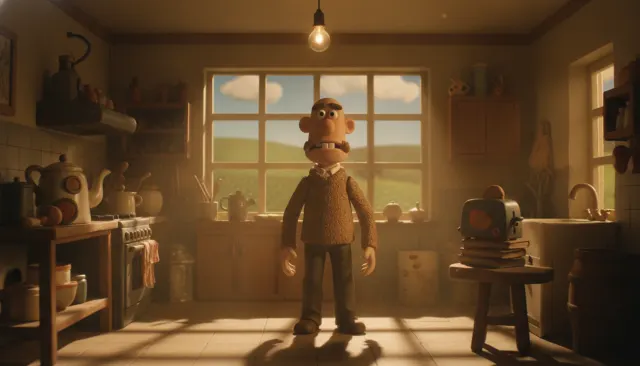 ClaymationAardman Wallace and Gromit Claymation
 Puppet Stop MotionTim Burton Nightmare Before Christmas
 Puppet Stop MotionLaika Coraline Spooky Stop Motion
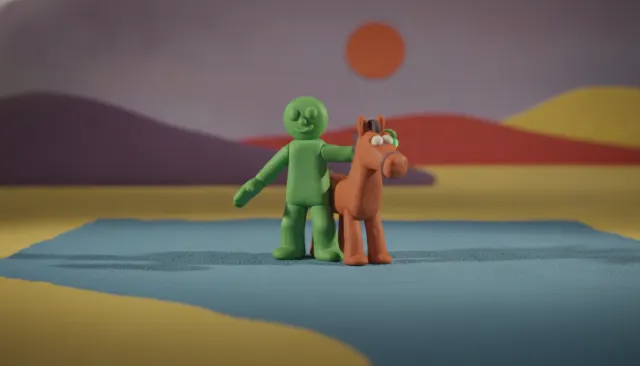 ClaymationGumby Classic Stop Motion
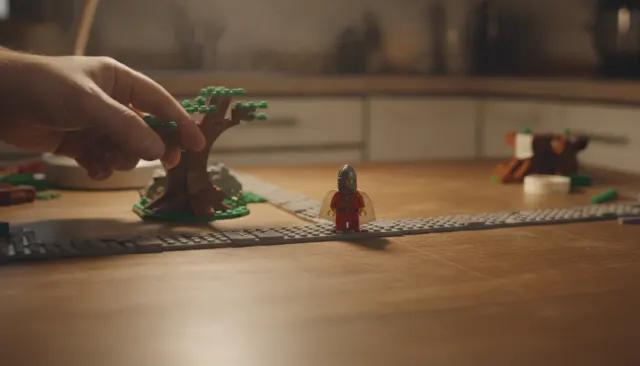 Brick Film LegoBrickfilm Amateur Stop Motion
 Mixed Media Stop MotionLego Brickfilm Stop Motion
 Paper Craft Stop MotionPaper Cutout Stop Motion Classic