PHOTOJOURNALISM · 1930S · INTERNATIONAL
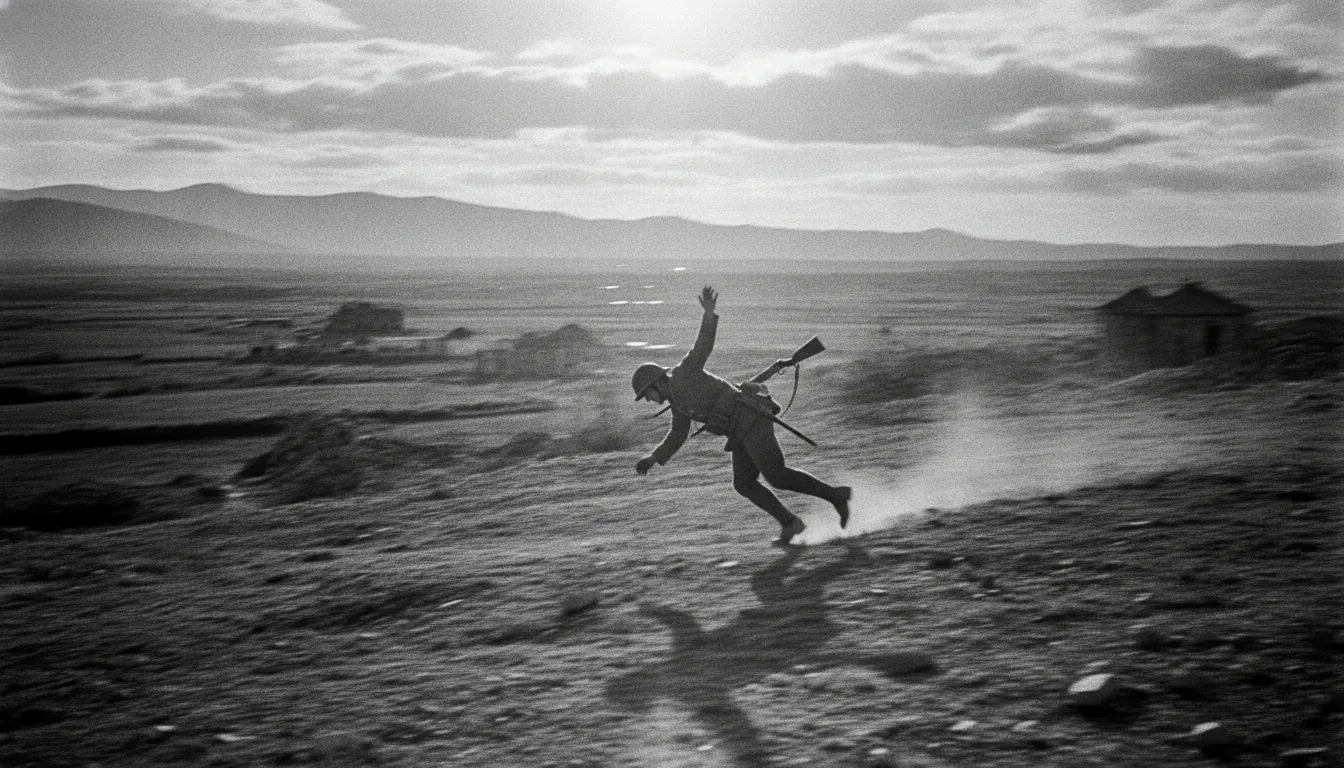
Robert Capa Spanish Civil War
Robert Capa Spanish Civil War. Falling Soldier era, get-close-or-not-close-enough, blurred motion bw, Life magazine wartime witness.
capawarmotion-blurmonochrome
LUT capa-spanish-war
WHEN TO USE
- Documentary or historical content about 20th century conflict, particularly the Spanish Civil War or WWII
- Photojournalism or documentary work in difficult or dangerous conditions where technical imperfection is authentic
- Editorial or brand content invoking the aesthetic of documentary commitment and physical risk
- Film, television, or streaming historical drama content about war or conflict requiring period-accurate photographic reference
- Cultural journalism about photography history, Magnum Photos (co-founded by Capa in 1947), or the ethics of war photography
WHEN NOT TO USE
- Commercial photography contexts where motion blur, grain, and out-of-focus images read as errors rather than honesty
- Portrait or beauty photography where the documentary distress aesthetic conflicts with flattering goals
- Brand content for commercial products without genuine connection to the documentary tradition
- Content for audiences who might interpret simulated combat photography aesthetics as trivializing real conflict
- Contexts requiring consistent technical quality across a series (the Capa aesthetic is incompatible with studio consistency)
SIGNATURE TECHNIQUES
How the look is made.
The moves a human crew would use to get here. Cue applies them for you, and knowing their names is how you ask for a change.
- 01Physical proximity
shooter positioned within the danger zone of the subject being documented
- 02Available light only
no flash, no supplementary lighting in conflict or sensitive environments
- 03Motion blur and grain as authentic record of difficult shooting conditions, not treated as defect
- 0435mm Contax or Leica cameras (smaller and faster than medium format) for proximity and unobtrusiveness
- 05High
contrast black and white or available-light color grain typical of ISO 400-1600 film pushed in development
- 06Decisive moment framing
Capa shoots in bursts but edits to single frames of maximum impact
- 07Documentary caption integrity
images are contextualized by precise location, date, and subject identity
HISTORY & CONTEXT
Where it comes from.
Robert Capa Spanish Civil War
Robert Capa (born Endre Friedmann, Budapest, 1913 - died Indochina, 1954) is the foundational figure of modern war photography. His work across five conflicts - the Spanish Civil War (1936-1939), the Second Sino-Japanese War (1938), World War II (1941-1945), the First Arab-Israeli War (1948), and the First Indochina War (1954, during which he was killed by a landmine) - established the photojournalist's code of proximity and created the visual grammar of 20th century combat photography.
The Falling Soldier, 1936
Capa photographed Federico Borrell García (identified definitively only in 2007 through archival research by Mario Brotons Jordá) at the moment of death near Cerro Muriano, Spain, on 5 September 1936. The image - a soldier with his rifle hand flung outward, body collapsing backward into space - was published in Vu magazine in September 1936 and became, with the possible exception of Migrant Mother, the most widely reproduced and debated single image in photographic history. Whether staged or spontaneous, it captures the physical fact of death in a way that no photograph had previously achieved at this scale of publication.
D-Day, Omaha Beach, 6 June 1944
Capa landed with the first wave at Omaha Beach on D-Day, shooting with two Contax II cameras while under fire. He made approximately 106 frames. A darkroom accident at the Life magazine lab in London - a 17-year-old technician dried the negatives too quickly and melted the emulsion - destroyed 95 of those frames. Eleven survived, and their extreme motion blur, grain, and out-of-focus quality - technical accidents of disaster - have become the defining aesthetic of combat photography. Caption editor John Morris published them under the title 'The Magnificent Eleven'.
The Doctrine of Proximity
Capa's most quoted statement - 'If your pictures aren't good enough, you're not close enough' - is not merely practical advice but an ethical position: the photographer's duty to the subject and the viewer requires physical proximity that places the photographer in the same danger as those being documented. This doctrine, contested but influential, remains the defining principle of combat and humanitarian photojournalism.
NOTABLE WORKS
Where you have seen it.
The Magnificent Eleven, Omaha Beach, D-Day, 6 June 1944 (published in Life Magazine)
Republicans celebrating in Barcelona during the Spanish Civil War, 1938
American soldier moments after landing, Sicily, July 1943
Collaboration with Gerda Taro (killed 1937, Spanish Civil War)
first photojournalist couple
Children of war, China, 1938
Robert Capa: The Definitive Collection (monograph, Phaidon, 2001)
THE RECIPE
The exact knobs
the renderer turns.
A Look is not a filter. It is a set of stored decisions the pipeline reads before it makes a single frame, so two videos in the same Look actually match.
SettingValue
GradeColour LUT applied to every frame
capa-spanish-warTransitionHow one shot becomes the next
hard cuts · 160ms · linearKen BurnsCamera move applied to stills
Slow push · 0.02 · centerTypographyDisplay / body / mono pairing
Playfair Display · Lora · CourierMusic moodWhat the bed under the voice sounds like
orquesta-spanish-war · mournful-guitarPrompt suffixAppended to every shot prompt in this Look
Robert Capa Spanish Civil War Falling Soldier, blurred motion bw, get close, Life magazine wartime witnessPALETTE
Primary
#1A1410
Secondary
#5C5040
Accent
#A88860
Text/Light
#0A0805
Text/Dark
#EBDDC5
BG 900
#0A0805
BG 800
#1A1410
RELATED LOOKS
Next to it on the shelf.

Your first cut
is on us.
+ New videoFree plan · no card · 1080p export