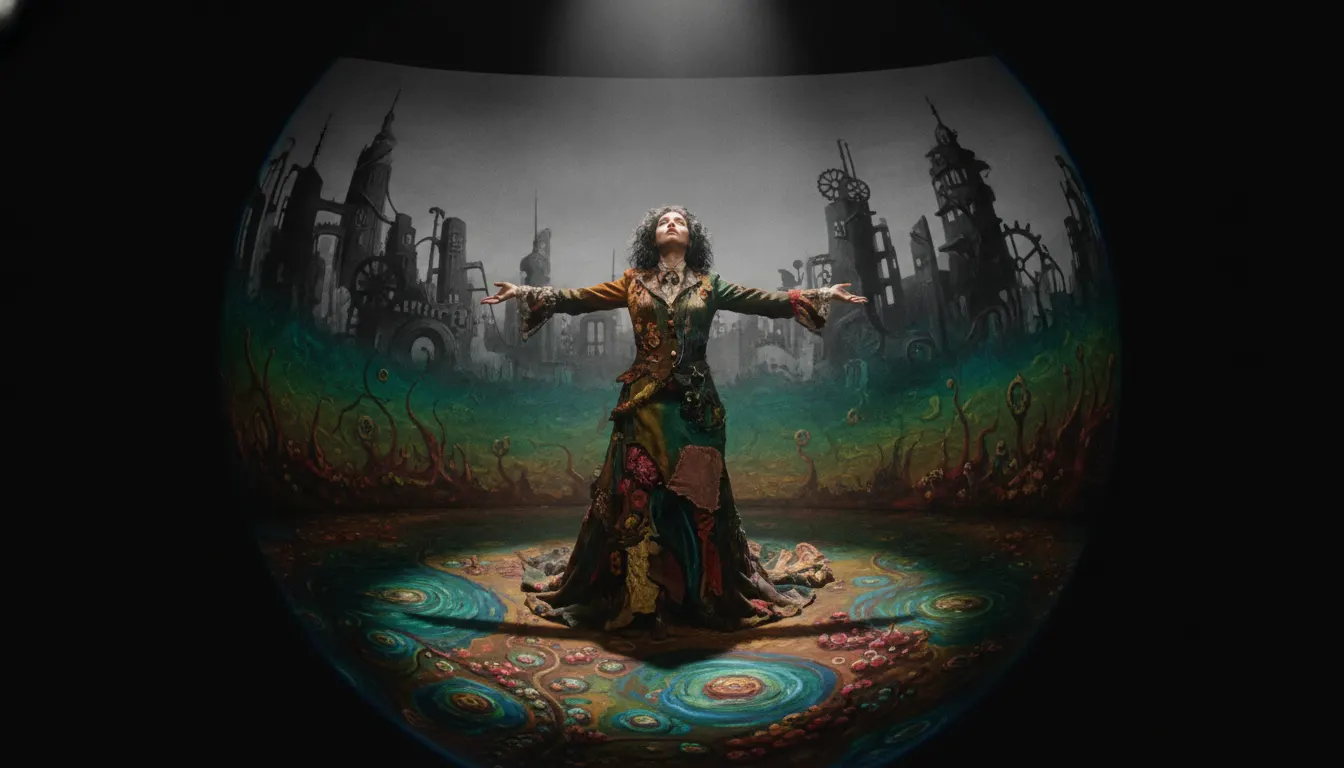
Poor Things
Yorgos Lanthimos / Robbie Ryan · 2023
The defining deployment of sustained fisheye cinematography in contemporary arthouse cinema
Robbie Ryan fisheye fabulism. Poor Things Yorgos Lanthimos, ultra-wide bug-eye distortion, soundstage painted-backdrop world, monochrome-into-color reveal.
The moves a human crew would use to get here. Cue applies them for you, and knowing their names is how you ask for a change.
Near-180-degree lens coverage curves all rectilinear geometry, externalising a subjectively distorted perception.
Physical film capture adds embodied texture that reinforces the haptic, sensory quality of Bella's experience.
The protagonist is placed at the optical centre where distortion is minimal, while the world curves away from her.
Production design built with awareness of the lens's curvature, making impossible architecture feel internally consistent.
Monochrome photography marks memory and flashback, contrasting with the hypersaturated fisheye present-tense.
The fisheye is used on a mobile, reactive camera, so distortion shifts dynamically with Bella's physical orientation.
Robbie Ryan's cinematography for Yorgos Lanthimos's Poor Things (2023) represents one of cinema's most intentional and sustained deployments of extreme wide-angle and fisheye optics as a storytelling instrument. The film's visual language - shot on custom-built lenses, including a 6mm fisheye providing near-180-degree coverage - externalises protagonist Bella Baxter's expanding, distorted perception of a world she is experiencing for the first time.
Robbie Ryan, the Irish-born cinematographer also known for his work on Marriage Story (2019, dir. Noah Baumbach) and American Honey (2016, dir. Andrea Arnold), is an alumnus of the handheld intimacy school. His work with Lanthimos on The Favourite (2018) introduced the fisheye grammar to their collaboration - that film's use of ultra-wide angles to distort palace spaces and power geometries was a precursor to Poor Things's more systematic deployment.
For Poor Things, Ryan and Lanthimos agreed that Bella's subjective experience - she is an adult woman with the newly implanted brain of an infant, essentially perceiving the world without preconception - demanded a lens language that itself distorts conventional perspective. The fisheye creates a bubble of heightened presence around the subject at centre frame while extreme barrel distortion warps the periphery, externalising a consciousness that has not yet learned to normalise perception.
The film was shot on 35mm film, with Ryan using custom-modified lenses to achieve fisheye coverage in a 35mm gate. The use of film rather than digital was deliberate - the grain and tonal response of 35mm adds a physical, embodied quality that pure digital capture lacks. The film also uses black-and-white photography for certain flashback sequences, with the full-colour fisheye grammar reserved for the present-tense narrative.
The production design by Shona Heath and James Price - deliberately fantastical architecture, supersaturated colours, impossible spaces - was built in collaboration with Ryan's lens choices. Locations and sets were designed knowing they would be photographed through a perspective that curves all rectilinear geometry.
The film won the Golden Lion at Venice 2023 and revived critical interest in deliberate optical distortion as a tool of point-of-view cinematography. Ryan's work demonstrated that fisheye and extreme wide optics, long associated with sports action cameras and amateur wide shots, could be deployed with the same intentionality as any other cinematographic decision.
Yorgos Lanthimos / Robbie Ryan · 2023
The defining deployment of sustained fisheye cinematography in contemporary arthouse cinema
Yorgos Lanthimos / Robbie Ryan · 2018
First Lanthimos-Ryan collaboration using wide-angle distortion for power dynamics
Andrea Arnold / Robbie Ryan · 2016
Handheld intimacy with wide optics applied to road-movie naturalism
Noah Baumbach / Robbie Ryan · 2019
Ryan's range: observational naturalism contrasted with his surrealist work
Andrea Arnold / Robbie Ryan · 2011
Extreme close-up and wide-angle distortion applied to period Gothic
Yorgos Lanthimos / Robbie Ryan · 2024
Continuation of the Lanthimos-Ryan visual grammar into anthology format
A Look is not a filter. It is a set of stored decisions the pipeline reads before it makes a single frame, so two videos in the same Look actually match.
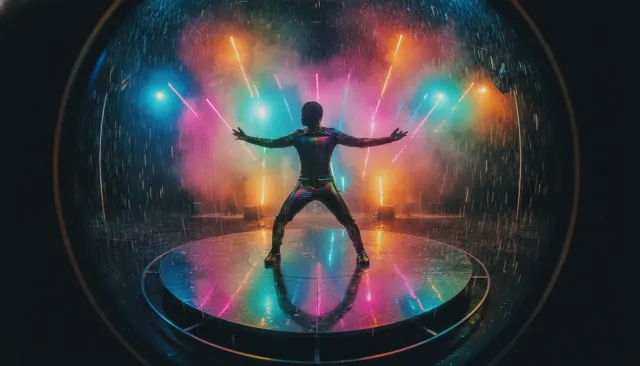 Mv DirectorHype Williams Fisheye Shiny
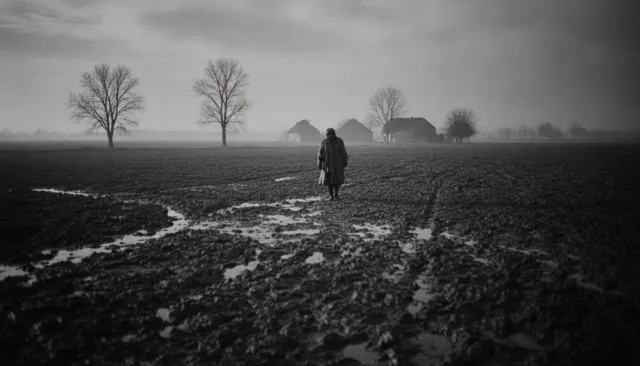 Cinema Era VintageSlow Cinema Bela Tarr
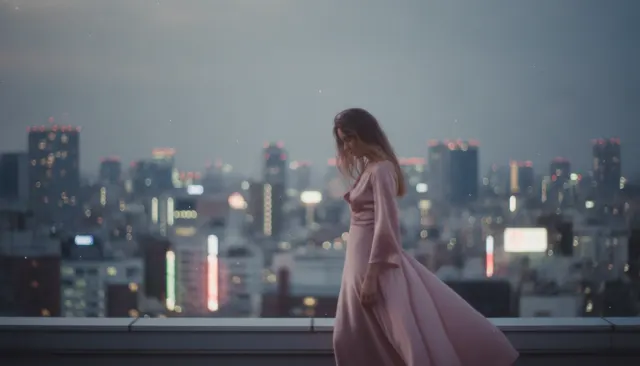 Director Aesthetic ModernSofia Coppola Pastel Melancholy
 Cinematographer AcclaimedSean Bobbitt Shame Handheld Intimate
 Cinema Era VintageNouvelle Vague Godard Truffaut
 Director Aesthetic ModernDavid Cronenberg Body Horror Clinical