Wes Wilson, Fillmore BG-53 -- Grateful Dead; defining melting letterform debut
1966
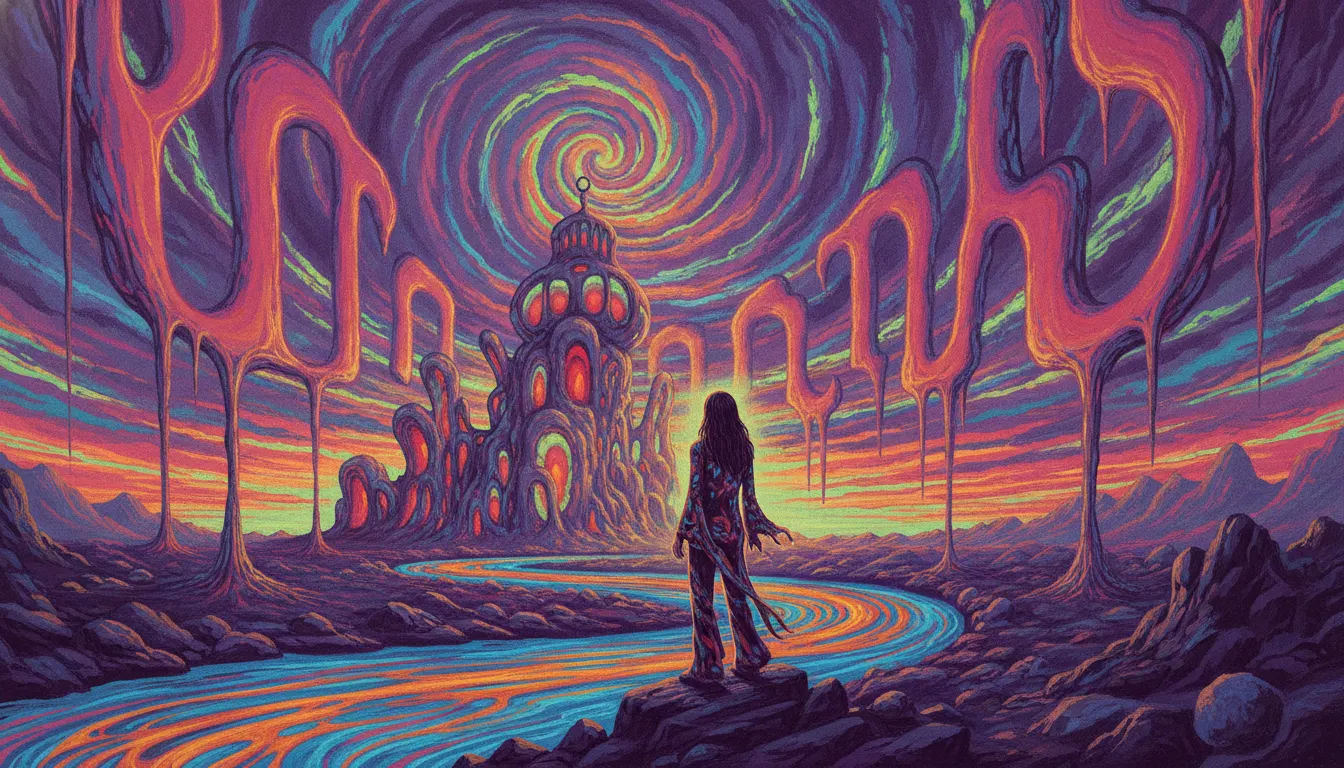
Wes Wilson Fillmore-era psychedelic concert poster. Melting bulbous letterforms, vibrating complementary color, San Francisco hippie rock.
The moves a human crew would use to get here. Cue applies them for you, and knowing their names is how you ask for a change.
over composition with no breathing space -- image and text compete equally across the surface
colour offset printing in four to six spot colours typical of 1960s commercial printing
drawn lettering that is simultaneously headline and decoration -- readable only on close inspection
The psychedelic concert poster is one of the most distinctive American graphic design movements of the 20th century, born in a compressed two-year window in San Francisco between 1966 and 1968. The five primary artists -- Wes Wilson, Victor Moscoso, Stanley Mouse, Rick Griffin, and Alton Kelley -- created a visual language for the counterculture that has never been successfully imitated without feeling derivative.
Bill Graham's Fillmore Auditorium and Chet Helms' Family Dog's Avalon Ballroom were the two main concert venues where this poster tradition emerged. Graham commissioned posters by the dozen from Wilson, who then introduced him to the other artists. The posters advertised concerts by the Grateful Dead, Jefferson Airplane, Big Brother and the Holding Company (with Janis Joplin), Cream, Jimi Hendrix, and The Doors.
Wes Wilson developed the organic, melting letterform that became synonymous with the movement -- letters that bulge, twist, and interlock so densely that they can barely be read. Fillmore Poster BG-53 (1966) for the Grateful Dead established the lettering style. His colour palette used simultaneous contrast theory: vibrating complementary combinations of red/green, orange/blue at equal saturation.
Victor Moscoso had formal art training (Yale under Josef Albers) and applied colour theory with precision: his posters use exactly matching saturation levels for complementary pairs, causing the eye to vibrate at the edge between colours. His Jim Kweskin Jug Band poster (1967) and Neon Rose series are technically the most sophisticated in the movement.
Stanley Mouse and Alton Kelley collaborated on the skull-and-roses Grateful Dead identity (1966), adapting Edmund Sullivan's illustrations for the Rubáiyát of Omar Khayyám. Rick Griffin brought a surf/underground comics sensibility; his lettering evolved into near-abstract symbol-glyphs for the Dead's Aoxomoxoa album (1969).
1966
1966
1967
1967
1966
A Look is not a filter. It is a set of stored decisions the pipeline reads before it makes a single frame, so two videos in the same Look actually match.