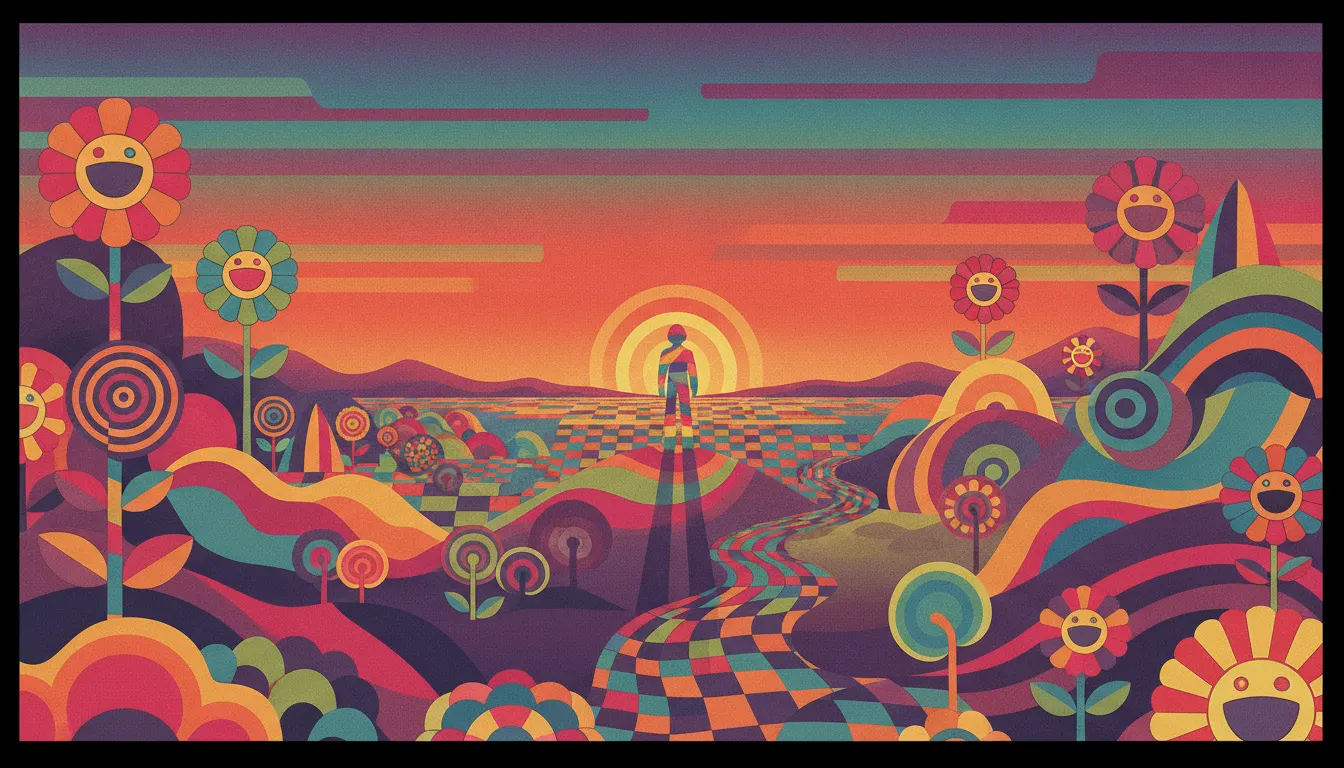
CONCERT POSTER EXTENDED · 1960S · UK
Beatles Yellow Submarine Psychedelic
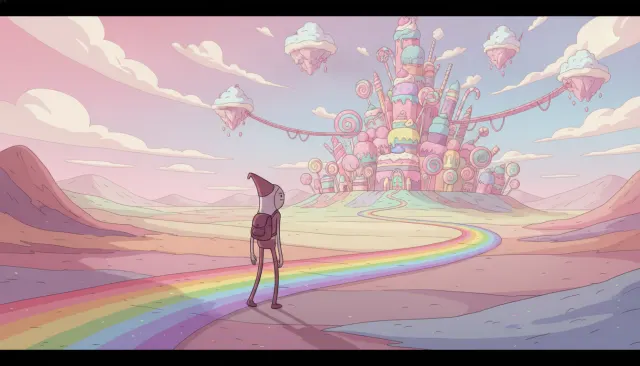
Beatles Yellow Submarine Heinz Edelmann psychedelic poster. Flat saturated psychedelic figures, Pepperland surreal landscape, late-60s rainbow flat illustration.
beatlesyellow-submarinepsychedelicedelmann
LUT yellow-submarine-pepperland
WHEN TO USE
- Music video content for psychedelic, indie, pop, or retro-leaning artists
- Festival promotion, concert posters, or event graphics for music events
- Brand content for youth culture, music, or entertainment companies seeking retro credibility
- Title sequences for documentaries about the 1960s, counterculture, or music history
- Social media graphics that need to stand out through maximalist visual energy
- Content celebrating nostalgia for the 1960s-1970s aesthetic
WHEN NOT TO USE
- Corporate or institutional content where the anarchic visual energy undermines credibility
- Minimalist or clean-design aesthetics
- Content requiring legibility and clear information hierarchy
- Dark, moody, or serious emotional content where the brightness conflicts
- Children's content for very young audiences where the visual complexity is overwhelming
SIGNATURE TECHNIQUES
How the look is made.
The moves a human crew would use to get here. Cue applies them for you, and knowing their names is how you ask for a change.
- 01Flat, fully saturated color with hard edges
no gradients, no modeling, no shadows
- 02Electric complementary color pairings that optically vibrate
magenta/green, yellow/purple
- 03Maximalist composition
no empty space, every corner filled with pattern, figure, or ornament
- 04Art Nouveau
revival letterforms distorted and mutated with psychedelic exaggeration
- 05Figures with distorted, exaggerated proportions
heads large, limbs elongated or multiplied
- 06Collaged scale relationships
tiny figures inhabit enormous pattern fields
- 07Pattern fields derived from Op Art, Islamic tile, and Victorian decorative repeat
HISTORY & CONTEXT
Where it comes from.
Yellow Submarine: Psychedelic Animation and the Summer of Love
Yellow Submarine (1968), directed by George Dunning and designed by Heinz Edelmann, is the defining visual document of the psychedelic era in animation. Edelmann (1934-2009), a German graphic designer based in Stuttgart, created a visual universe that synthesized Art Nouveau revival, Pop Art, surrealism, optical art, and the full anarchic spectrum of late-1960s counter-culture typography and illustration into a single sustained visual experience.
The Film and Its Visual World
The film follows John, Paul, George, and Ringo - rendered as stylized, flat-color animated versions of their Sgt. Pepper -era selves - journeying to Pepperland to save it from the music-hating Blue Meanies. The narrative is intentionally thin; the film is primarily a vehicle for Edelmann's visual invention, with each sequence introducing a new aesthetic register.
The film premiered in London on July 17, 1968, and was a modest commercial success, though it was largely dismissed by The Beatles themselves (none of them attended the premiere). Its cultural afterlife far exceeds its initial reception: it defined the visual grammar of psychedelic graphic design and has influenced animation, music video, graphic design, and illustration continuously since.
Heinz Edelmann's Design Sources
Edelman's primary influences included:
- Art Nouveau revival: the film's ornamental borders, flowing plant forms, and sinuous figure design echo Mucha and Beardsley, filtered through the 1960s poster revival
- Victor Moscoso and the San Francisco poster artists: psychedelic concert posters by Moscoso (1936-), Wes Wilson, and Rick Griffin used vibrating complementary colors and illegible Art Nouveau-derived typography to create physiologically disorienting effects
- Pop Art: flat color, halftone dots, brand imagery, and the aesthetic of commercial printing as fine art
- Optical Art / Op Art: Bridget Riley-style pattern fields that appear to vibrate or move
- European modernist illustration: the 1960s British and German graphic tradition of flat, witty image-making
Visual Characteristics
Flat, saturated, non-mixed color (electric yellows, magentas, cyans, acid greens); hard edges between color areas with no gradation or shadow; maximalist composition leaving no empty space; vintage-style letterforms in mutated Art Nouveau script; figures with exaggerated proportions; dreamlike scale relationships; collaged historical imagery into surreal contexts.
NOTABLE WORKS
Where you have seen it.
The Beatles
Sgt. Pepper's Lonely Hearts Club Band album cover (1967, Peter Blake and Jann Haworth)
Victor Moscoso
Neon Rose concert poster series (1966-1968, San Francisco)
Wes Wilson
Fillmore Auditorium concert posters (1966-1968)
Rick Griffin
Grateful Dead concert poster designs (1967-1968)
Martin Sharp
Mister Tambourine Man (Bob Dylan, Oz magazine cover, 1967)
THE RECIPE
The exact knobs
the renderer turns.
A Look is not a filter. It is a set of stored decisions the pipeline reads before it makes a single frame, so two videos in the same Look actually match.
SettingValue
GradeColour LUT applied to every frame
yellow-submarine-pepperlandTransitionHow one shot becomes the next
hard cuts · 160ms · linearKen BurnsCamera move applied to stills
Slow push · 0.02 · centerTypographyDisplay / body / mono pairing
Monoton · Inter · JetBrains MonoMusic moodWhat the bed under the voice sounds like
beatles-psych · 60s-popPrompt suffixAppended to every shot prompt in this Look
Beatles Yellow Submarine Heinz Edelmann psychedelic poster 1968, flat saturated psychedelic figures, Pepperland surreal landscape, late 60s rainbowPALETTE
Primary
#FFD60A
Secondary
#7B3FF2
Accent
#FF61A6
Text/Light
#1F1A08
Text/Dark
#FFFFFF
BG 900
#1F0A1F
BG 800
#2A102A
RELATED LOOKS
Next to it on the shelf.
Your first cut
is on us.
+ New videoFree plan · no card · 1080p export