CONCERT MUSIC POSTER · CONTEMPORARY · INTERNATIONAL
Riso Printed Art Print
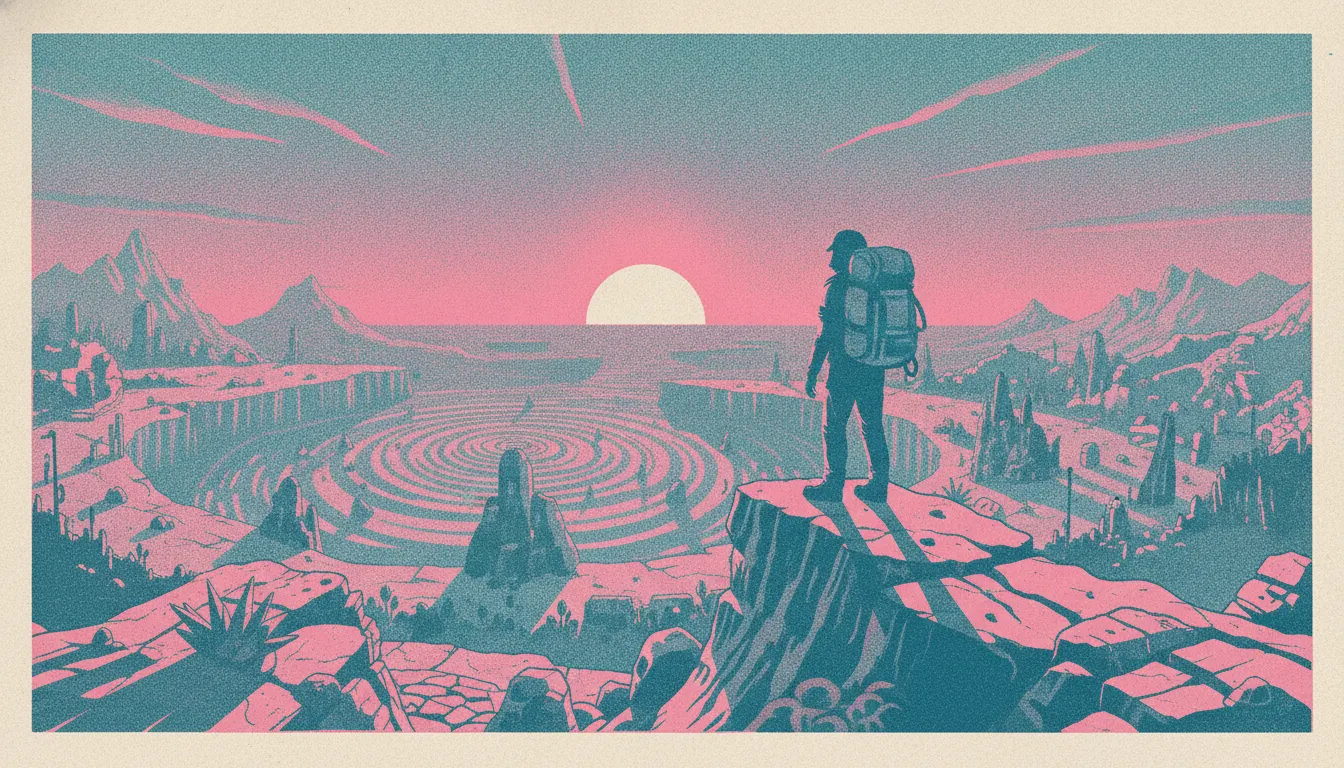
Risograph two-color art print. Bright fluorescent pink and teal, slight misregistration, grain dot texture, indie zine-fair aesthetic.
risofluorescentmis-registeredindie
WHEN TO USE
- Independent music, film, or art releases targeting audiences aligned with indie, zine, and DIY visual culture
- Small-run merchandise -- prints, zines, tour programmes, limited edition publications -- where the production method is part of the value
- Brand identities for independent coffee shops, record labels, art galleries, and creative studios
- Social media content that wants to reference print culture and analogue craft without being a pastiche
- Poster design, event flyers, and announcement graphics where two-colour restriction is a creative feature
WHEN NOT TO USE
- Large-scale brand campaigns where the deliberately small-batch aesthetic reads as underfunded rather than intentional
- Corporate, financial, or institutional content where the indie register undermines authority
- Content requiring photographic fidelity or full CMYK colour range
- Digital-only campaigns where the physical printing process cannot be simulated convincingly enough to matter
SIGNATURE TECHNIQUES
How the look is made.
The moves a human crew would use to get here. Cue applies them for you, and knowing their names is how you ask for a change.
- 01Two to four spot
colour layers, each printed separately with slight misregistration visible at edges and overlaps
- 02Coarse halftone dot screens at 65
100 lpi in mid-tones, visibly grainy at print size
- 03Fluorescent inks (particularly Fluorescent Pink and Fluorescent Orange) with a luminosity that exceeds standard CMYK
- 04Ink bleeding and feathering on absorbent stock, creating soft, irregular edges
- 05Unexpected colour mixing at overlaps
soy-based inks blend subtractively in non-standard ways
- 06Uncoated, textured paper stock
- newsprint, kraft, coloured off-white -- as the default substrate
- 07Flat, graphic compositions with large areas of solid colour that exploit the ink's characteristic texture
HISTORY & CONTEXT
Where it comes from.
Riso Printed Art Print
Risograph printing (often shortened to RISO) is a duplicating machine technology invented by the Riso Kagaku Corporation in 1980s Japan as a cheap, fast alternative to photocopying for high-volume document duplication. Beginning around 2008-2012, independent publishers, zinesters, and artists rediscovered the Risograph as an aesthetic tool rather than a utilitarian one, and it has since become the defining production method and visual language of indie publishing, small-press art books, and zine culture.
How Riso Printing Works
A Risograph uses soy-based inks in specific spot colours -- Fluorescent Pink, Fluorescent Orange, Teal, Cornflower, Hunter Green, Gold, Black, and a dozen others -- applied through a master drum, one colour pass per sheet. The machine does not achieve precise registration between passes, producing the characteristic slight misalignment between colour layers. The soy ink sits on the paper surface rather than penetrating it, creating a matte, slightly rough finish with visible dot patterns at finer tones. Paper show-through is common in lighter stock.
The Aesthetic
The Riso aesthetic is defined by its constraints: two to four spot colours maximum (budget and practicality), halftone dots visible at mid-tones, misregistration that can range from a fraction of a millimetre to several millimetres, ink bleeding at edges and on absorbent papers, and the luminous quality of fluorescent and metallic inks that no digital reproduction fully captures. Overlapping Riso colours produce unexpected mixtures: Fluorescent Pink over Teal creates a warm purple; Blue over Fluorescent Orange creates a striking brown-grey.
Cultural Context
Practitioners include LSFF (London Short Film Festival), Hato Press (London), Perfectly Acceptable Press (US), Colour Code Printing (Melbourne). Artists including Malwina Chabocka, Samantha Mash, and Femke Herregraven have produced defining Riso art prints. The Tokyo Zine Fest and the Portland Zine Symposium function as the annual gathering points for Riso culture.
NOTABLE WORKS
Where you have seen it.
Femke Herregraven, Sprawl (Riso art book, 2015)
Malwina Chabocka, illustrated Riso prints (2015-present)
Colour Code Printing, Melbourne -- community RISO studio and publishing house
Perfectly Acceptable Press, various artists (2010s-present)
Landfill Editions (London, Riso zine label, 2012-present)
THE RECIPE
The exact knobs
the renderer turns.
A Look is not a filter. It is a set of stored decisions the pipeline reads before it makes a single frame, so two videos in the same Look actually match.
SettingValue
TransitionHow one shot becomes the next
hard cuts · 160ms · linearKen BurnsCamera move applied to stills
Slow push · 0.02 · centerTypographyDisplay / body / mono pairing
Archivo · Inter · JetBrains MonoMusic moodWhat the bed under the voice sounds like
indie-pop-bedroom · lofi-strumPrompt suffixAppended to every shot prompt in this Look
Risograph two color art print, fluorescent pink and teal, slight mis-registration, grain dot texture, indie zine fair printPALETTE
Primary
#FF38A1
Secondary
#F0E6D0
Accent
#3FBFB0
Text/Light
#1F081A
Text/Dark
#FFF1F8
BG 900
#F5EFE0
BG 800
#E8E0CC
RELATED LOOKS
Next to it on the shelf.

Your first cut
is on us.
+ New videoFree plan · no card · 1080p export