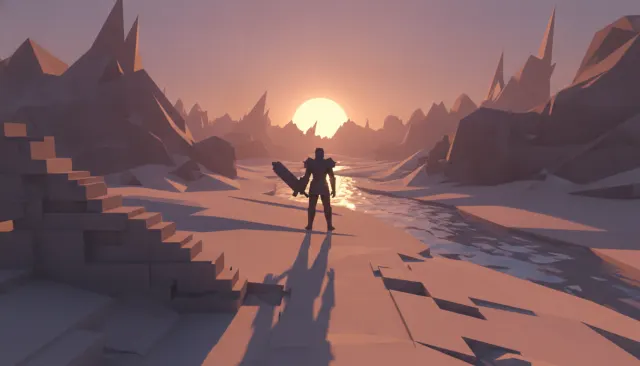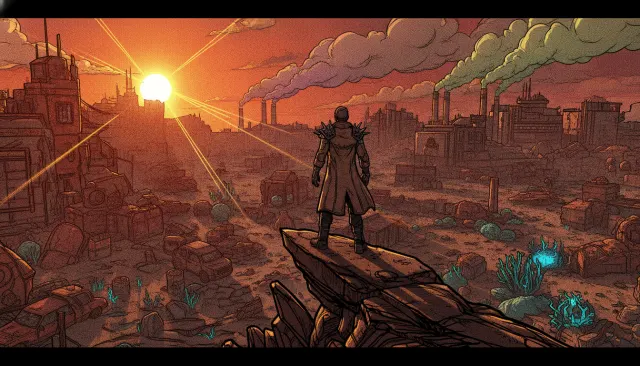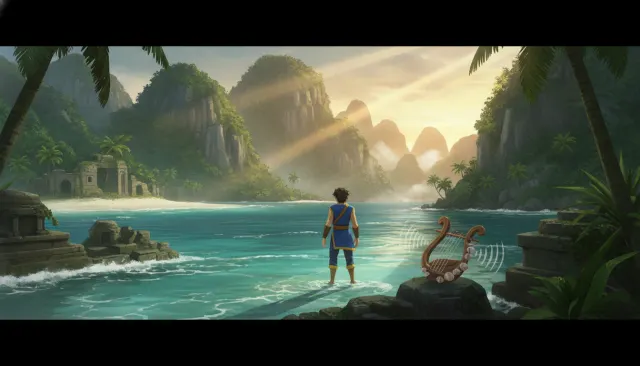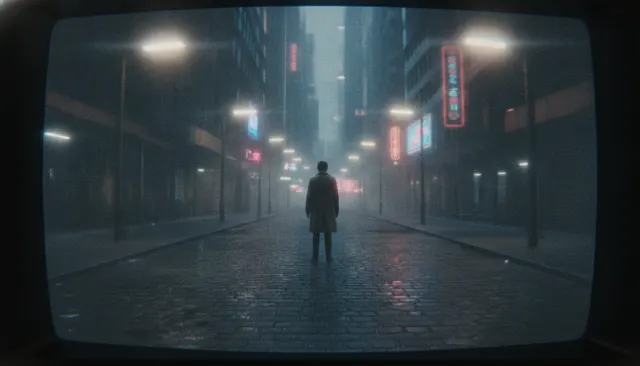
ICO (Team ICO / Sony, 2001)
painterly atmospheric minimalism defining PS2 artistry
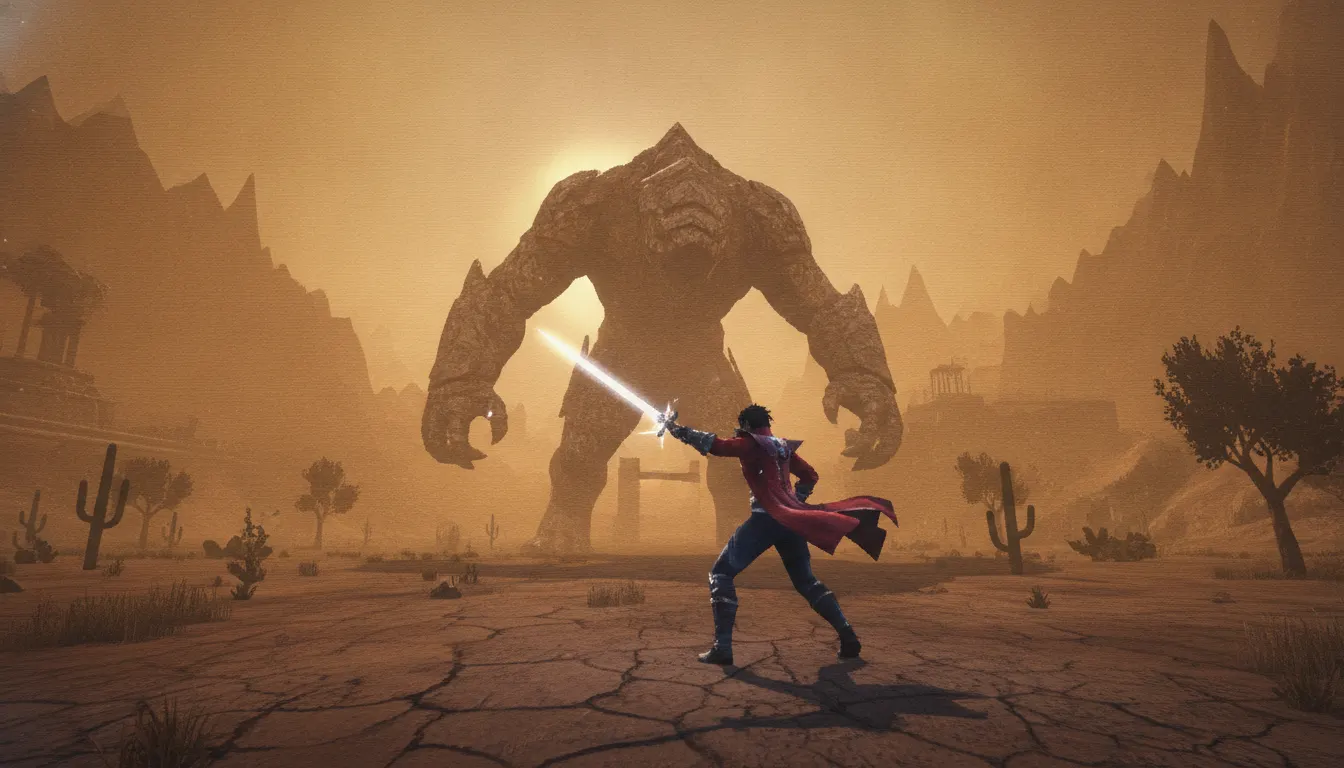
PlayStation 2 era stylized 3D. Shadow of the Colossus haze, GTA San Andreas open-world, Devil May Cry combat staging, 480p output.
The moves a human crew would use to get here. Cue applies them for you, and knowing their names is how you ask for a change.
shading: flat color fills with hard-edge Toon lighting and ink outline rendering
resolution textures (128x128 to 256x256) with hand-painted surface detail
The PlayStation 2 (Sony, 2000) represented the transition from PS1's jagged imperfection to a new paradigm - higher polygon counts, more sophisticated shading, and the first widespread adoption of stylized art direction as a deliberate aesthetic choice rather than a hardware workaround. Running at 480i interlaced (720x480) on standard televisions, PS2 games occupy a distinctive visual middle ground between the lo-fi charm of the PS1 era and the HD precision of the PS3 generation.
The PS2 output interlaced video to CRT televisions, and the interaction between this signal and phosphor persistence created a soft, slightly blurred image quality that is now read as warmly nostalgic. Games designed for this environment used bold outlines, high-contrast color choices, and saturated palettes that would read clearly through the interlacing artifact. When emulated or upscaled today, PS2 games often look sharper than they did in their original environment, stripping away some of that warmth.
The PS2's Emotion Engine processed roughly 66 million polygons per second, but texture memory and fill rate remained constrained. Studios responded with strong art direction that made limitations invisible. ICO (Team ICO / Sony, 2001) used bloom lighting and a desaturated, painterly palette to create atmospheric depth without dense geometry. Shadow of the Colossus (Team ICO / Sony, 2005) extended this to epic scale. Kingdom Hearts (Square Enix, 2002) merged Disney's animation vocabulary with JRPG character design, creating a look that felt simultaneously Western and Eastern.
The PS2 era saw the first widespread commercial adoption of cel-shading as a deliberate style. Jet Set Radio Future (Smilebit / Sega, 2002) and Viewtiful Joe (Clover Studio / Capcom, 2003) demonstrated that hardware limitations could be transformed into expressive strength. The resulting aesthetic - flat color fills, hard edges, bold outlines - anticipated the flat design trend in UI by a decade.
PS2 textures typically topped out at 256x256 pixels, requiring careful unwrapping and hand-painted detail. Character models ranged from 1,500 to 8,000 polygons. Depth of field and motion blur were rare; most games relied on particle effects and strong silhouettes to convey cinematic quality. The lack of hardware anti-aliasing in many titles meant edges appeared notched on non-CRT displays.
painterly atmospheric minimalism defining PS2 artistry
epic scale through art direction alone
Disney-JRPG hybrid defining PS2 stylized look
cel-shading as cinematic vocabulary
seamless open-world streaming on PS2 hardware
mature action defined by bold PS2 direction
sumi-e ink wash aesthetic on PS2 hardware
A Look is not a filter. It is a set of stored decisions the pipeline reads before it makes a single frame, so two videos in the same Look actually match.