EASTERN HISTORICAL · 1500S · PERSIA
Persian Miniature Illuminated
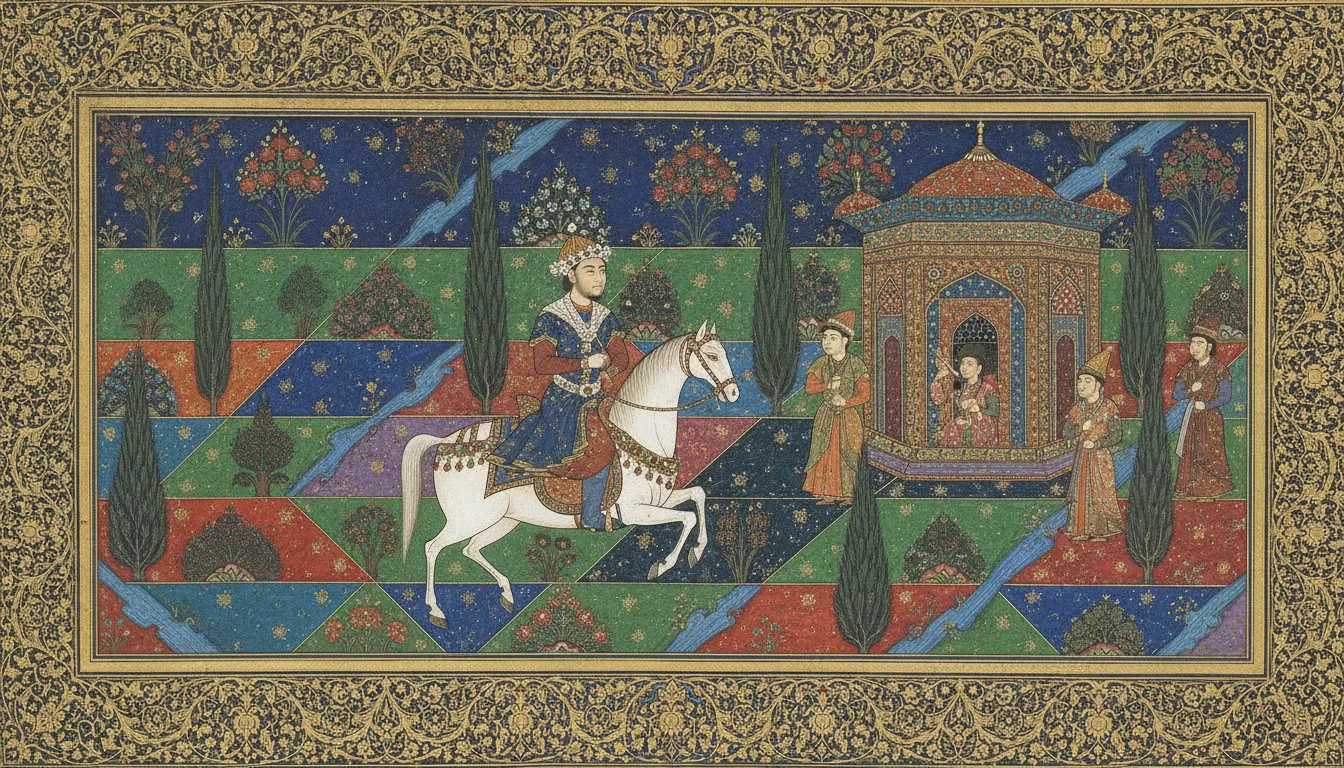
Safavid Persian miniature illumination. Flat patterned garden, jewel-tone palette, no shadow, gold leaf border, Shahnameh courtly scene.
persianminiaturegold-leafilluminated
WHEN TO USE
- Content exploring Middle Eastern history, Islamic art, Persian literature, or Mughal culture
- Luxury brand campaigns that want to signal craft, tradition, and intricate artisanship
- Music, fashion, or film projects drawing on South Asian, Central Asian, or Iranian visual culture
- Animation, game art, or world-building that needs a pre-modern, courtly, or fantastical Islamic aesthetic
- Editorial illustration for poetry, mythology, or historical narrative
WHEN NOT TO USE
- Contemporary minimalist or digital-native content where the ornate density reads as cluttered
- Brand campaigns requiring photographic immediacy or modern lifestyle associations
- Content that might inadvertently aestheticise cultures without appropriate context or commissioning
SIGNATURE TECHNIQUES
How the look is made.
The moves a human crew would use to get here. Cue applies them for you, and knowing their names is how you ask for a change.
- 01Non
perspectival layered composition with figures arranged in horizontal bands
- 02Lapis lazuli blue (ultramarine) and verdigris green as dominant pigments alongside lead white and vermilion
- 03Gold leaf for sky, architecture, and arabesque border ornament
- 04Intricate arabesque and islimi vine
scroll borders in illuminated manuscript margins
- 05Figures with large, almond
shaped eyes, arched brows, small mouths, and delicate hands
- 06Architectural interiors shown in simultaneous plan and elevation -- walls tilted to reveal both facade and interior
- 07Hierarchical scale
rulers and heroes larger than attendants regardless of spatial logic
HISTORY & CONTEXT
Where it comes from.
Persian Miniature Illuminated
Persian miniature painting is one of the great achievements of Islamic art, flourishing between the 13th and 17th centuries in the courts of the Ilkhanid, Timurid, Safavid, and Mughal dynasties. It developed as book illustration -- illuminating manuscripts of poetry by Firdausi, Nizami, Rumi, and Hafiz -- but reached a technical and artistic peak that elevates it far beyond decoration.
The Herat and Tabriz Schools
Kamal ud-Din Behzad (c. 1450-1535), working in Herat under the Timurid sultan Husayn Bayqara and later in Tabriz under Shah Ismail I, is universally regarded as the supreme master of the form. His compositions in the Khamsa of Nizami (1494-95, British Library) and the Bustan of Sa'di (1488, National Library of Egypt) demonstrate extraordinary spatial complexity within a flat, non-perspectival framework. Behzad populated his scenes with dozens of individuated figures, each with a distinct face and gesture, set against architectural vistas rendered in meticulous geometric ornament.
The Tabriz school under Shah Tahmasp (r. 1524-1576) produced the Shahnama of Shah Tahmasp (c. 1522-1535), the most lavish illustrated manuscript ever made, containing 258 full-page miniatures by artists including Sultan Muhammad and Mir Musavvir. The Safavid court exported miniaturists to the Mughal court in India, where Behzad's tradition merged with Indian sensibility to produce Mughal miniature painting.
Visual Language
Persian miniature rejects European linear perspective in favour of layered horizontal bands read from bottom to top. Figures are shown in three-quarter view, with large almond eyes and delicate fingers. Sky is typically gold or lapis lazuli blue, never atmospheric. Gardens are depicted as geometric paradises: formal pools, cypress trees, flowering shrubs. Borders are illuminated in gold and ultramarine with arabesque vine and floral interlace. Scale is hierarchical -- important figures are larger regardless of spatial position.
NOTABLE WORKS
Where you have seen it.
Khamsa of Nizami (1494-95, Behzad, British Library) -- masterwork of the Herat school
Shahnama of Shah Tahmasp (c. 1522-1535, Tabriz school) -- 258 miniatures, most lavish manuscript ever made
Haft Awrang of Jami (1556-1565, Safavid, Freer Gallery) -- late Safavid masterpiece
Hamzanama (c. 1562-77, Mughal imperial atelier) -- 1,400 large-scale paintings for Akbar's court
THE RECIPE
The exact knobs
the renderer turns.
A Look is not a filter. It is a set of stored decisions the pipeline reads before it makes a single frame, so two videos in the same Look actually match.
SettingValue
TransitionHow one shot becomes the next
hard cuts · 160ms · linearKen BurnsCamera move applied to stills
Slow push · 0.02 · centerTypographyDisplay / body / mono pairing
Marcellus · Lora · JetBrains MonoMusic moodWhat the bed under the voice sounds like
oud-classical · persian-tarPrompt suffixAppended to every shot prompt in this Look
Safavid Persian miniature illumination, flat patterned garden, jewel-tone palette, no shadow, gold leaf border, Shahnameh courtly scenePALETTE
Primary
#1A3A8E
Secondary
#7AB733
Accent
#D4AF37
Text/Light
#0A1424
Text/Dark
#F5E6B8
BG 900
#0A1424
BG 800
#152A4A
RELATED LOOKS
Next to it on the shelf.
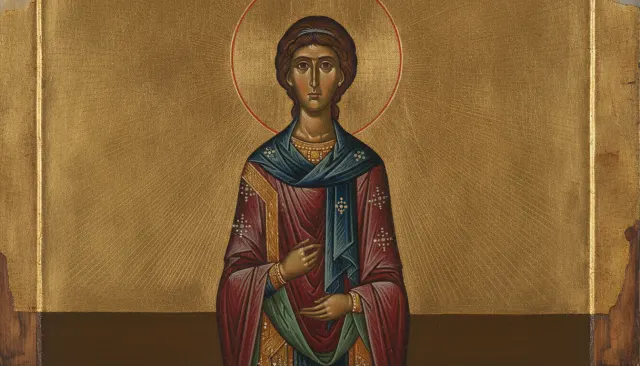 Eastern HistoricalByzantine Icon Gold Leaf
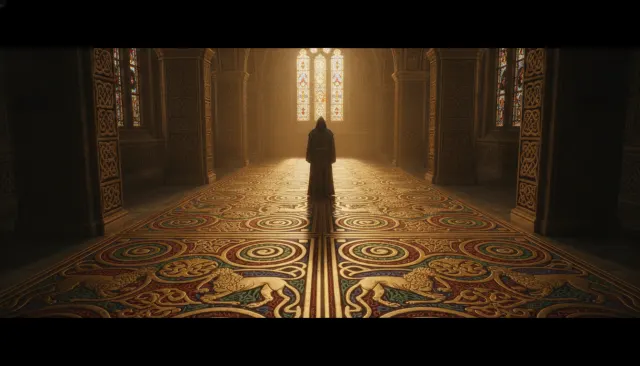 Historical Illuminated ExtendedBook of Kells Celtic Illuminated
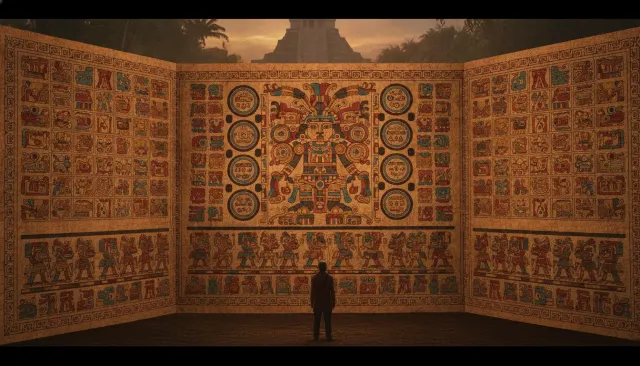 Historical Illuminated ExtendedAztec Mesoamerican Codex Symbol
 Art Movement ClassicalBaroque Painting Caravaggio
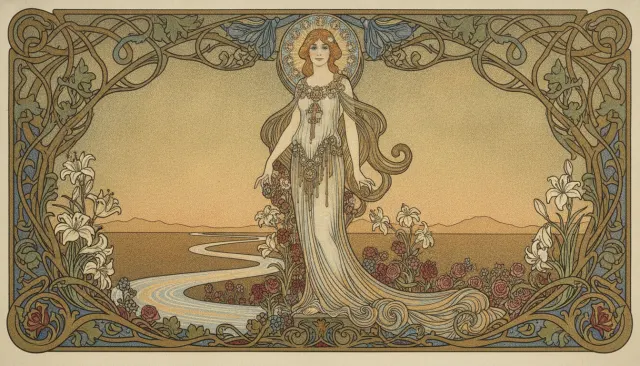 Illustrators NamedAlphonse Mucha Art Nouveau Poster
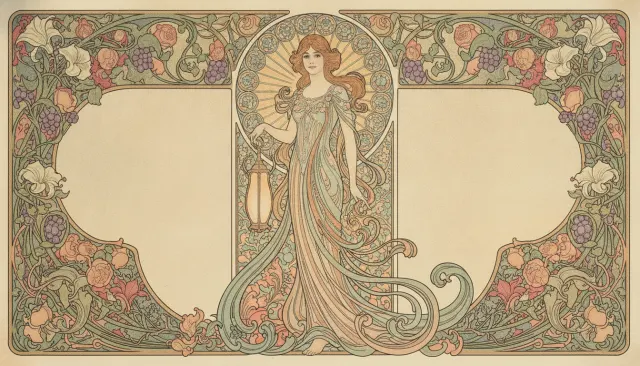 Art Movement ModernArt Nouveau Mucha
Your first cut
is on us.
+ New videoFree plan · no card · 1080p export