PORTRAIT TRADITIONS · CONTEMPORARY · INTERNATIONAL
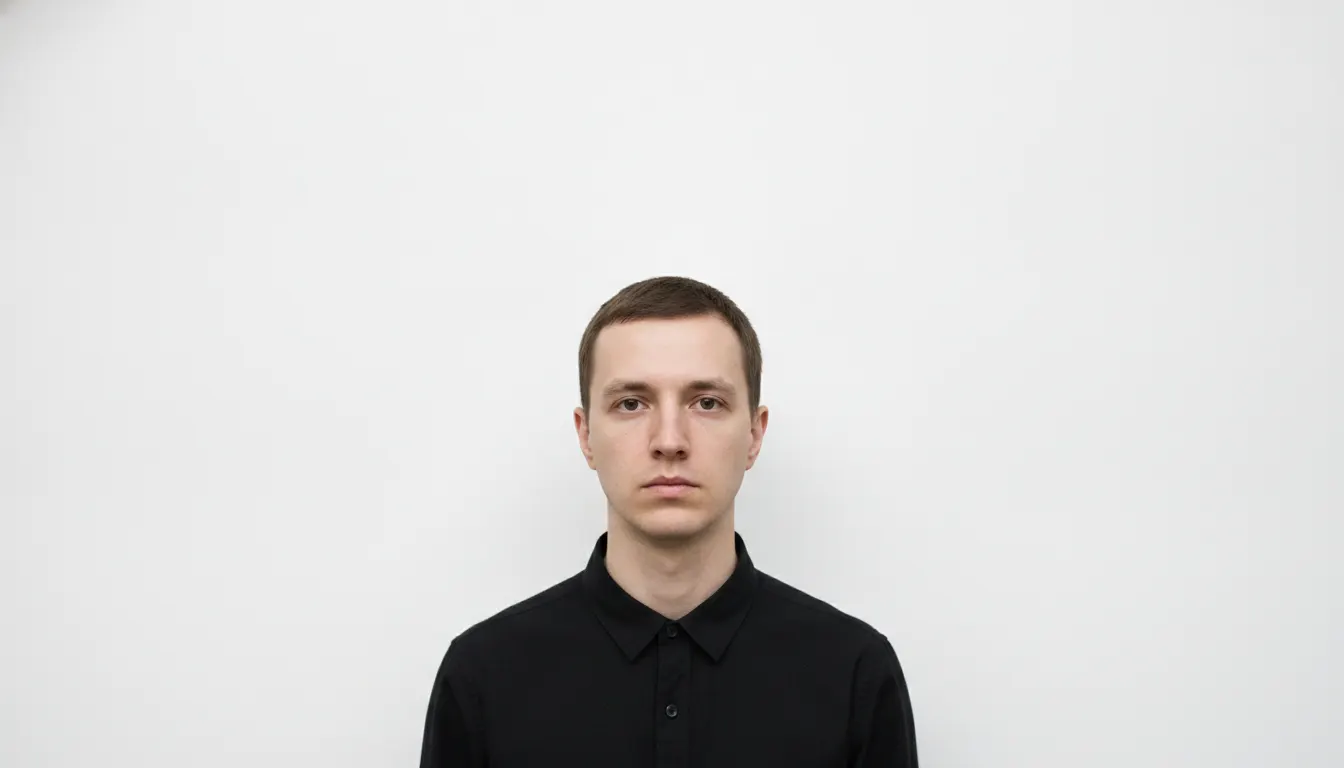
Passport Photo Flat Light
Government-spec passport photograph. White seamless wall, even shadow-free key, no smile, head straight, ICAO biometric compliance.
passportbiometricflat-lightcompliance
LUT passport-biometric-flat
WHEN TO USE
- Identity or bureaucracy-themed editorial content where the flat official aesthetic is the point
- Satirical content about government, surveillance, or institutional identity systems
- Conceptual portrait photography engaging with state control, identity, or the gap between self and official record
- Tutorial or educational content about lighting techniques demonstrating the simplest, most even setup
- Corporate ID photo production contexts where functional identity documentation is literally required
- Vintage or historical content referencing the early-to-mid 20th century era when passport photography was establishing itself
WHEN NOT TO USE
- Any portrait context where flattery, warmth, or personality is a desired outcome
- Fashion, beauty, or celebrity photography where the bureaucratic flatness contradicts glamour goals
- Fine art portraiture seeking emotional depth, character, or narrative beyond identity documentation
- Commercial content for brands not explicitly engaged with identity, government, or institutional themes
- Content for international markets where local regulatory standards for identity photography vary significantly
SIGNATURE TECHNIQUES
How the look is made.
The moves a human crew would use to get here. Cue applies them for you, and knowing their names is how you ask for a change.
- 01Twin lights at 45 degrees or ring flash for completely flat, shadow-free illumination across face and background
- 02White or off
white seamless paper background, evenly lit to eliminate gradient
- 03Frontal framing
full face, both ears visible, eyes at approximately mid-frame height
- 04Neutral, slightly serious expression
no smile, no raised eyebrows
- 05Camera at eye level
no perspective distortion from above or below
- 06Head filling 70
80% of frame height with even space around
- 07No shadows falling on background
subject placed 30-60cm in front of background
HISTORY & CONTEXT
Where it comes from.
Passport Photo Flat Light
The passport photograph is among the most widely produced photographic format on earth. The International Civil Aviation Organization (ICAO) Document 9303 specifies the technical requirements for passport and travel document photographs used by over 190 member states: full-face frontal view, neutral expression with closed mouth, eyes open and clearly visible, white or off-white background, no glasses, specific head-size-to-frame ratio (70-80% of total image height), taken within six months of application.
History of Identity Photography
Passport photographs became mandatory in the United States in 1914 and were adopted universally across allied nations during and after World War I as governments recognized that unrestricted international travel had become a security risk. The format replaced more narrative identity description (height, hair color, distinguishing marks) as the primary means of verifiable identity, a shift that permanently elevated photography's role in state administration.
The Aesthetic of Bureaucratic Flatness
The passport photo's visual character is defined entirely by its function: it must be reproducible under varying scanning and printing conditions, allow automated facial recognition, and be unambiguous across ethnic lighting and skin tones. These constraints produce the aesthetic. Flat, shadowless lighting (typically two lights at 45 degrees or a ring flash for even illumination) eliminates facial structure that could be misread by automated systems. Neutral expression prevents the deformation of facial landmarks by emotion. The white background maximizes contrast separation at the edges of the face and hair.
Cultural Appropriation
The passport photo's aggressive functionality has made it attractive as an art material. Photographers including Taryn Simon (An American Index of the Hidden and Unfamiliar, 2007) and Thomas Ruff (his large-format 'Portraits' series, 1981-1985) have worked in or against this format. The DMV or passport booth self-portrait is a recurring image in vernacular photography - everyone has a bad one. Fashion photography occasionally appropriates the format as deliberate anti-glamour provocation.
NOTABLE WORKS
Where you have seen it.
Taryn Simon, An American Index of the Hidden and Unfamiliar, identity photography study, 2007
ICAO Document 9303 biometric passport standard photographs, adopted internationally 2006
Gillian Wearing, Signs that say what you want them to say and not signs that say what someone else wants you to say (ID-inspired portraiture), 1992-1993
THE RECIPE
The exact knobs
the renderer turns.
A Look is not a filter. It is a set of stored decisions the pipeline reads before it makes a single frame, so two videos in the same Look actually match.
SettingValue
GradeColour LUT applied to every frame
passport-biometric-flatTransitionHow one shot becomes the next
hard cuts · 100ms · linearKen BurnsCamera move applied to stills
Static framesTypographyDisplay / body / mono pairing
Inter · Inter · JetBrains MonoMusic moodWhat the bed under the voice sounds like
ambient-procedural · subtle-electronicPrompt suffixAppended to every shot prompt in this Look
government passport photo ICAO biometric, white wall seamless, even shadowless key, no smile head straightPALETTE
Primary
#F5F5F0
Secondary
#A89B82
Accent
#3A3A3A
Text/Light
#1A1A1A
Text/Dark
#F5F5F0
BG 900
#1A1A1A
BG 800
#2A2A28
RELATED LOOKS
Next to it on the shelf.
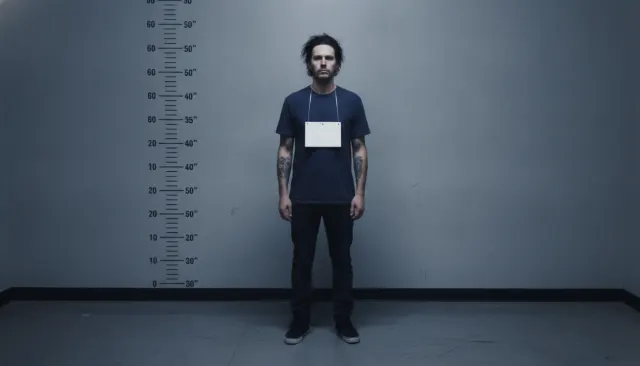 Portrait TraditionsMugshot Front Side Flash
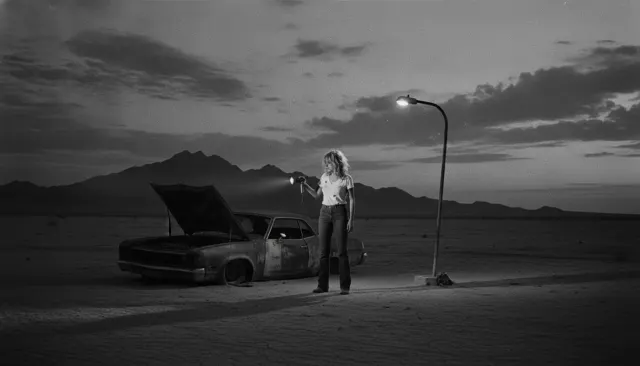 Photographers Fine ArtCindy Sherman Conceptual Portraiture
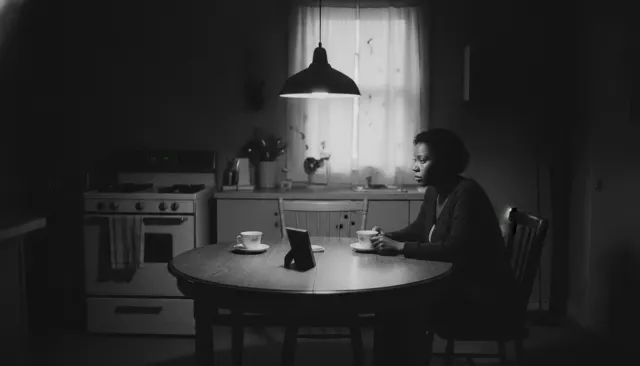 Photographers Color ModernCarrie Mae Weems Narrative BW
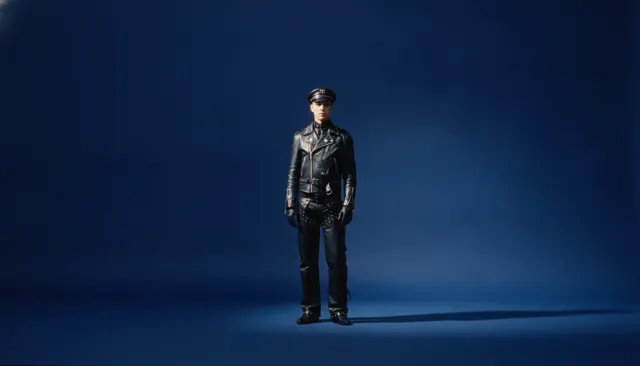 Photographers Fine ArtCatherine Opie Portrait Formal
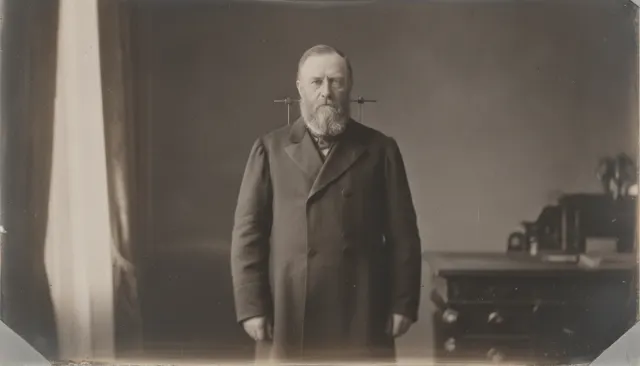 Photographic EraDaguerreotype 1840s Portrait
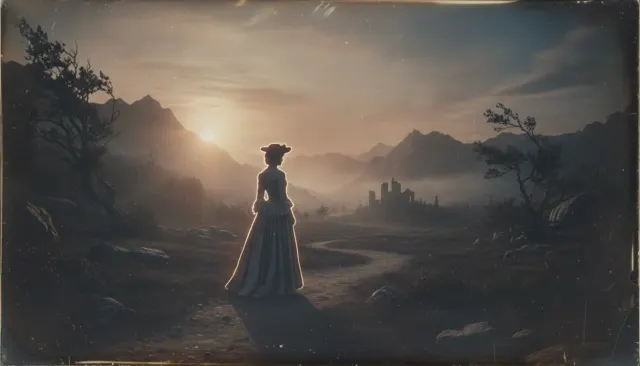 Analog Process ExtendedDaguerreotype Modern Recreation
Your first cut
is on us.
+ New videoFree plan · no card · 1080p export