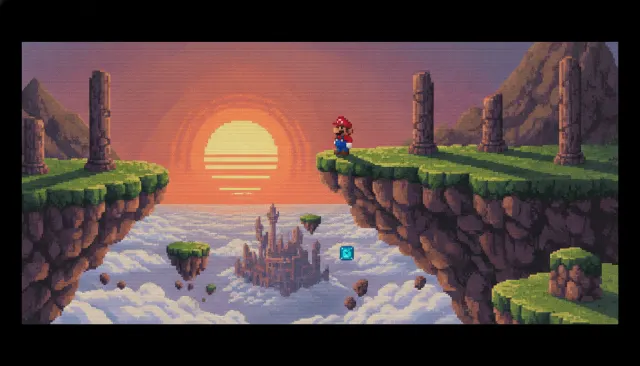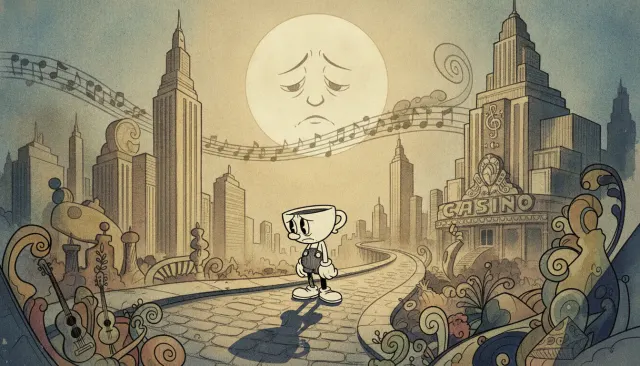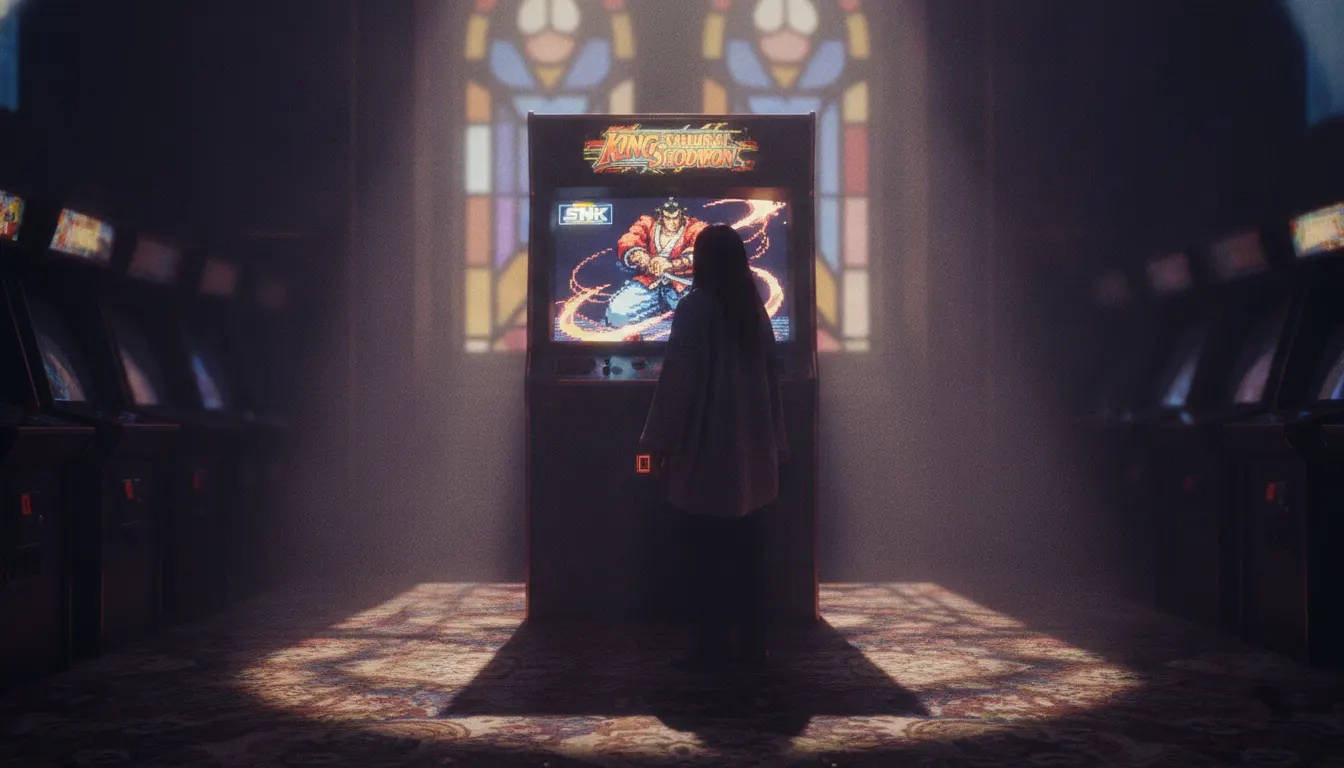
Fatal Fury
SNK, 1991 - the Neo Geo fighter debut establishing Terry Bogard and the Southtown setting
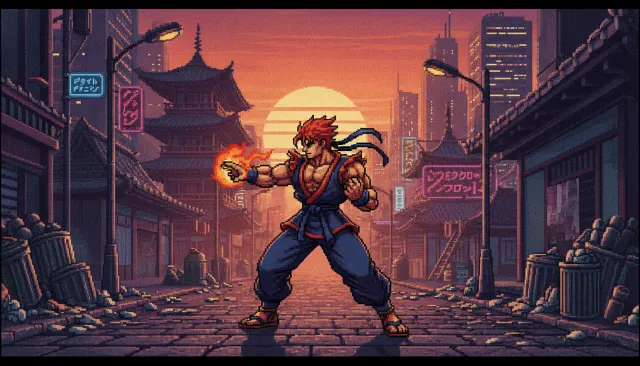
SNK Neo Geo MVS arcade fighter aesthetic. 65000-color palette, large 380px detailed sprites, King of Fighters and Samurai Shodown peak hand-drawn 2D sprite craft.
The moves a human crew would use to get here. Cue applies them for you, and knowing their names is how you ask for a change.
200px character height on MVS) with 200+ animation frames per character move set
drawn character caricature: expressive facial distortion on win/lose portraits beyond gameplay sprites
Osaka streets, feudal Japan, European cities
palette color constraint exploited for character identity: each SNK fighter has an unmistakable color signature
zoom portraits: screen-filling character face close-up on special attack activation
breathing, hair movement, costume fabric settling - establishing character personality
SNK's Neo Geo Multi Video System (MVS) arcade hardware and its home equivalent the AES, released in 1990, were the most powerful 2D game hardware commercially available for over a decade. Games ran from large ROM cartridges and displayed sprites at resolutions and sizes that other arcade boards could not match, creating a distinctive aesthetic of detailed, large-format hand-drawn fighting game sprites that became the gold standard of the genre.
The Neo Geo's Yamaha 68000 CPU, Z80 co-processor, and custom sprite hardware could render up to 380 sprites on screen simultaneously, each up to 512 pixels tall. In practice, fighting games used this to render opponent characters at approximately 100-200 pixel heights with animation frame counts (sometimes exceeding 200 frames per move set) that no contemporary hardware could approach. The result was characters that moved with illustrative fluidity.
SNK housed the talent to exploit this hardware: artists producing work for Fatal Fury (1991), Art of Fighting (1992), Samurai Shodown (1993), The King of Fighters '94 (1994), Metal Slug (1996), and their sequels developed a house style characterized by expressive hand-drawn characters with distinctive facial caricature, dynamic attack poses, and backgrounds that functioned as independent illustration commissions. The Osaka and Tokyo neighborhoods depicted in Fatal Fury's stages, or the feudal Japanese settings in Samurai Shodown, were painted with the care of an editorial illustrator, not a game background artist.
Neo Geo AES cartridges were sold directly to consumers at astronomical prices ($200-400 per game in 1990s dollars), creating a premium collector market. This pricing positioned Neo Geo as a luxury product, reinforcing the premium quality of its sprite artwork as a feature consumers were paying explicitly for.
The Neo Geo sprite art tradition directly informs King of Fighters, Samurai Shodown, and Fatal Fury: City of the Wolves (2025). The MVS library is extensively preserved in MAME emulation and the community around it remains active 35 years after launch.
SNK, 1991 - the Neo Geo fighter debut establishing Terry Bogard and the Southtown setting
SNK, 1992 - introduced super-zoom scaling moves and more detailed portrait art
SNK, 1993 - feudal Japan setting with illustrated background excellence
SNK, 1994 - unified the SNK universe into a team-battle tournament
Nazca / SNK, 1996 - run-and-gun using Neo Geo sprite art for dense environmental detail
SNK, 1999 - widely considered the technical and artistic peak of Neo Geo sprite output
SNK Playmore, 2009 - definitive late-era sprite expansion
A Look is not a filter. It is a set of stored decisions the pipeline reads before it makes a single frame, so two videos in the same Look actually match.