Cuphead (Studio MDHR, 2017)
the definitive modern reference
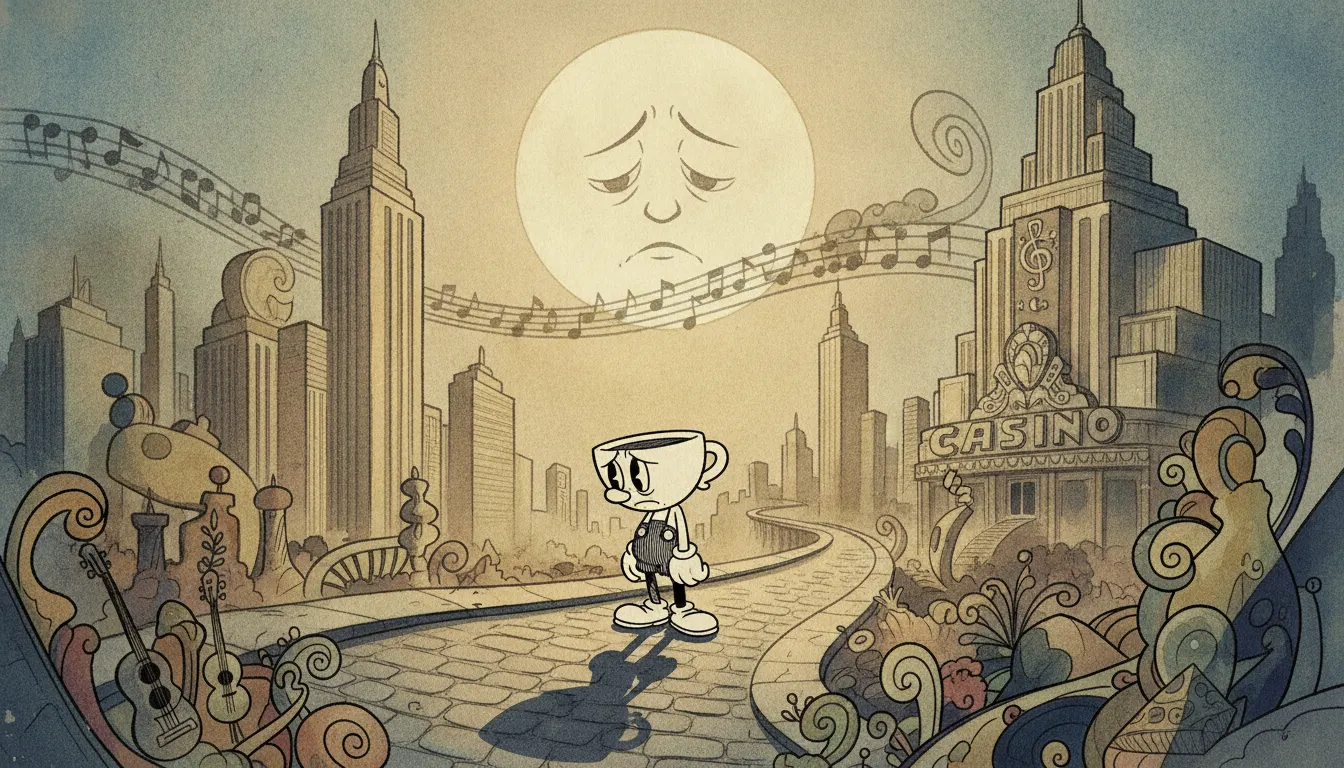
Cuphead 1930s rubber-hose animation aesthetic. Studio MDHR Fleischer Disney homage, hand-inked frame-by-frame, watercolor backgrounds, jazz-age palette.
The moves a human crew would use to get here. Cue applies them for you, and knowing their names is how you ask for a change.
hose limbs with no anatomical joints - arms and legs bend freely at any angle in any direction
cut circular eyes with rotating highlight to indicate eye direction
drawn frame-by-frame animation on paper, not digital tweening or bone-rig shortcuts
processing: grain, vignette, color fade, and reel-change burn marks
single directional smear drawings between extreme positions
all movement beats timed to accompanying jazz/ragtime score
Cuphead (Studio MDHR, 2017) by brothers Chad and Jared Moldenhauer is the most technically rigorous recreation of 1930s cartoon animation aesthetics in the history of games. Every frame was hand-drawn on paper by a small team of animators, then scanned, colored with genuine watercolor techniques for backgrounds, and composited with period-accurate post-processing effects. The result is not a simulation of 1930s cartoons - it is effectively a 1930s cartoon that happens to be interactive.
The 'rubber-hose' term describes the animation style pioneered by Max and Dave Fleischer (Betty Boop, 1930-1939; Popeye, 1933-1957) and early Walt Disney Productions (Steamboat Willie, 1928; Silly Symphonies, 1929-1939). Characters have limbs with no elbows or knees - they bend freely in any direction like rubber tubing. Eyes are pie-cut circles. Mouths are simple curves. Everything smears, squishes, and stretches with exaggerated energy. This style predates the anatomical realism that Disney introduced with Snow White (1937).
Studio MDHR animators drew on paper at 24 frames per second, then scanned drawings and applied coloring digitally while maintaining the line variation, hand-drawn texture, and slight wobble of authentic hand-made animation. Most studios would have produced this digitally from the start - the decision to use physical paper was a commitment to authenticity with significant production cost.
Backgrounds are genuine watercolor paintings, not digital watercolor simulations. This creates a soft, luminous quality distinct from any digital process - the paper texture, wet-on-wet blooming, and color bleeding of real watercolor. Combined with the hand-drawn character animation, the composite looks genuinely historical.
Film grain, vignetting, slight color fading, and a cigarette-burn reel-change indicator were added to complete the illusion of archival film. The game deliberately looks like a degraded film print of a 1934 cartoon short.
the definitive modern reference
originating rubber-hose reference
peak Fleischer rubber-hose
Mickey Mouse's debut, early Disney rubber-hose
Disney rubber-hose anthology series
parallel 1930s cartoon game aesthetic same year
streaming animation extension
A Look is not a filter. It is a set of stored decisions the pipeline reads before it makes a single frame, so two videos in the same Look actually match.