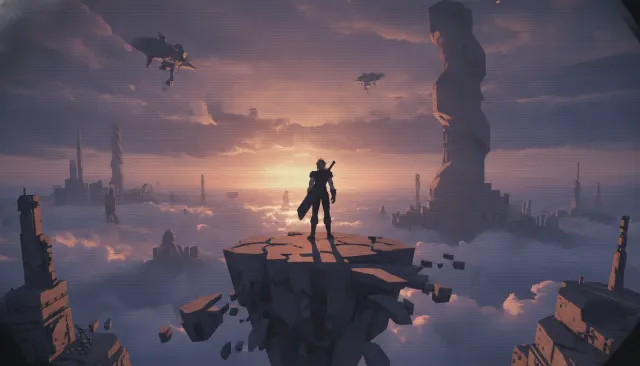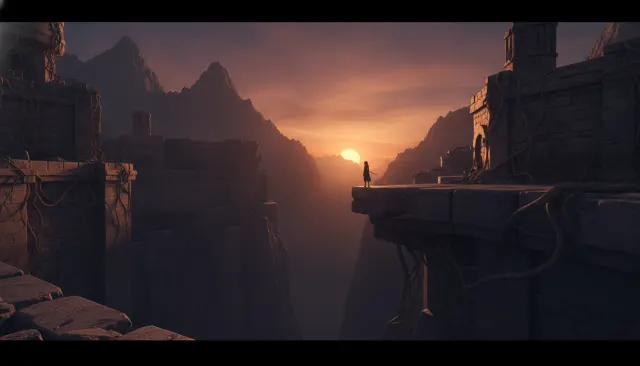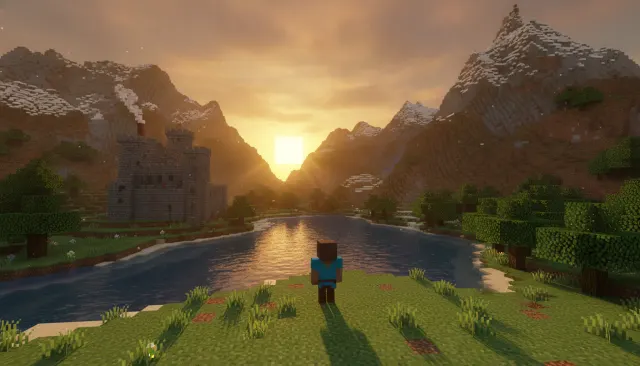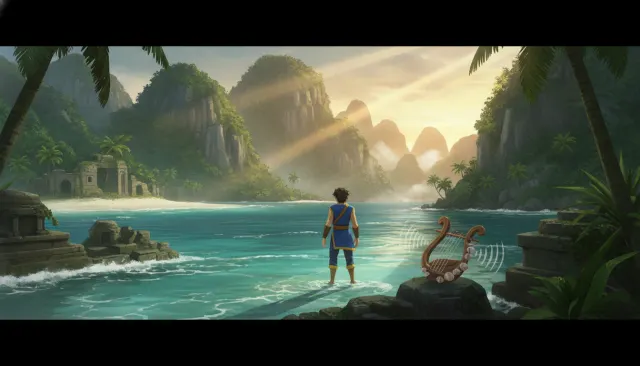
Super Mario 64
1996
Nintendo EAD; defining N64 character model aesthetic
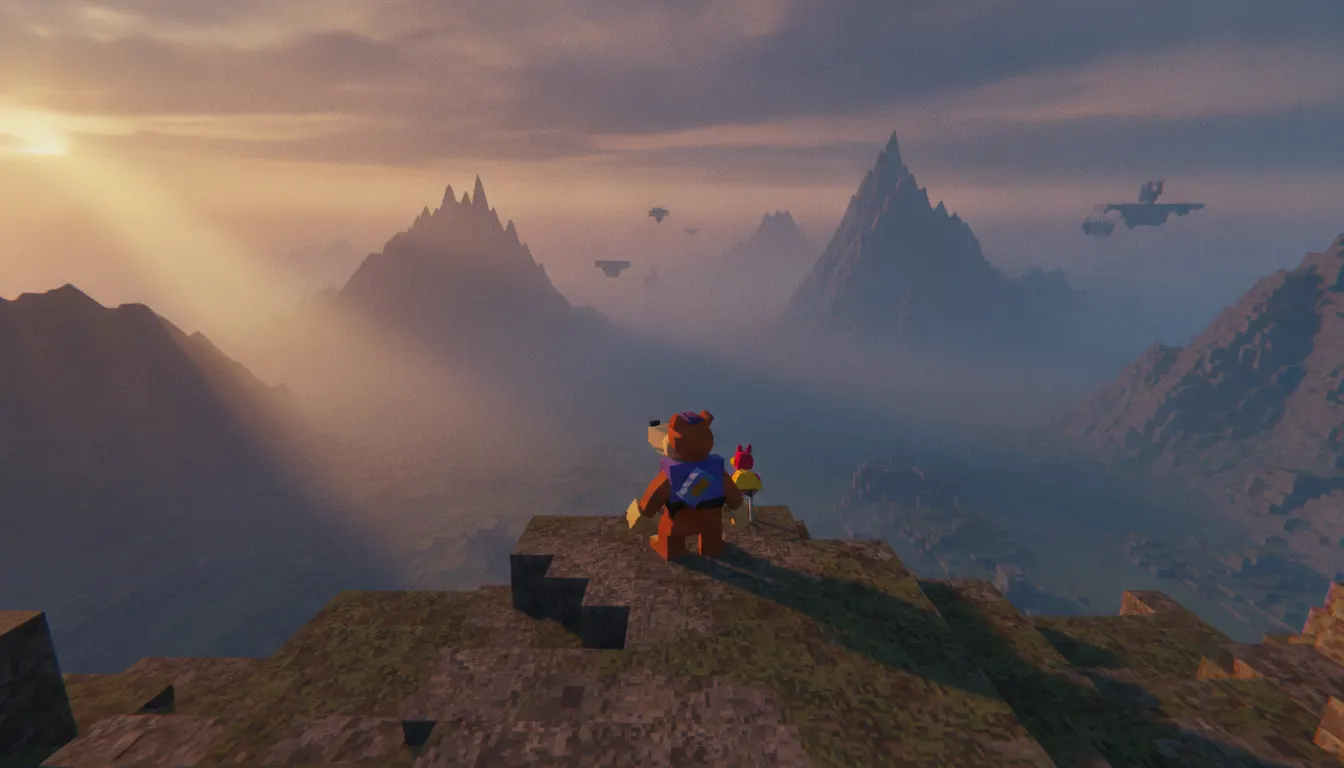
Nintendo 64 blocky-texture era. Bilinear texture smear, fog draw-distance, low-res characters, Mario 64 and Banjo-Kazooie feel.
The moves a human crew would use to get here. Cue applies them for you, and knowing their names is how you ask for a change.
poly geometry with visible polygon faces and no geometric smoothing
lit color shading rather than dynamic per-pixel lighting
large heads, rounded torsos - to read character through silhouette
colored sky polygons or low-resolution gradient skyboxes
The Nintendo 64, released in 1996 (Japan/North America) and 1997 (Europe), defined a specific era of 3D game aesthetics that sits between the fully flat-shaded primitives of PS1 and the smoother, more resolved polygon counts of PS2. The N64 aesthetic is characterized by vertex-lit (rather than texture-lit) geometry, low-resolution texture maps with aggressive bilinear filtering, and the distinctive muddy color cast that results from 4KB texture cache limits.
The N64's Reality Coprocessor could push more polygons than the PlayStation but was hamstrung by a 4KB texture cache per draw call. This forced developers to use small, tiled textures (typically 32x32 or 64x64 pixels) that were stretched across large surface areas, producing the characteristic smeared, soft-edged texture appearance. Unlike the PS1's warping affine texture mapping, N64 used perspective-correct texturing, so textures didn't wobble - they simply stayed low-resolution and repeated.
Character models in N64 games have a distinctive boxy quality. Super Mario 64 (Nintendo EAD, 1996) established Mario's form as a collection of rectangular prisms with rounded vertex tricks: the face, gloves, and cap are visually readable primarily through texture rather than geometry. The Legend of Zelda: Ocarina of Time (Nintendo EAD, 1998) pushed character expression through exaggerated proportions - large heads, small feet - to communicate emotion despite low vertex counts.
GoldenEye 007 (Rare, 1997) established the N64 FPS visual standard: blocky environment geometry with flat-lit faces, low-resolution texture detail on walls and floors, and character models with visible polygon faces on heads and hands. Banjo-Kazooie (Rare, 1998) used bright saturated texture palettes to compensate for low resolution, a strategy that gave N64 platformers their cheerful, toy-like appearance.
Mario Kart 64 (Nintendo EAD, 1996) demonstrated the look at high speed: flat-shaded course geometry, billboarded sprite characters on polygonal karts, and vibrant track color coding that remains visually legible despite the technical limitations.
The N64 aesthetic occupies a cultural position distinct from PS1 nostalgia. PS1 is associated with horror, JRPG, and indie lo-fi because of the texture warping and vertex jitter that creates an unsettling quality. N64 nostalgia is warmer: the bright Nintendo palette, the broad simple geometry, and the lack of affine warping make the era feel safe and playful. This is why N64-adjacent aesthetics appear in children's content and lighthearted indie games, while PS1 aesthetics appear in horror and experimental work. The N64 era's low-poly aesthetic has influenced a generation of indie developers creating games in the low-poly stylized space, including A Short Hike (Adam Robinson-Yu, 2019) and various Game Boy and Nintendo-homage titles.
1996
Nintendo EAD; defining N64 character model aesthetic
1998
Nintendo EAD; fantasy world in N64 vocabulary
1997
Rare; N64 FPS environment standard
1998
Rare; saturated toy-world N64 platformer
1996
Nintendo EAD; high-speed N64 color and geometry
1997
Nintendo EAD; geometric spacecraft and environments
1997
Rare; combined sprite and polygon N64 visual
A Look is not a filter. It is a set of stored decisions the pipeline reads before it makes a single frame, so two videos in the same Look actually match.